Have you ever taken a step back from your artwork only to find that the circles you’ve drawn aren’t as perfect as you imagined? The quest to draw a perfect circle can be more challenging than it seems, especially when you realize that even slight imperfections can alter the overall balance and aesthetic of your piece. By learning how to make a perfect circle, you not only enhance your skills but also gain precision that boosts your confidence as an artist. So, how do you achieve those flawless circles that elevate your work?
In this article, you’ll discover practical tips, essential tools, and step-by-step techniques to help you draw a perfect circle every time. We’ll delve into common pitfalls, explore circle test methods to fine-tune your accuracy, and equip you with advanced strategies for mastering this fundamental shape. Whether you’re an aspiring artist or a seasoned sketcher, understanding the nuances of circle drawing can significantly improve your creative output.
Understanding the Anatomy of a Circle
Before you can draw a perfect circle, it’s crucial to understand what makes a circle perfect. A circle is defined by its consistent radius from a central point. This symmetry is what distinguishes a circle from an oval or other rounded shapes. The key to mastering circle drawing lies in maintaining this uniform distance, ensuring that every point on the circumference is equidistant from the center.
As you practice, visualize the circle’s center and imagine a radius extending outward like the spoke of a wheel. This mental image helps you maintain focus on symmetry and balance, allowing you to create more accurate circles.
Tools and Materials for Perfect Circles
While you can certainly practice freehand drawing, using the right tools can drastically enhance your ability to draw a perfect circle. A compass is one of the most effective tools, allowing you to set a fixed radius and draw consistent circles effortlessly. Additionally, using a drawing board with a grid can provide guidance and help maintain symmetry.
For those who prefer digital drawing, software tools such as Adobe Illustrator offer features like the ellipse tool, which can create perfect circles with ease. However, even in digital art, understanding the principles of circle drawing is beneficial, as it allows you to make adjustments and corrections more intuitively.
Step-by-Step Guide: Draw a Perfect Circle
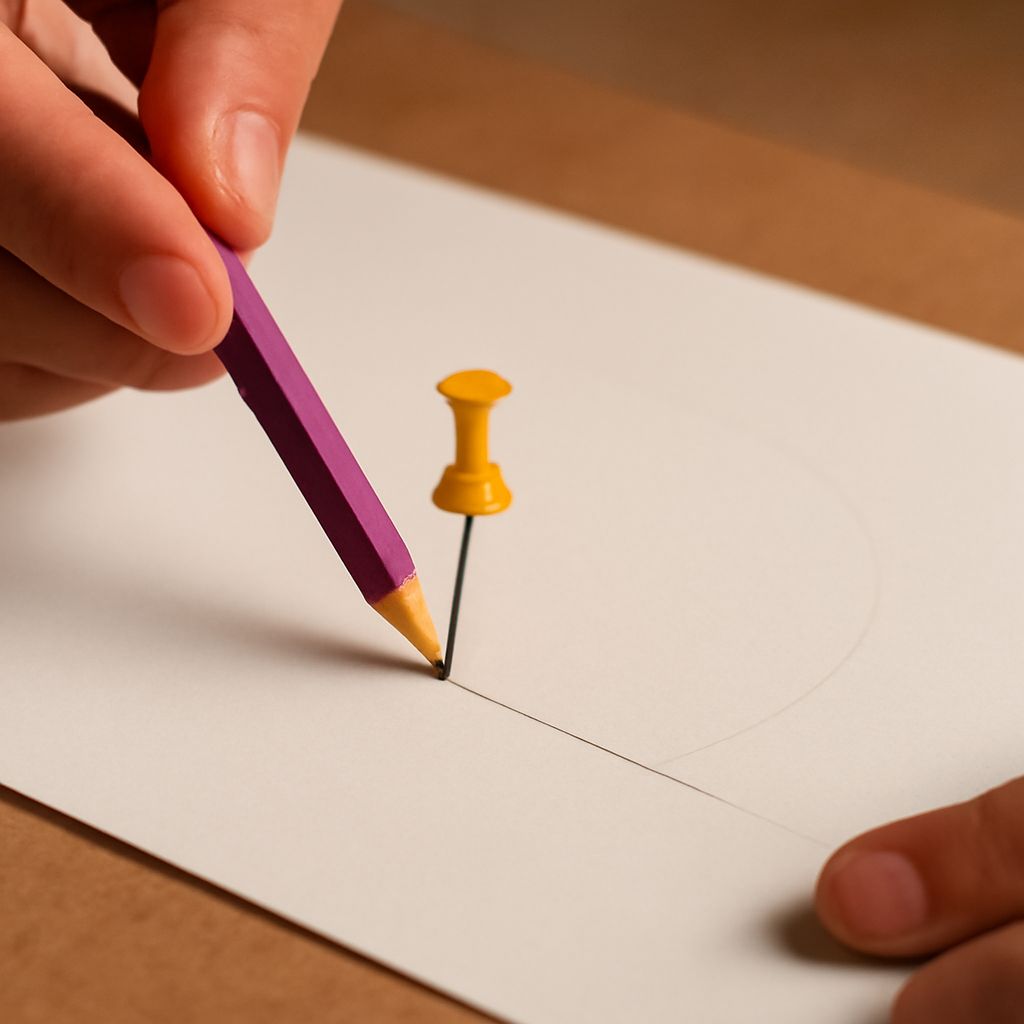
To draw a perfect circle, start by lightly sketching a cross on your paper where the horizontal and vertical lines intersect at your intended circle’s center. Use this as a guide to keep your radius consistent.
- Position your pencil at the desired radius on the compass, and place the pivot point at the center of your cross.
- Rotate the compass steadily, ensuring the pivot remains fixed and the pencil maintains even pressure.
- If you’re drawing freehand, practice the motion with your wrist or elbow rather than your fingers, enhancing control over the circular movement.
By following these steps, you can draw a perfect circle more effectively, leveraging the combination of technique and tools.
Common Mistakes in Circle Drawing
One of the most common mistakes when attempting to draw a perfect circle is relying too heavily on your fingers for control, which can lead to uneven pressure and inconsistent lines. Instead, focus on using your whole arm to guide the pencil in a smooth, circular motion.
Another error is not maintaining a steady hand, resulting in wobbly lines. Practicing the circle test by drawing multiple circles consecutively can help improve your steadiness and control, leading to more consistent results.
Circle Test Techniques to Improve Accuracy
The circle test is a valuable exercise for honing your circle-drawing skills. Begin by drawing a series of concentric circles without lifting your pencil, aiming to keep them equidistant and symmetrical. This exercise enhances muscle memory and control, essential for mastering how to make a perfect circle.
Additionally, try blind contour drawing, where you draw a circle without looking at the paper. This technique sharpens your spatial awareness and encourages you to trust your instincts and muscle memory.
Advanced Tips for How to Make a Perfect Circle
As you advance, consider experimenting with different techniques and materials. For instance, using different grip styles on your pencil can influence your control and precision. Holding your pencil closer to the tip can offer more control, while a looser grip can facilitate smoother, freer motion.
Additionally, practice drawing circles in various sizes and orientations, incorporating them into complex compositions. This challenges your ability to maintain symmetry and proportion, ultimately improving your skill in drawing circles within any context.
Mastering the art of circle drawing takes practice and patience. As you integrate these techniques and tools into your routine, you’ll find your circles becoming more precise and your confidence as an artist growing. Whether through freehand practice or using digital tools, the journey to draw a perfect circle is one of continuous learning and improvement.