Have you ever wondered what is illustration and how it plays a pivotal role in both art and everyday design? From the sketches that shape architectural marvels to the vibrant hues of watercolor landscapes, illustration invites creativity and precision in equal measure. As you explore the realms of artistic expression, understanding the nuances of illustration and its varied forms becomes essential. Dive deeper into this fascinating world to unravel the intricacies of what is a technical sketch and what is technical drawing while also discovering delightful watercolor techniques that enhance artistic endeavors.
Understanding What is Illustration
Definition of Illustration
Illustration is a visual representation that accompanies, explains, or decorates a text. You often encounter illustrations in books, magazines, and advertisements, where they help convey messages or complement narratives. As a bridge between visual and textual communication, illustrations capture and sustain the viewer’s attention effectively.
Importance in Art and Design
In the realm of art and design, illustrations serve not only as complements to texts but also as standalone artworks. They are instrumental in shaping branding, advertising, and digital media by conveying messages succinctly and aesthetically. Understanding what is illustration enables you to appreciate its impact across various platforms, from printed materials to digital screens.
Exploring What is a Technical Sketch
Characteristics of Technical Sketches
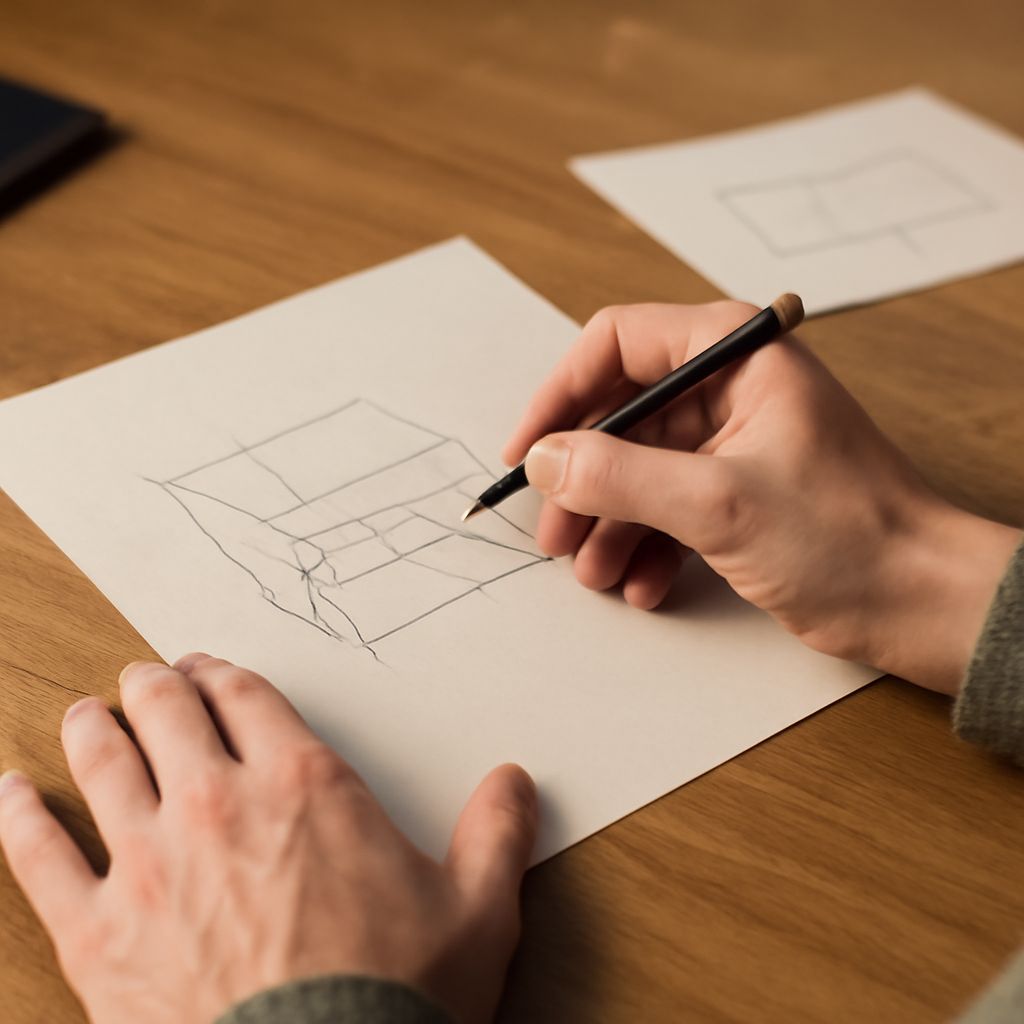
Technical sketches are detailed, precise drawings used to convey information about objects and systems. They typically include measurements, scales, and annotations that provide clarity and guidance. A technical sketch serves as a preliminary stage for complex technical drawings, helping you visualize and refine your ideas with accuracy.
Applications in Various Fields
Technical sketches play a crucial role in fields such as architecture, engineering, and product design. You rely on these sketches to brainstorm and communicate concepts effectively with colleagues and clients. They are essential tools for translating abstract ideas into tangible blueprints that guide the creation of structures, machinery, and products.
Difference Between Technical Sketch and Drawing
While the terms ‘technical sketch’ and ‘drawing’ might seem interchangeable, they hold distinct meanings. A technical sketch is often less detailed but emphasizes functional aspects and measurements. In contrast, technical drawing involves more meticulous detail and precision, serving as a comprehensive guide for construction or manufacturing. Understanding these differences enhances your grasp of what is a technical sketch and its specific role within the broader category of drawing.
What is Technical Drawing?
History of Technical Drawing
Technical drawing has a rich history that spans centuries, with roots in ancient Egypt and Greece. It evolved significantly during the Renaissance, when innovations in mathematics and perspective transformed it into a sophisticated discipline. As you explore what is technical drawing, you appreciate its evolution into a cornerstone of modern engineering and design.
Tools and Techniques Used
Creating precise technical drawings requires specialized tools and techniques. From traditional instruments like compasses, protractors, and T-squares to modern computer-aided design (CAD) software, the tools you use shape the drawing process. Mastery of these tools is crucial for producing accurate and reliable technical drawings.
Modern Applications of Technical Drawing
In today’s world, technical drawing remains indispensable in industries such as construction, automotive design, and aerospace. You leverage these drawings to communicate complex specifications clearly, ensuring that projects meet exacting standards. They are fundamental in transforming conceptual designs into functional realities.
The Artistic Side: What is Watercolor?
Basics of Watercolor Painting
Watercolor painting is an artistic technique that uses water-soluble pigments to create luminous and translucent artworks. As you explore what is watercolor, you’ll find that this medium allows for spontaneity and fluidity, with colors that blend and layer beautifully on paper. Its versatility makes it a favorite among artists seeking to capture delicate details and vibrant scenes.
Techniques for Beginners
As a beginner, starting with basic watercolor techniques can help you build confidence and skill. Techniques like wet-on-wet, where you apply wet paint onto wet paper, and dry brush, where you use a dry brush to apply paint for texture, offer diverse effects. Experimenting with these methods allows you to develop a unique style and deepen your understanding of the watercolor medium.
Famous Watercolor Artists
Throughout history, many artists have excelled in using watercolor to create impactful art. From J.M.W. Turner, known for his expressive landscapes, to contemporary artists experimenting with abstract forms, these individuals demonstrate the medium’s vast potential. Studying their works can inspire you to appreciate the depth and beauty of watercolor techniques.