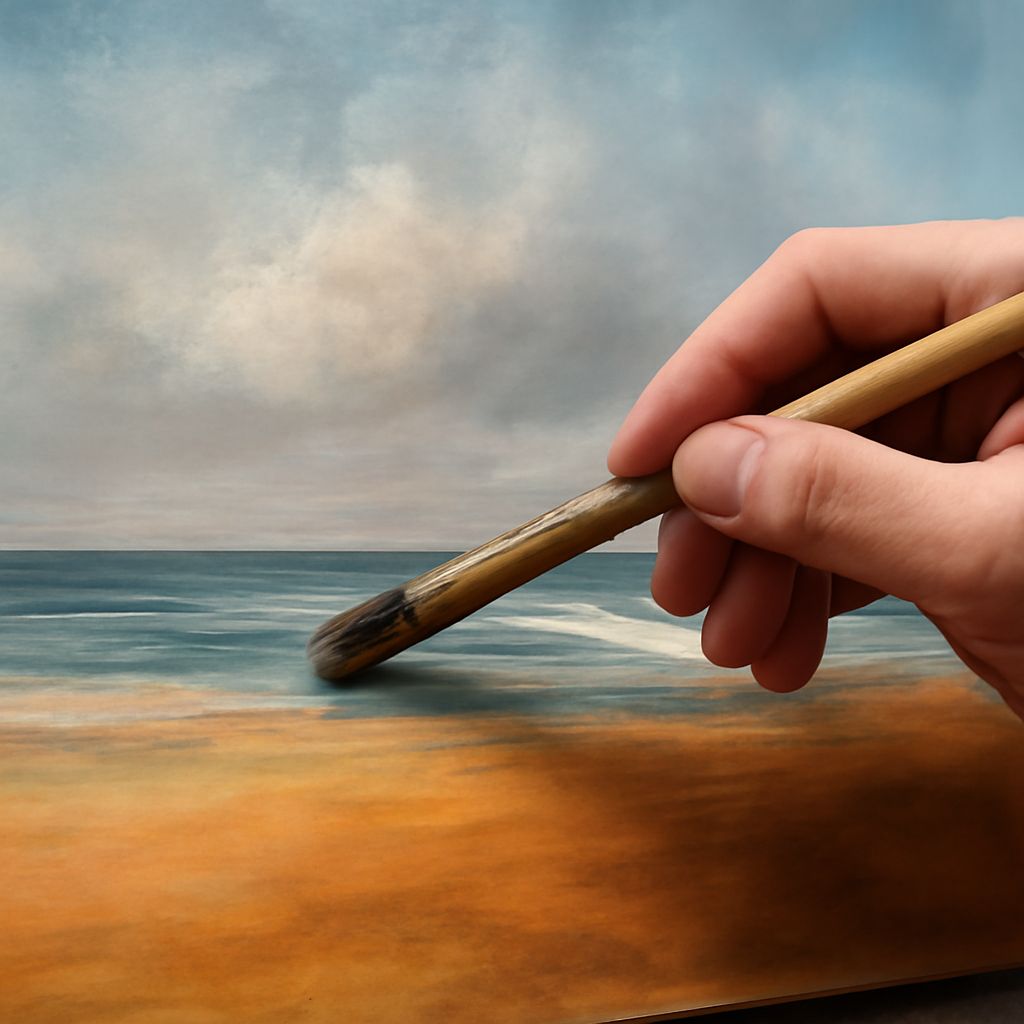
A ridge of oil paint can feel firm on top while softer paint remains beneath it. If you need your oil colors to dry more quickly, the decisions you make before the first stroke—especially the thickness of a layer and the medium you use—matter more than a hurried test at the end.
Oil paint does dry, but a surface that no longer feels tacky is only one stage in a longer process. You can plan for careful handling and a steadier working rhythm by observing the whole painting, including its thickest marks.
Does Oil Paint Dry All the Way Through?
Oil paint hardens as its oil binder reacts with oxygen and forms a connected film. Gamblin explains that oxidation continues after a layer becomes touch-dry. A skin can form at the exposed surface while material underneath is still soft, especially in a thick stroke. Touch-dry is a practical observation; it is not a measurement of the film’s complete maturation.
So does oil paint dry at a predictable rate? Not across every color and painting. Pigment, oil, layer thickness, ground, medium, and room conditions all affect the result. Winsor & Newton’s color guide gives different rates for different colors within its own ranges. Treat those figures as comparisons for those products, not a deadline for a finished painting.
Plan Layers for a Steadier Pace
If you are deciding how to make oil paint dry faster, start with thin, even passages where the composition allows them. A broad thin wash and a thick crest made with a palette knife expose very different amounts of paint to the air. To shorten oil paint drying time between sessions, save pronounced texture for later layers.
Use a properly prepared support intended for oil painting, following the ground manufacturer’s directions. Its absorbency can affect the appearance and behavior of the paint; a surface that draws in oil may leave some passages duller. Keep the support and ground consistent in your tests so that you can compare your colors meaningfully.
For layered work, follow the related principles of fat over lean, thick over thin, and slow-drying over fast-drying. Winsor & Newton explains these as ways to arrange layers as a painting develops. An early, slow-drying layer covered by a faster one can create stress as the layers continue to change. Plan the sequence before adding a quick-drying product to an upper layer.
Choose Color and Medium Deliberately
The way oil paints dry varies with their formulation; some colors harden sooner than others. Check the manufacturer’s information for the particular colors on your palette, then paint labeled swatches at the thicknesses you actually use. A thin swatch of umber and a thick passage of white can dry quite differently. Record the date, paint, medium, ground, and room conditions; compare the marks over several sessions.
A compatible alkyd medium can speed oil paint drying. For example, Gamblin describes Galkyd as a medium that speeds drying and changes flow. Use the selected product as its maker directs, and test its effect on gloss and brushwork as well as timing. Adding more medium than recommended is not a reliable shortcut: it also changes the character and structure of the paint layer.
If you want to make an oil painting dry sooner, choose faster-drying colors or an appropriate medium at the planning stage, rather than adding random driers to a nearly finished work. A small test panel will show whether your choice makes the oil paint dry sooner. Oils themselves differ too: Winsor & Newton notes that poppy and safflower oils generally dry more slowly than linseed oil.
Check Readiness Without Rushing
How long does it take for an oil painting to dry? There is no single useful number for every painting: a thin study and a heavily textured canvas need separate assessments. When the surface appears dry, examine the thickest passage in good light. On a separate test panel painted at the same time and thickness, gently touch a discreet area; if it remains tacky or yields easily, give the painting more time.
A dry test panel offers a clue about when the oil painting may be ready to handle, but conditions and thickness can differ across the actual work. Handle the painting by its edges or stretcher, avoid touching the painted face, and leave space around it. If you need to transport it, use a carrier that keeps all packing clear of the surface; delay packing if any area is soft.
When considering how to make oil paint dry faster without putting the work at risk, keep it in a clean, ventilated room under stable, moderate conditions. Avoid direct heat, ovens, heat guns, and enclosed hot spaces. Keep dust away without sealing the painting in an airtight container. Follow the safety instructions for any medium and dispose of oil-soaked rags as directed by the product maker and local guidance.
The time an oil painting takes to dry also affects finishing. Touch-dry does not mean ready for every varnish: consult the varnish maker’s instructions and assess the thickest areas before proceeding. Over the coming season, keep your dated test panel and notes. You will build a record of how your own oil colors dry and which choices help the next painting reach its handling stage sooner.