A stable drawing surface at the right height lets your toddler sweep a crayon across a sheet without chasing the paper around the room. An easel designed for toddlers gives those early lines a place to grow, while a kid-sized easel keeps the tools within reach and leaves you close enough to help.
Before buying, consider where the setup will stand and how easily you can put materials away.
Kid Easel Basics: Height and Stability
Look for a kid easel with a working surface your child can reach comfortably while standing or sitting, depending on the design. The center of the paper should be accessible without stretching overhead, and the lower edge should not force a standing child to bend deeply. A broad stroke should feel easy across the sheet.
An adjustable easel for toddlers can accommodate changes in height, but examine how the adjustment locks. An adult should be able to secure it firmly, with no loose hardware or accessible pinch points. Check the manufacturer’s age guidance and assembly instructions before choosing a model.
A wide base and firm joints matter when a child leans into a stroke. An easel for toddlers should stay planted as the child draws across the panel. Set it on a level floor and test it from several directions. If it rocks or slides, reposition it or choose a steadier surface; keep the area clear of furniture edges and walkways. Stay beside your child while the easel is in use, as the child moves around it.
Compare the Surfaces
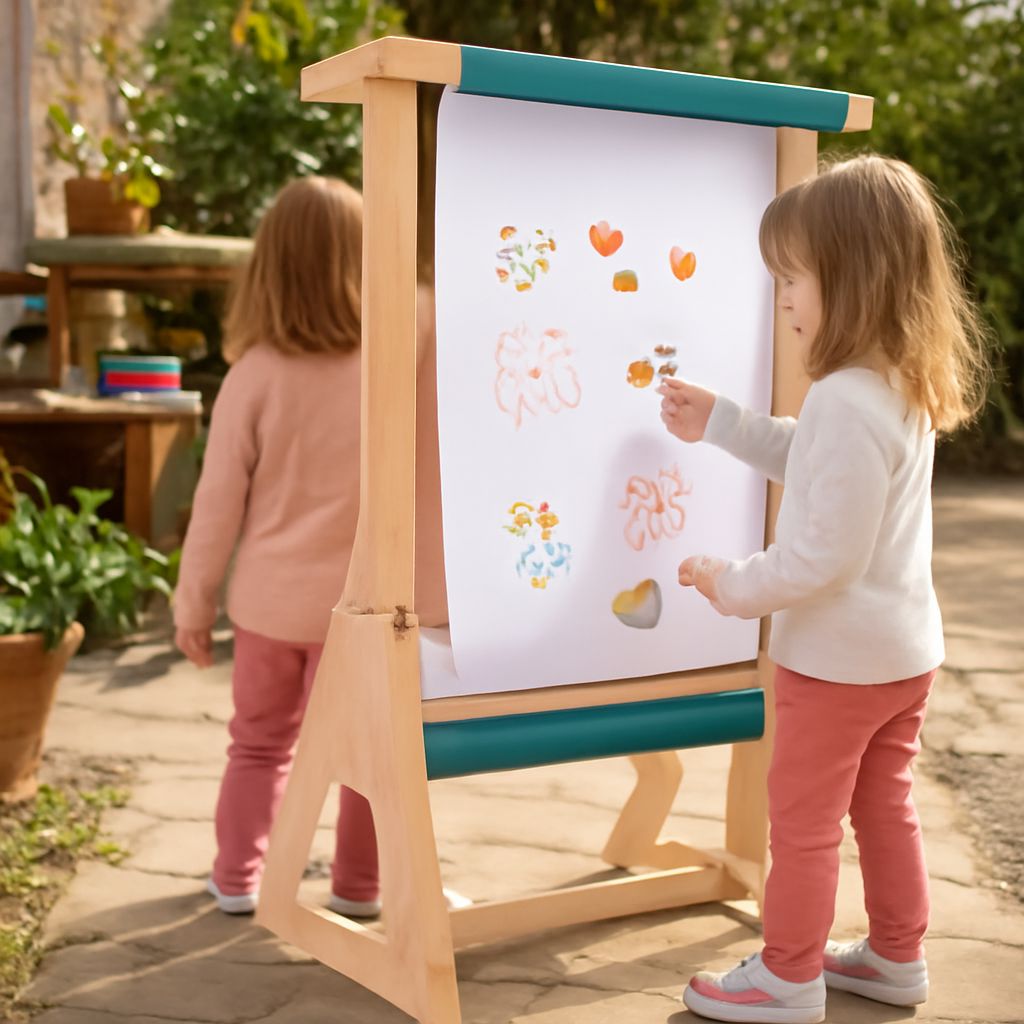
An easel for a toddler can turn a sheet of paper into a generous place to see a line appear and change direction. A roll holder can make replacing a sheet quick, while clips or a frame can hold individual sheets flat. Secure the paper yourself with age-appropriate, firmly attached clips. A sturdy kid easel should hold the sheet still under an enthusiastic crayon stroke.
A wipe-clean board offers a fresh surface without replacing paper, but the accompanying markers must be appropriate for the child’s age. Chalkboards create a different texture and require cleanup; consider whether your child tends to put chalk in their mouth and whether the dust suits your space. A two-sided easel for a toddler can offer both paper and a board, provided you can supervise access to each side.
A toddler’s easel with a single broad paper panel can make the choice of material clear: one sheet, one crayon, and plenty of room for a long looping line. Add another medium when your child is ready to explore it with you.
Materials, Storage, and Everyday Handling
A secondhand listing might use the label “childs easel”; ask for the age guidance, dimensions, and a photo of the base before deciding whether the frame suits your child. Inspect the assembled frame for loose joints and damaged parts in person.
A wooden easel for a toddler can fit into a living space. Look for smooth edges and a finish that is intact. A plastic easel for a kid may be lighter to carry and easy to wipe, but check their joints and base with the same care. Weight alone does not tell you whether a frame will resist a push; its shape and assembly matter too.
If you need to move a kid’s easel after each session, check its folded dimensions and the way it locks open. An adult should fold and unfold it, keeping little fingers clear of hinges. A compact tabletop easel for kids takes less floor space, but it needs a stable table and a child who can reach the surface safely from a suitable seat or standing position.
A child’s easel with a shallow tray can hold a few large crayons or a small paint cup where you can see them. Keep spare supplies in a separate container out of reach between sessions. A kid-friendly easel with a tray that catches water or paint is convenient to wipe; a crowded tray can make it harder for a small hand to find a color.
Set Out a Few Materials
For a first session, offer a large sheet and a chunky crayon intended for your child’s age. A short, broad-handled brush and a little washable, water-based paint can offer a different kind of mark when you are ready to manage the cup and cleanup. Use products intended for young children and follow their labels. The American Academy of Pediatrics’ guidance on art supplies recommends looking for ASTM D4236 labeling and the ACMI Approved Product seal, and supervising children as they work.
Avoid loose small parts for children under three, including detachable accessories that could be swallowed; the CPSC’s toy safety guidance addresses small-part hazards for that age group. Keep caps and extra materials with you, and stop the activity if your child starts putting supplies in their mouth. Wash hands with soap and water afterward.
An easel made for toddlers is an invitation to experiment, so let the marks lead. Describe a thick blue line or the dots gathering at the bottom of the page, then pause. A child’s drawing easel does not need a model picture or a finished result to make a satisfying session.
Before your child begins, check that the frame is locked and steady, the paper is secured at a comfortable height, and the floor is clear. Place one or two age-appropriate tools within reach, keep the rest beside you, and settle in close enough to watch and help.