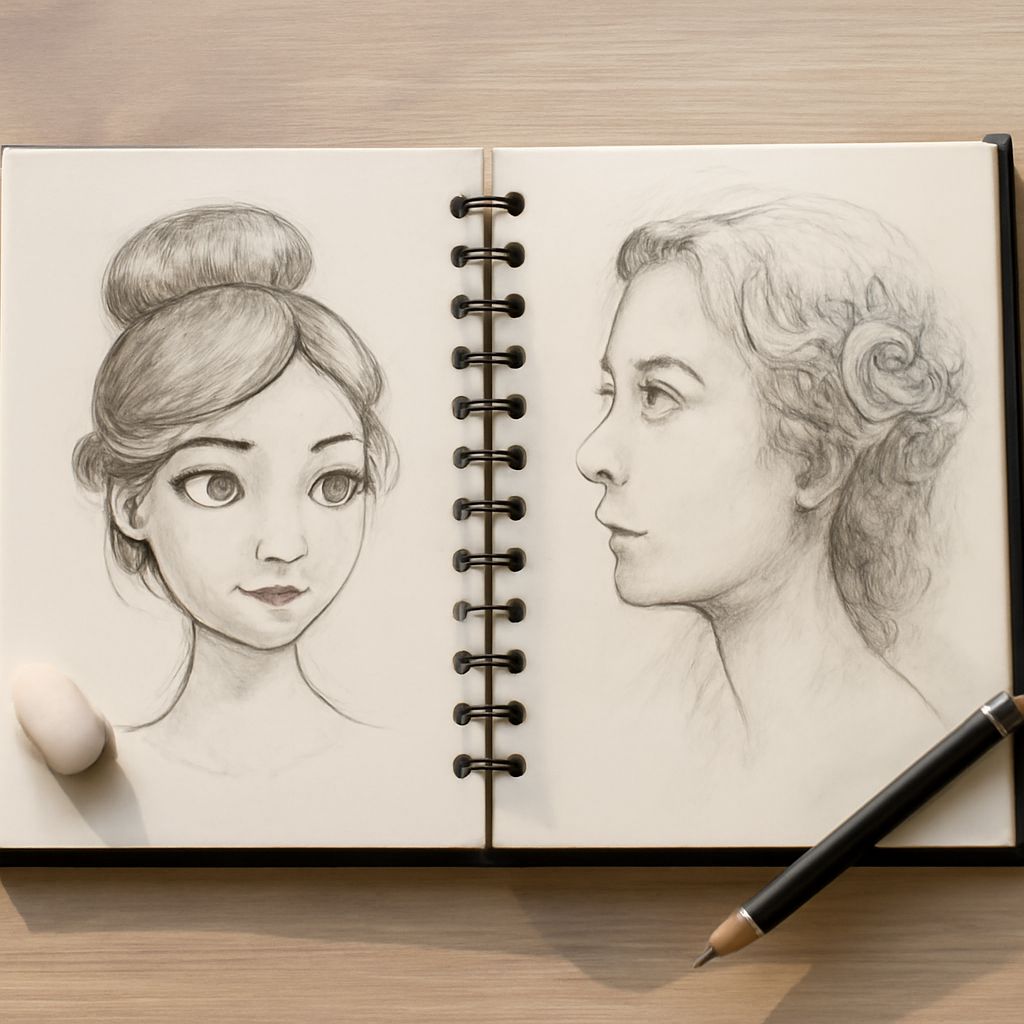
A charcoal portrait has a shadow that has grown too dark. You want to lighten the cheek without losing the marks that give it form. A kneadable eraser is a soft, shapeable tool for lifting some of that charcoal from the paper.
You can use this pliable eraser as a broad pad, a narrow edge, or a point. Its surface picks up loose drawing material, so a few light touches can gradually change a tone. The same tool can soften graphite lines and pull small highlights out of a shaded passage.
What the material does
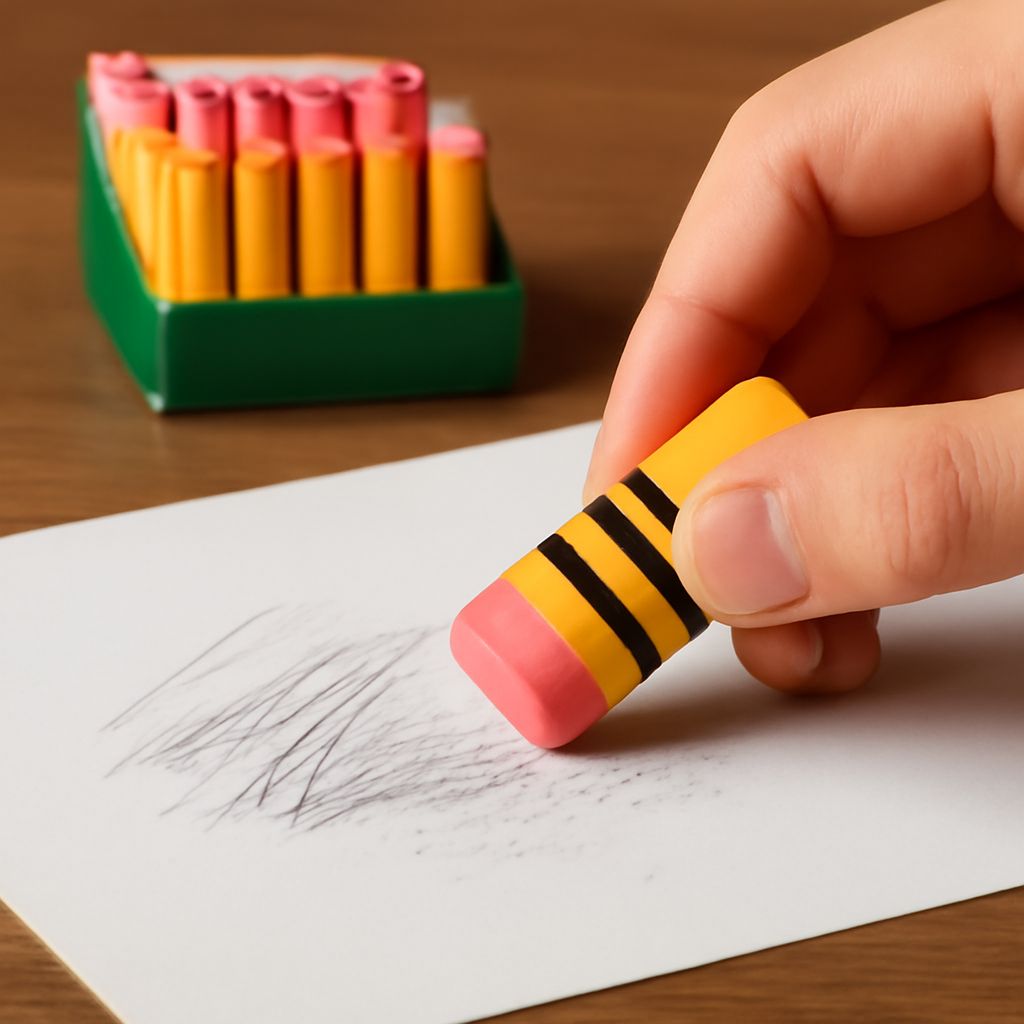
A kneaded rubber eraser is a pliable mass you can stretch, fold, and reshape. Unlike a firm block that wears down as you rub, it generally leaves few crumbs. This pliable rubber eraser collects graphite and charcoal on its surface as you work.
What is a kneaded eraser made to do in a drawing? It lets you remove material in controlled amounts. Press lightly and lift to reduce a tone; repeat if you need it lighter. The result depends on the medium, the paper, and how heavily you have drawn. Deeply pressed pencil marks can leave a groove or a trace of graphite behind.
A kneadable rubber eraser is a tool for adjusting values. A pale area against a darker one can suggest reflected light on a nose or the curve of a leaf. You can draw into the lightened area again if it needs a sharper boundary.
Kneaded eraser use begins with shaping
To use your kneaded eraser, unwrap it and stretch and fold it between clean fingers. The material should become flexible enough to hold a shape. If it feels stiff, work it a little longer rather than pressing hard against the page.
For a wide area, flatten part of it into a pad. For the edge of a shadow, pinch a thin ridge between your thumb and forefinger. For a highlight, pull out a small point. A shaped kneaded eraser is a temporary tip: it bends and blunts, so reshape it when the mark widens.
Try each shape on a scrap of the same paper before moving to the drawing. Lay down a patch of graphite or charcoal, then touch it with the pad, ridge, and point. Notice how much each contact lifts and how clearly its outline reads. Keep the point visible as it touches the paper.
Lift a tone in stages
A useful kneaded eraser use is lightening a passage that has become too dark. Flatten a clean face, place it gently on the shaded area, and lift it straight off. Work across the patch with overlapping touches, checking the change as you go. Several light contacts give you a chance to stop at a middle gray instead of removing too much at once.
When using a kneaded eraser on a portrait, for example, lighten the center of the cheek and leave the darker edge of the shadow intact. If the touches form visible patches, make smaller, lighter contacts around their edges, then redraw gently to integrate the transition. Keep the surrounding highlights clear of loose charcoal as you work.
A kneadable art eraser is a gradual lifting tool; it may not clear dense graphite completely. It is often more effective to build darks gradually and preserve the brightest paper from the start. If the mark remains darker than you want, avoid pressing until the paper surface becomes rough; adjust the drawing around it or test another approach on a scrap.
Make highlights with a point or edge
Use a kneaded eraser point to lift a glint in an eye. Lift, inspect, and repeat if needed. For a thin highlight along a strand of hair, pinch a ridge and press a short section at a time. Turn the eraser or reshape the ridge as its working edge collects dark material.
What is a kneaded eraser useful for beyond corrections? It can make light marks within a field of tone. In a charcoal study, for instance, a few small lifted shapes can describe the light striking folded fabric. Leave some transitions soft and sharpen others with a pencil: the contrast helps separate a crisp fold from a gradual curve.
Using the kneaded eraser in short touches also helps you judge the width of a highlight. Start narrow; you can widen it with another contact. If you lift too much, restore the tone with a light layer of graphite or charcoal and try again.
Refresh and store it
As you work, the surface darkens. Fold that surface inward, stretch the mass, and knead it until a cleaner face appears. The kneaded eraser is a reusable lifting surface: folding distributes collected material through it without removing that material. Shape a new edge and test it on scrap paper before returning to a pale area.
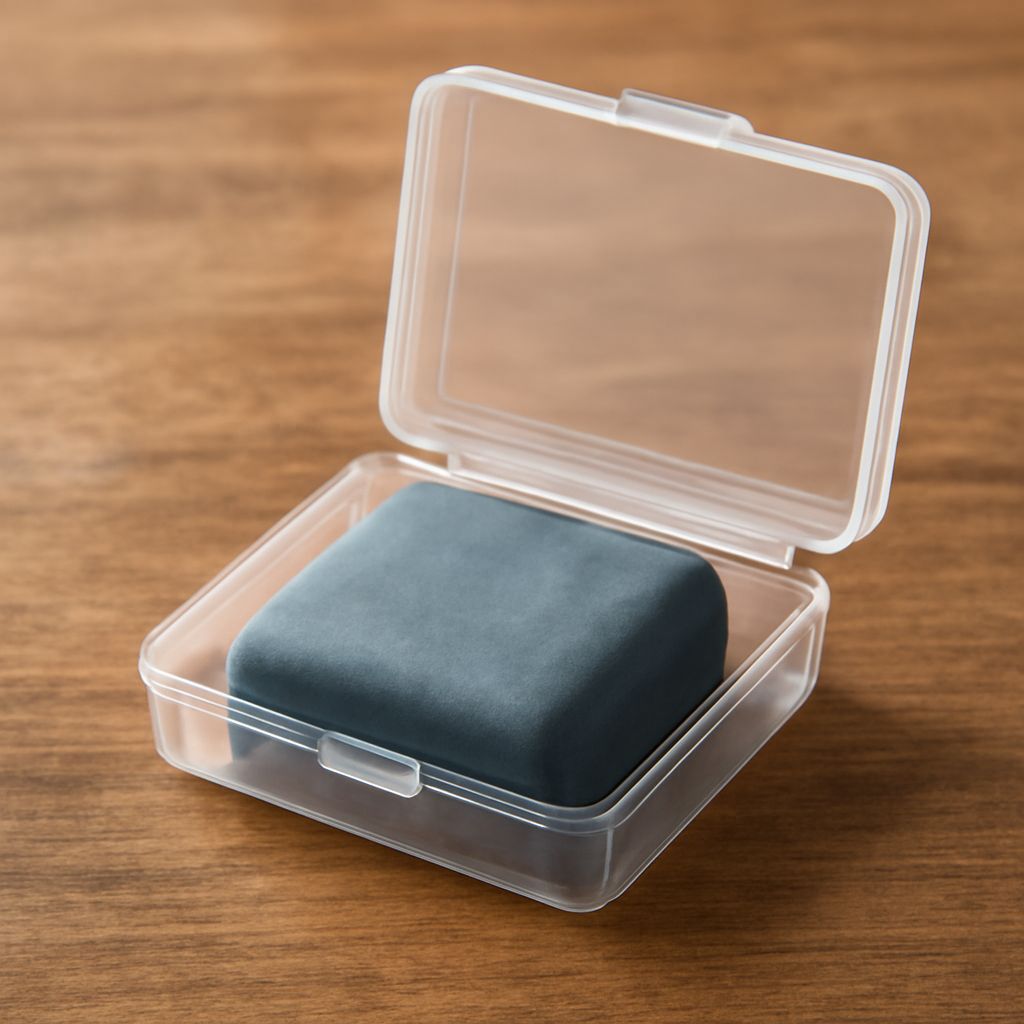
Store a kneaded rubber drawing eraser in its case or a small closed container, away from loose dust and shavings. Replace it when kneading no longer exposes a face that lifts cleanly, or when it becomes too stiff or crumbly to shape and control. Keeping a separate piece for charcoal can also help you avoid carrying dark particles into delicate graphite work.
If a kneaded eraser leaves a gray smear where you expected a lighter patch, it is transferring collected material. Stop, fold and knead it to expose a cleaner surface, then test on scrap paper. If the test still leaves a mark, replace it before returning to the drawing.