What separates a realistic drawing from a merely accurate one? Accuracy means the proportions are correct and the subject is recognizable. Realism goes further — the surface textures feel touchable, the values create convincing three-dimensional form, and the marks themselves recede behind the illusion they create. Realistic pencil drawings achieve this through patient, systematic technique that builds multiple layers of observation into a single convincing image. Realistic portrait drawing is perhaps the highest technical standard in the discipline because viewers are exquisitely attuned to facial proportions and skin texture quality. Realistic rose drawings challenge artists to handle the complex overlapping petal structure and the soft gradients of petal surfaces. Traditional rose drawing connects to centuries of botanical and decorative art tradition. And rose botanical illustration demands the precision of scientific illustration combined with the compositional sense of decorative art. All of these require the same foundational approach: systematic observation, patient value building, and specific mark-making technique for each surface type.
This guide covers the technical foundations and subject-specific approaches that produce convincing realistic pencil work.
Foundations of Realistic Pencil Drawing Technique
Consistent, patient value building is the foundation of all realistic pencil drawings. The common beginner error is working too dark too early — applying maximum pressure in early layers leaves no room for deeper darks later and forces flat, two-dimensional value relationships. Effective technique uses very light initial marks to establish values and relationships, then builds density progressively through multiple overlapping layers.
Pencil grade matters significantly: H grades (H, 2H, 4H) are harder and lighter, suitable for initial construction marks and light value passages. B grades (B, 2B, 4B, 6B) are softer and darker, suitable for deep shadows and strong value accents. A typical realistic pencil drawings session uses multiple grades rather than a single pencil, moving from harder pencils for light areas to softer pencils for deep shadows. Sharpening frequently — every few minutes in detail work — maintains the precision that realistic drawing requires.
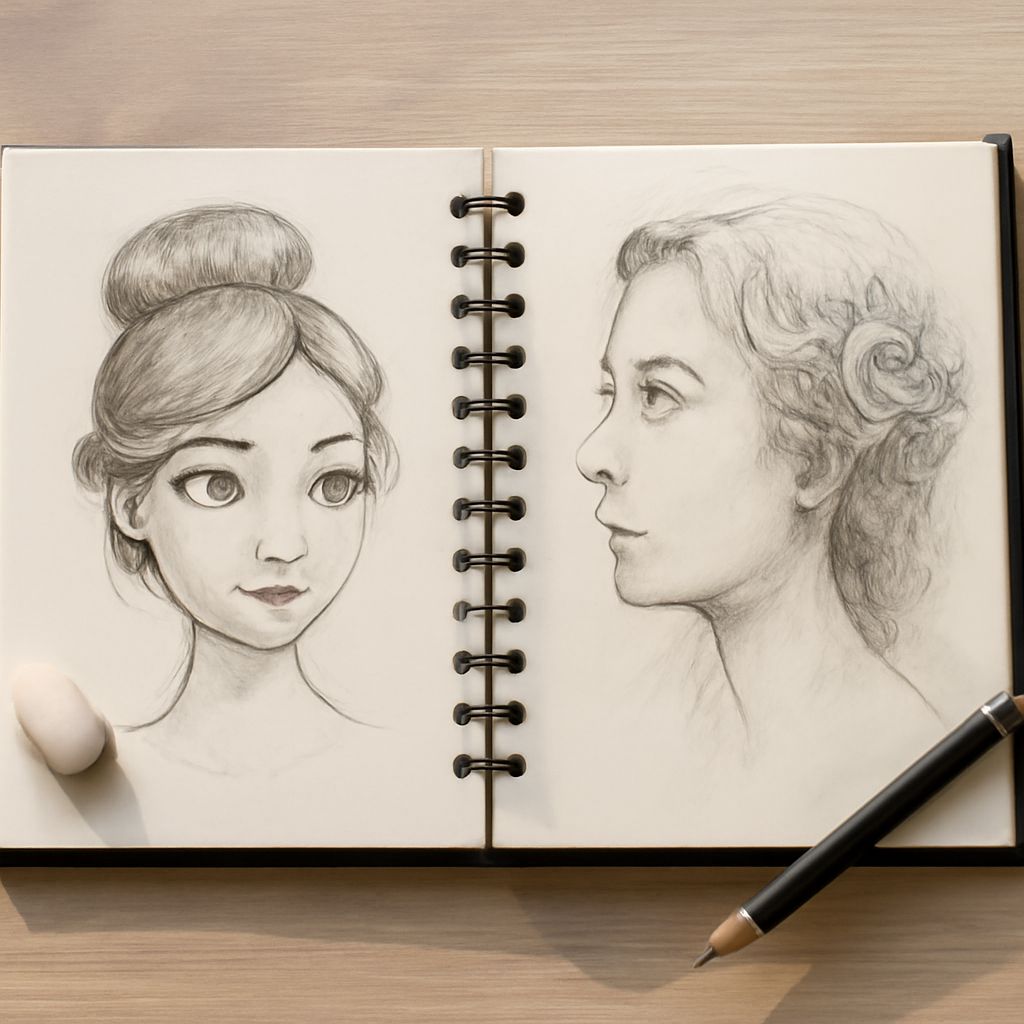
Realistic Portrait Drawing: The Face as a Landscape
Approaching realistic portrait drawing as a landscape — a set of forms in light and shadow rather than a face with features — produces better results than trying to draw “an eye” or “a nose.” The specific named features of the face are less important than the planes, values, and edges that create the three-dimensional reading. When you draw the shadow that falls beneath the brow ridge rather than “the eyelid,” your marks reflect actual observation rather than stored symbols.
The technical sequence for realistic portrait drawing: establish the major value masses (light side, shadow side, reflected light) before any feature detail. Then establish edges — some crisp, most soft. Then build surface texture and tonal variation within the value masses. The features emerge from this process rather than being drawn in isolation. This mass-to-detail approach prevents the fragmented, assembled-from-parts quality that plagues portrait drawing when features are approached individually.
Realistic Rose Drawings: Structure and Soft Gradients
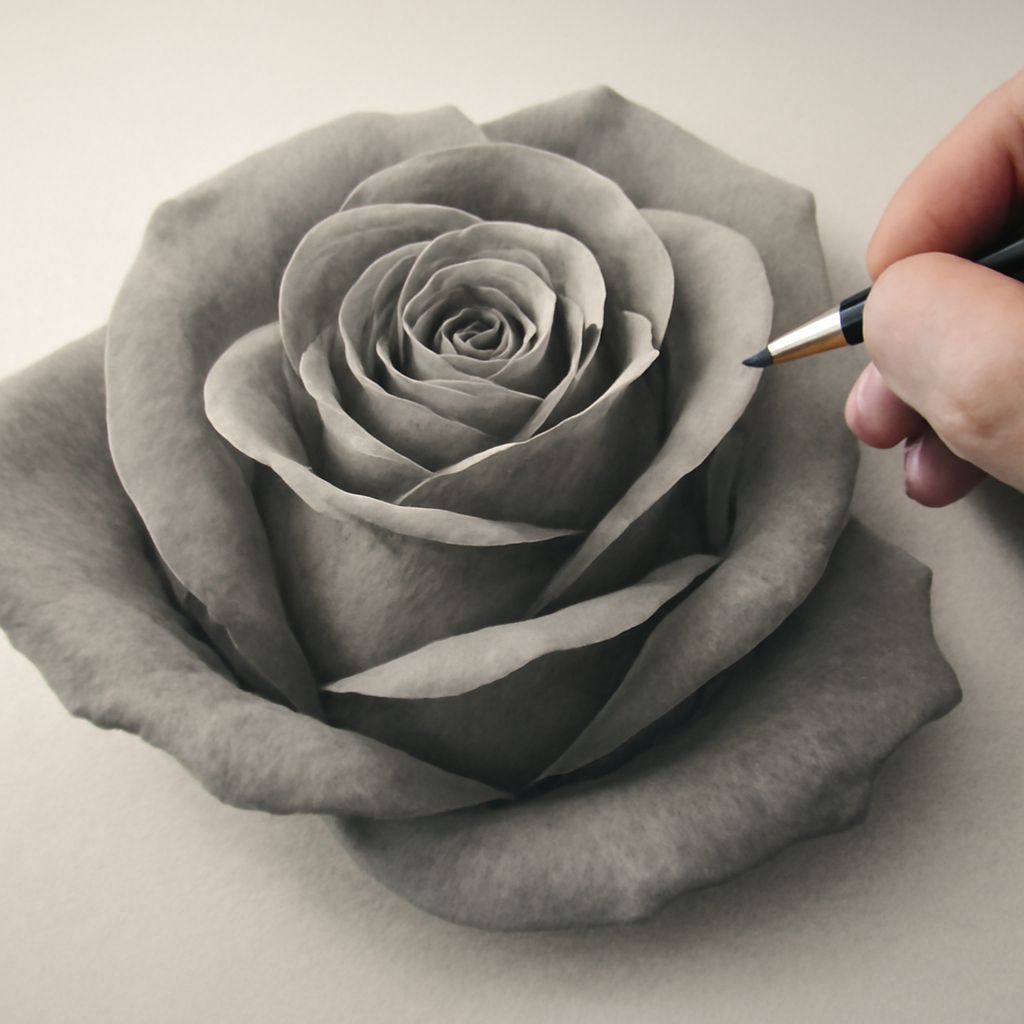
Realistic rose drawings present a structural challenge — the rose’s multi-layered petal architecture — and a rendering challenge — the soft, gradating values of each individual petal. The structure comes first: understand the center bud, the intermediate petal layers that cup around it, and the outer guard petals that frame the composition. Draw the structural relationships between layers before any value or texture.
Each petal in realistic rose drawings has a light side, a shadow side, and the specific rolled edge where the petal surface curves away and catches light again. The rolled edges are the most characteristic feature of rose petals in realistic rendering and require deliberate attention. For the soft gradients within each petal, blending stumps or tortillons used after light initial marks create smooth transitions that hard pencil lines alone cannot achieve.
Traditional Rose Drawing and Botanical Illustration
Traditional rose drawing connects to a rich history of ornamental and botanical representation that includes Redouté’s Les Roses — the most celebrated botanical illustration of roses ever produced — as well as decorative art traditions in fabric, wallpaper, and interior design. This tradition emphasizes the rose as both a specific plant with identifiable botanical features and as a symbol of beauty, love, and transience.
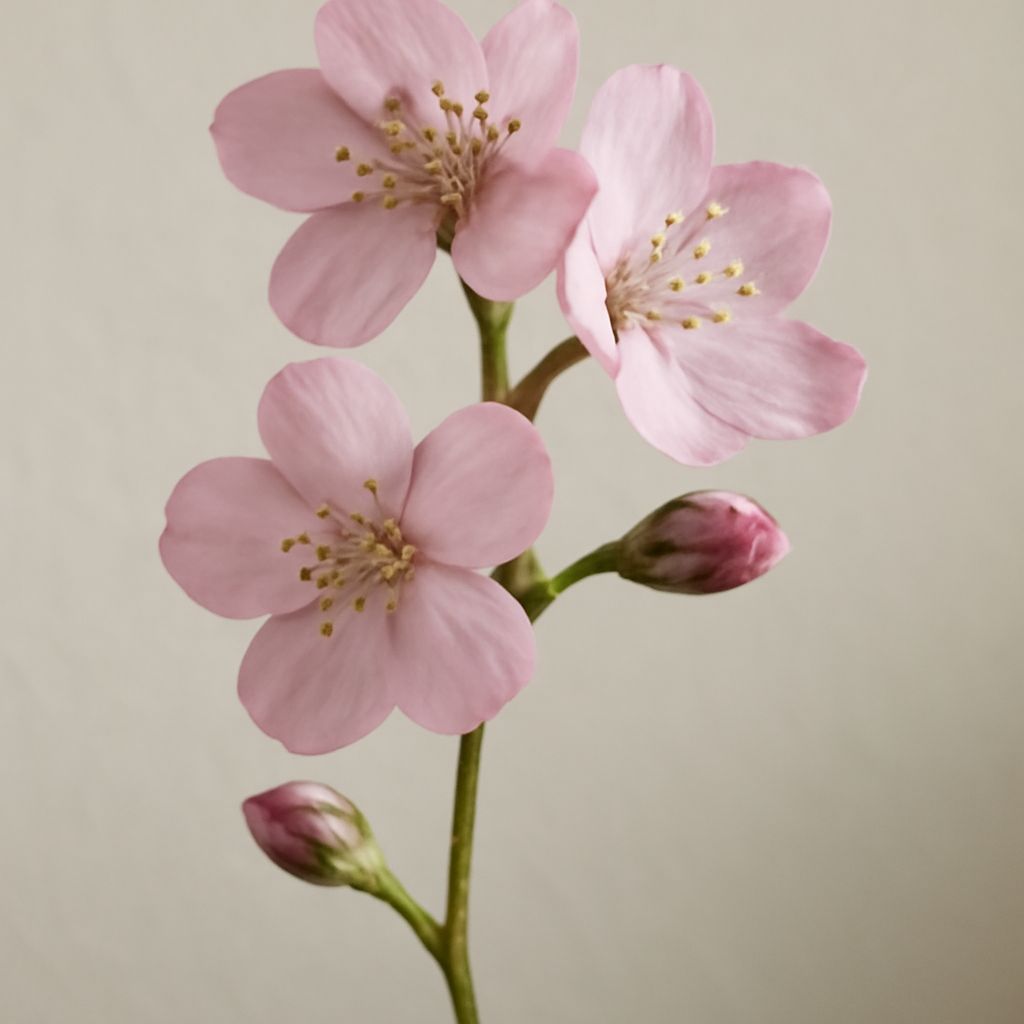
For rose botanical illustration, the specific requirements include: showing the reproductive structures (stamens and pistils) visible in open roses, correctly representing the number and shape of leaflets on the compound leaf, and depicting the characteristic thorn (technically called a prickle) arrangement on the stem. These botanical accuracy requirements make rose botanical illustration more demanding than decorative rose drawing while also producing work with greater informational value and historical authority.