Drawing Warm Ups: Head Looking Up, Face Looking Up, and Warm Up Exercises
Why do professional athletes warm up before competition but so many artists sit down and immediately expect their best work? The same principles that govern physical performance apply to drawing. Cold muscles produce poor athletic performance; a cold drawing hand and unfocused observational attention produce stiff, tentative marks and avoidable errors. Drawing warm ups before a serious session solve this problem in ten to fifteen minutes by activating the hand-eye coordination, observational attention, and mark-making confidence that you need for productive work. Head looking up drawing is one of the most valuable warm-up subjects precisely because it is technically challenging and requires genuine spatial thinking. Face looking up drawing exercises the foreshortening and proportion skills that drawing from standard angles does not address. Systematic drawing warm up exercises build skill progressively and prevent the session-start anxiety that many artists experience. And the broader category of drawing warmups includes everything from quick gesture sketches to focused line-control exercises.
This guide provides a complete framework for building warm-up routines that improve your drawing sessions immediately and your overall skill progressively.
Why Drawing Warm Ups Matter
The first five minutes of a drawing session are often the most frustrating and the most likely to produce discouraging results. Your hand has not yet settled into the muscle memory of mark-making, your observational attention is scattered, and your spatial reasoning is not yet engaged with the three-dimensional problems the drawing presents. Drawing warm ups address all three of these issues systematically before they can undermine your session.
The psychological benefit of warm-ups is also significant: completing several quick, low-stakes drawings before beginning your main work generates positive momentum. The act of making marks and seeing results — even simple results — activates creative engagement and reduces the paralysis that often precedes starting difficult work. Professional illustrators, concept artists, and fine artists almost universally report that their session quality improves when they warm up consistently.
Head Looking Up Drawing as a Warm-Up Exercise
Head looking up drawing is challenging because it forces you to draw the face in a foreshortened view where standard proportion rules do not apply directly. The chin comes forward and downward, the nose appears from below showing the nostrils, the eyes are seen from below their lids, and the forehead recedes above. Getting this perspective right requires active spatial reasoning rather than the pattern-matching that standard front view faces allow.
For head looking up drawing warm-ups: start with the overall oval of the head in the tilted position, then place the eyes, nose, and mouth according to the foreshortened perspective rather than the standard rule positions. The eyes sit lower on the face in an upward-looking head than in a neutral view. The mouth curls upward at the corners as the chin projects forward. Practicing this specific view two or three times during your warm-up builds the spatial flexibility that makes all other head angles easier.
Face Looking Up Drawing Technique
Face looking up drawing extends the head-looking-up challenge to include the full neck, jaw, and throat anatomy that becomes prominent in this view. The underside of the chin and the column of the neck dominate the lower portion of the image in ways that are rarely practiced in standard figure drawing. The Adam’s apple (laryngeal prominence) becomes a major landmark. The clavicle and top of the sternum may be visible depending on how far the head tilts back.
For effective face looking up drawing: reference photographs taken from below rather than relying on imagination for this view until you have internalized the correct spatial relationships. Even experienced figure artists use reference for unusual viewing angles because the tendency to revert to more familiar perspective conventions is strong. Once you have drawn from reference ten to fifteen times, the spatial relationships internalize and you can construct the view without reference.
Drawing Warm Up Exercises for Different Skills
A complete set of drawing warm up exercises addresses several different skill components rather than repeating the same exercise repeatedly. A varied warm-up covers more ground and prevents the false confidence of performing well at exercises you have already mastered:
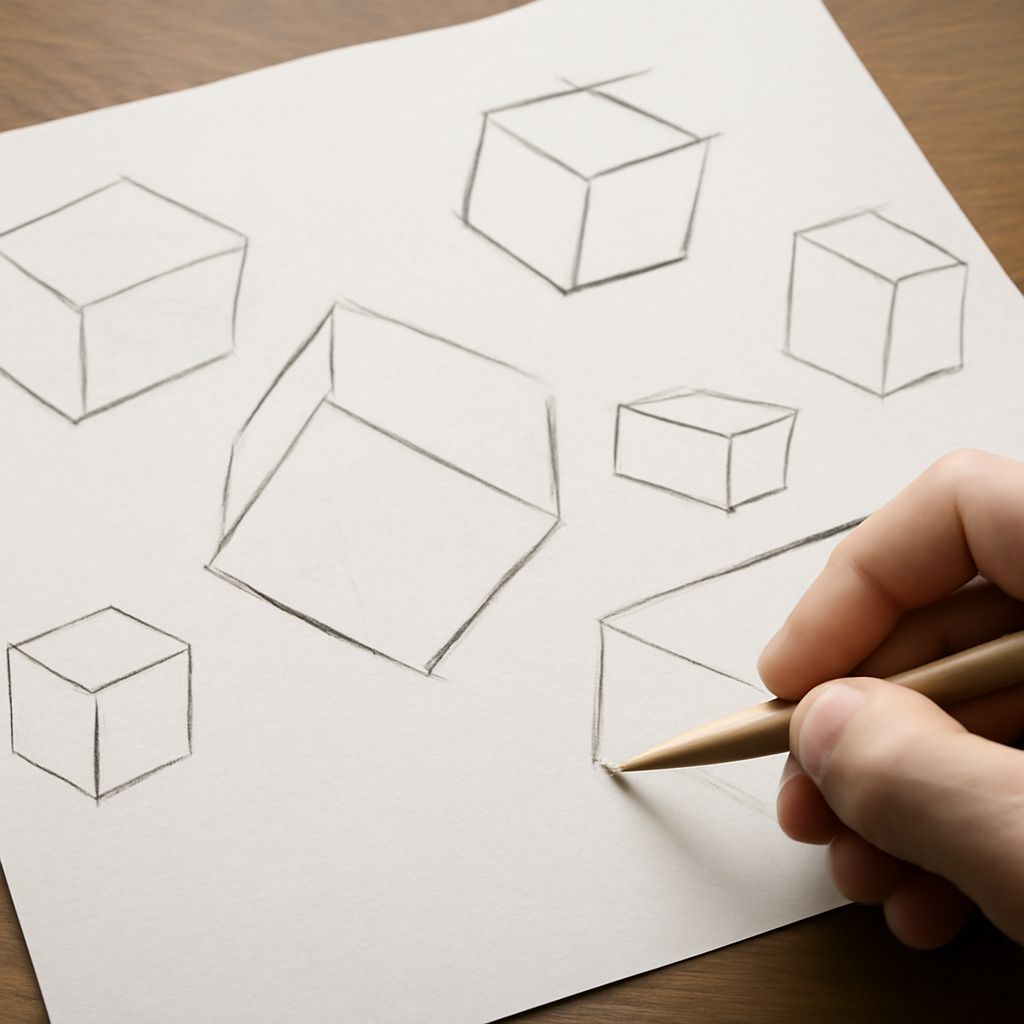
- Gesture and line quality: Five 30-second gesture drawings using continuous line, focusing on flow and decisiveness rather than accuracy.
- Spatial foreshortening: One head looking up or looking down construction exercise, working from reference.
- Value control: A two-minute value scale exercise, building from white paper through five even value steps to the darkest tone you can produce.
- Proportion observation: One five-minute hand drawing from observation, focusing on relative proportions of fingers and palm.
These drawing warm up exercises together take about fifteen minutes and address gesture, spatial reasoning, value control, and proportion — the four fundamental components of figurative drawing performance.
Building Your Drawing Warmups Routine
Consistency matters more than the specific content of your drawing warmups routine. Choose five to ten exercises that address your current weaknesses, arrange them in a sequence from loose and gestural to more controlled and observational, and do them before every serious drawing session. Over weeks, you will notice that your main session work starts better, lasts longer before fatigue sets in, and produces fewer of the frustrating early-session errors that previously disrupted your productive working time.