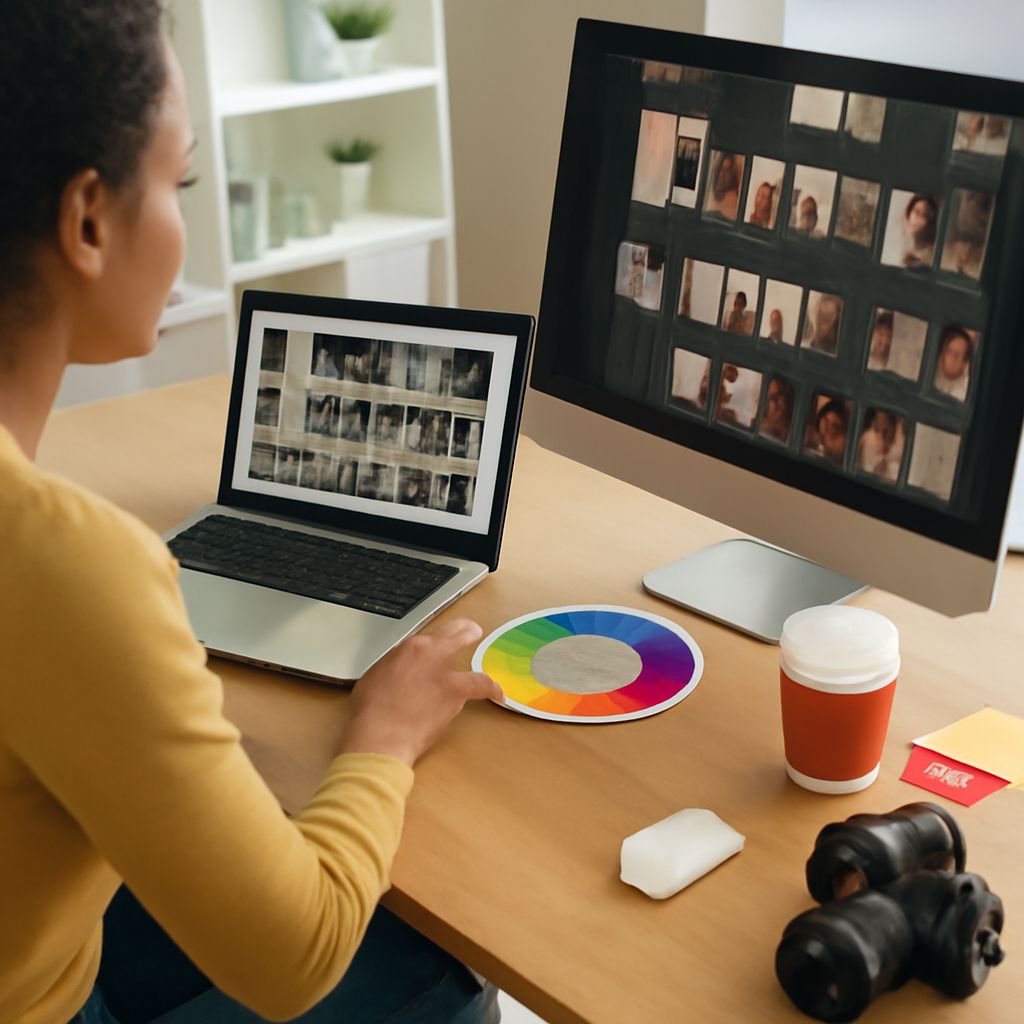
A single poster can teach you more about hierarchy than a folder of saved inspiration. Put the event name, date, and location on a page, then see whether someone can find each one quickly. A course gives you concepts to apply; a small project shows you where you need more practice.
You can study graphic design online without paying for every lesson. Choose material that explains a principle, gives you something to try, and fits the time you can set aside. Check the access and certificate terms separately before enrolling.
Free Online Graphic Design Courses to Start With
Canva’s Graphic Design Essentials is a beginner course covering design elements, typography, color, and mood boards. Its course page lists ten lessons and a certification test. Canva says an account is needed for the test and that creating one is free; its certification is digital and is not externally accredited. Check the current course and test terms when you sign in.
For a broader introduction to the design process, The Open University’s Design thinking is a free introductory course with readings and practical activities. It is about design thinking rather than graphic design alone, so pair it with a typography or layout project. You can start the material without signing up; enroll and complete the requirements through a free account to receive a statement of participation. The statement is not university credit.
These options give you different starting points: one introduces visual communication, while the other helps you frame and explore a problem. In graphic design, free courses are most useful when you apply a lesson immediately, even if the first attempt is rough.
Separate free access from a credential
A free graphic design course may offer lessons at no cost while reserving a certificate or graded work for a paid track. Read the enrollment page for the specific course and distinguish a free trial from ongoing free access. A trial can end before you complete the material.
For example, Coursera’s CalArts Fundamentals of Graphic Design describes its certificate experience as a purchase and notes that access options can vary. It focuses on design principles rather than a particular software package. Review the current enrollment screen and any financial-aid option before committing; do not assume that “enroll for free” includes a free certificate.
When comparing free online graphic design courses with certificates, identify what the credential actually confirms, whether an assessment is required, and whether a fee applies. A participation statement, a provider’s certificate, and university credit are different outcomes. Save the course page and completion record so you can describe your achievement accurately.
Plan a sequence of small projects
Start with four short stages. Spend as much time making and revising as you do watching or reading. Free graphic design courses become more useful when each topic has a visible result.
- Hierarchy: Make a one-page event poster with a title, date, place, and action. Create two versions using different type sizes and spacing. Ask which detail is seen first.
- Typography: Set the same short announcement in two typefaces. Change line length and spacing, then compare readability at phone size and on a printed sheet.
- Color: Choose a background, text color, and one accent. Test the text-background contrast and revise any combination that is difficult to read.
- Composition: Build a simple card or social graphic using one image and the text from your poster. Align elements deliberately and leave space around them.
A beginner can learn graphic design online free of charge with ordinary materials: paper and pencil for sketches, then a free digital editor for layouts. You can also learn graphic design free of charge by using type, shapes, and your own photographs. Choose a tool that lets you export an image and keep your working file.
Find feedback and record progress
Free graphic design classes do not always include individual critique. Ask a classmate, a local creative group, or a trusted colleague to review one draft. Give them a concrete task: “What is this event, and where would you go to register?” Their answer reveals whether the hierarchy works more clearly than a general request for opinions.
Save your first draft, the feedback, and a revised version. Add a short note describing the intended audience, the problem you noticed, and the change you made. Over time, those comparisons show your decisions, not just a collection of polished images. If you publish a project, use assets you created or have permission to share, and label a practice brief as such.
A free class in graphic design can give you structure, but the work between lessons builds judgment. Revisit an early project after a few weeks and see whether you can explain a better choice of type, spacing, or contrast.
This week, choose the Canva essentials course, schedule two short study sessions, and make an event poster after the first lesson. Show it to one person, write down what they noticed first, and revise it before moving to the next topic.