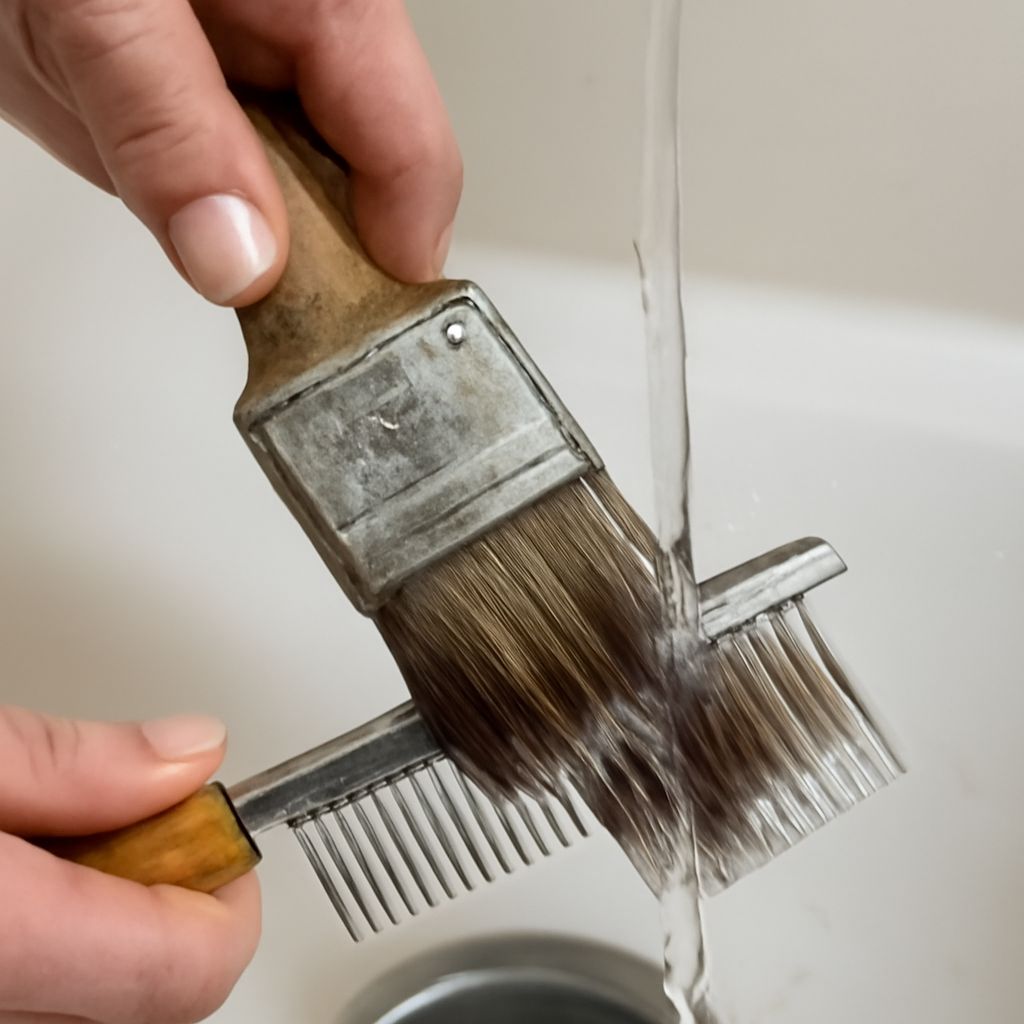
A bright drop of acrylic can become a thin, stubborn film while you are still deciding where to put your next brushstroke. Cleaning acrylic paint from a table is easiest while the drop is wet; once it dries, the surface underneath matters as much as the paint itself.
Start removing acrylic paint by looking at both the spill and the material beneath it. A glass palette can tolerate a different approach from a varnished desk or an unfinished wooden workbench. Work gently, and stop if the finish begins to change.
Acrylic Paint Removal Starts With the Wet Spill
To clean an acrylic paint spill, pick up a thick puddle with cardboard or a paper towel, working from the outside toward the center. Lift the paint instead of pushing it across the table. Use fresh sections of towel as they become saturated, then wipe the remaining film with a lightly damp cloth and a little mild soap. Follow with a clean damp cloth and dry the area.
Use only enough water to dampen the residue, particularly around seams, edges, and unfinished wood. If pigment begins to spread, blot it with a clean towel before wiping again. Liquitex notes that wet acrylic cleans up with water; that opportunity narrows as a skin forms.
Knowing how to clean up acrylic paint includes managing the waste you collect. Keep paint-heavy towels and scrapings out of the sink. Let small residues dry and consult local disposal guidance for the paint and any contaminated materials. Golden Artist Colors recommends wiping excess paint away before washing tools to reduce the solids entering wash water.
Test Before Lifting a Dry Film
Dry acrylic can cling to a surface as a flexible skin. Before removing dried acrylic paint, choose an inconspicuous spot and test the gentlest proposed method. A spare piece of the same material is even better if it has the same finish. Dampen a cloth with water and a little mild soap, place it on the test spot briefly, then lift and wipe; do not leave a puddle sitting on the surface.
Look at the test area from the side in good light. If the cloth picks up the table’s own color, the sheen turns cloudy, the finish softens, or the surface swells, stop. Dry the area and consult the surface manufacturer’s care directions. If the test leaves the finish unchanged, repeat gently on the spill, checking often. You are trying to loosen the paint without pulling up the material below it.
For acrylic paint removal on a replaceable work mat, a little discoloration may be acceptable. On a treasured desk, an unknown finish, or a porous surface, leave a stubborn mark in place and seek advice from the surface maker or a conservator rather than escalating to a stronger chemical.
Match the Method to the Surface
Glass and smooth palettes. On a sturdy glass palette away from fragile edges, a damp cloth can help loosen the film. Golden suggests wetting dried paint on glass or plastic palettes with a very wet sponge or rag. Lift a loosened edge with a plastic scraper held nearly flat, working slowly. Collect the pieces as they come away. Avoid metal blades on coated or unfamiliar glass, where scratching or damage to a coating is possible.
Plastic work surfaces. Test first: plastic can scratch, and some cleaners can cloud or soften it. After a short damp-cloth treatment, try lifting an edge with a flexible plastic card. If the film stays attached, repeat the gentle treatment rather than digging into the surface. Removing dried acrylic paint from a plastic palette may take several short passes.
Finished wood and laminate. Removing wet acrylic paint starts with blotting promptly and keeping moisture away from seams. For a dry spot, use a barely damp cloth after testing, then dry immediately. Do not pry at a film if the finish starts to lift with it. When you decide how to clean acrylic paint from a coated desktop, preserving that finish is the limit that guides the work.
Unfinished wood and porous surfaces. Wet pigment can enter pores or grain and leave color behind even after the surface is wiped. Blot rather than rub, use minimal moisture, and avoid scraping across raised grain. If a stain remains, pause before sanding: sanding changes the surface and can make a light patch larger than the original spot. For an important object, get material-specific advice first.
Make the Next Session Easier
A practical acrylic paint cleanup begins before the palette opens. Cover the area with a suitable reusable mat, keep a scrap of cardboard and a damp cloth within reach, and give wet containers a stable place away from the edge. Check under jars when you move them; a small ring is easy to miss until it dries.
When considering how to clean acrylic paint without spreading it, pick up the thick paint first and work on the remaining film second. Keep the cloth separate from the one you use to dry the surface, and inspect the spot once it has dried. That sequence makes cleaning up spilled acrylic paint less disruptive while you are working.
Now put a protective mat, a scrap of cardboard, and a clean cloth beside your usual painting spot, ready for the next drop.