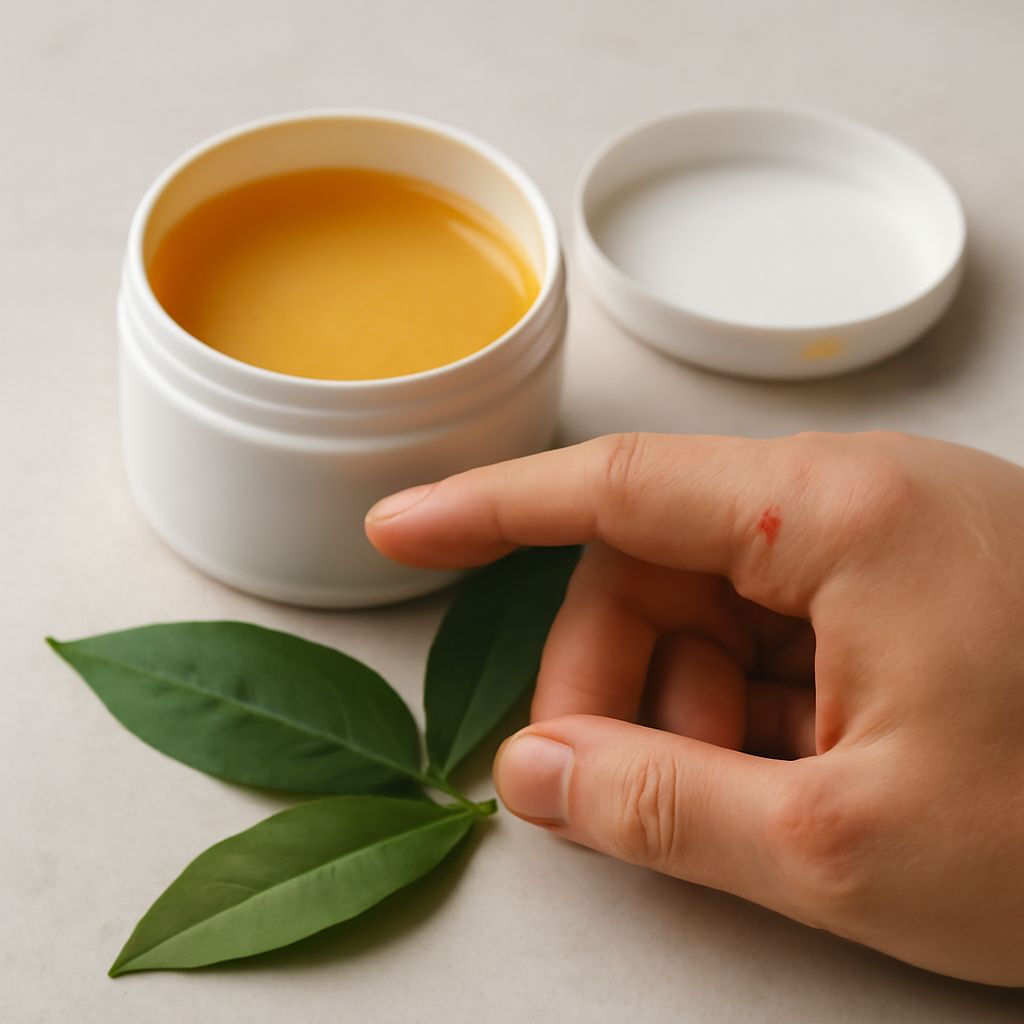
What exactly is a drawing salve, and where does the concept come from? Drawing salve is a topical preparation designed to be applied to the skin over a localized infection, foreign body, or skin complaint with the goal of bringing the affected material toward the surface. The term “drawing” refers to the idea of drawing something out. Understanding what is drawing salve in practical terms means looking at both the historical use of these preparations and the current evidence for how they function at a tissue level.
Does drawing salve work? The answer depends on what you mean by “work” and what you are applying it to. How does drawing salve work is a question with a more nuanced answer than the simple folk medicine explanation suggests. This guide covers both the traditional use of drawing salves and the more practical, evidence-informed perspective on what a drawing salve is actually doing when you apply it to your skin.
What Is Drawing Salve
Historical Origins Drawing salves have been used in folk medicine traditions across cultures for centuries. The core concept of a preparation that could draw infection, splinters, or toxins out of the skin appears in herbal medicine traditions in Europe, North America, and elsewhere. Early drawing salves used ingredients like ichthammol (a coal-tar derivative), plantain leaf, comfrey root, and various clays. These ingredients were chosen empirically, meaning they were observed to produce useful effects, not because the mechanism was understood at a biochemical level.
Modern Formulations
What is a drawing salve in a contemporary pharmacy context? The most common modern drawing salve is ichthammol ointment, available in 10% or 20% concentrations. Ichthammol has mild antiseptic and anti-inflammatory properties. It is thick, dark brown, and strongly scented. Other modern drawing salves use activated charcoal, bentonite clay, or herbal ingredients as alternatives or additions to ichthammol. Brand-name products like Prid Drawing Salve have been sold in American pharmacies for decades and contain ichthammol as the primary active ingredient.
How Does Drawing Salve Work
The Softening Mechanism How does drawing salve work at a tissue level? The primary mechanism is occlusion and softening. When you apply drawing salve and cover it with a bandage, you create a warm, moist environment over the affected area. This softens the skin, which can make it easier for a boil to come to a head on its own timeline. The salve does not literally pull infection through intact skin; skin is not permeable to bacteria or pus in that direction. What it does is create conditions that support the body’s natural process of bringing the infection to a surface point where it can drain.
Anti-Inflammatory Effects
Ichthammol, the active ingredient in most commercial drawing salve products, has documented mild anti-inflammatory and antiseptic properties. These effects help reduce the surface inflammation around a boil or infected follicle, which can reduce pain and may slightly accelerate the maturation process. The anti-inflammatory effect is relatively mild compared to medical treatments but is consistent with the observed clinical improvement that many users report.
Foreign Body Cases
Drawing salve is more mechanically plausible for splinters than for infections. When a splinter sits close to the surface, the softening effect of the salve can loosen the surrounding skin tissue enough that the splinter migrates toward the surface on its own over 12 to 24 hours. This is a genuine mechanical outcome that many users observe. Whether the same mechanism applies to infections in the same way is less clear, since infections involve living bacteria rather than inert objects.
Does Drawing Salve Work: What the Evidence Shows
Clinical Evidence
Does drawing salve work according to clinical research? The honest answer is that well-controlled clinical trials specifically on drawing salve effectiveness are limited. Ichthammol has been studied for certain dermatological conditions including folliculitis and ingrown hairs, with some evidence of benefit. The broader category of drawing salve preparations has a long history of empirical use that preceded the current standards of clinical evidence, and most of the evidence base is observational or anecdotal rather than randomized trial data.
What Users Consistently Report
User experience with drawing salve, particularly for boils and superficial infections, is consistently positive in anecdotal terms. Many users report that applying drawing salve overnight noticeably accelerates the maturation of a boil and reduces the time to natural drainage. This consistency of user report across many years and many products suggests a genuine, if modest, benefit for this specific application. What is drawing salve most useful for, based on user experience? Boils, cystic ingrown hairs, and embedded splinters appear most frequently in positive reports.
Safe Use of Drawing Salve
Application Guidelines
Apply a small amount of drawing salve directly to the affected area, cover with a clean bandage or gauze pad, and leave in place for 8 to 12 hours. Remove, clean the area, and reapply if needed. Repeat for two to four days for most applications. Keep the drawing salve on the affected area and minimize contact with surrounding healthy skin.
When Not to Use Drawing Salve
Drawing salve is not appropriate for large or deep abscesses, infections accompanied by fever, facial boils near the eyes or nose, or infections that have not responded to home care after a few days. For these situations, medical evaluation and treatment, potentially including drainage and antibiotic therapy, is the appropriate path. Drawing salve is a supportive home care option, not a treatment for serious infection.