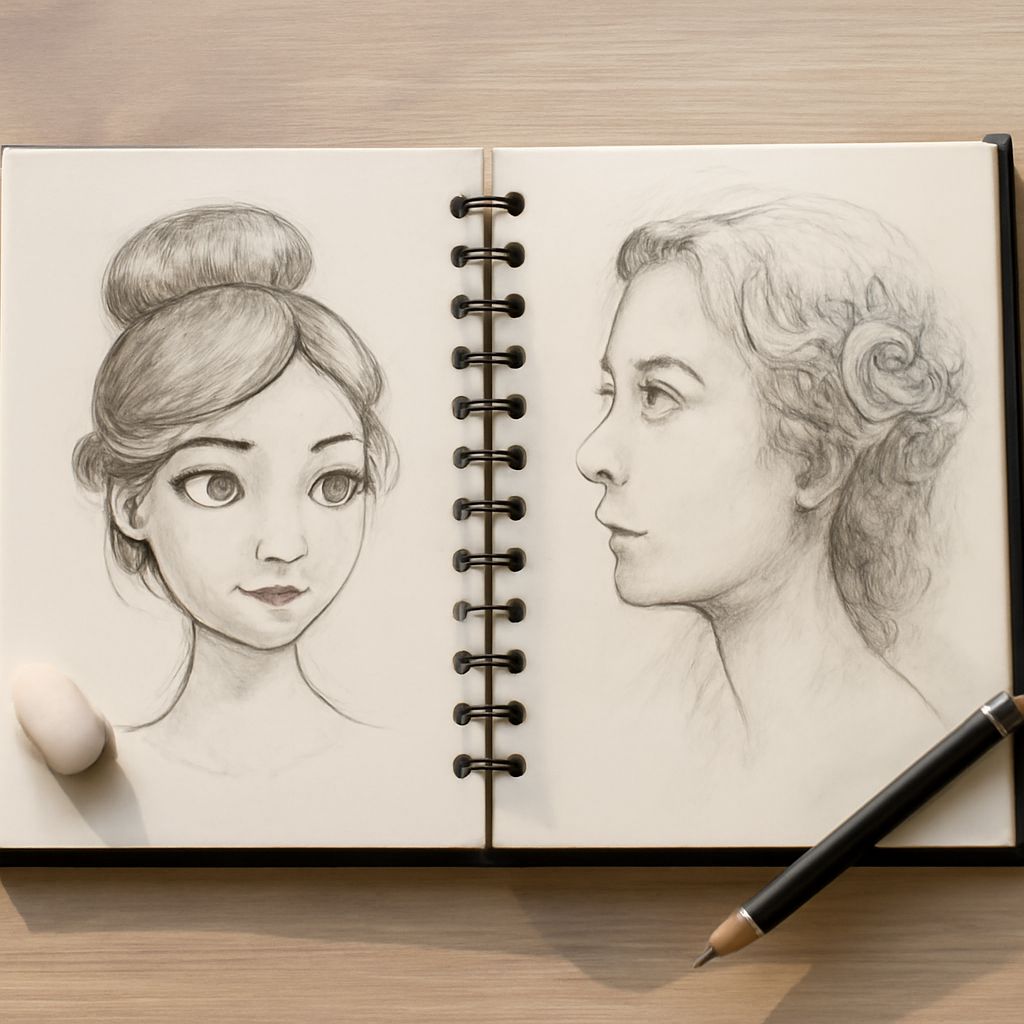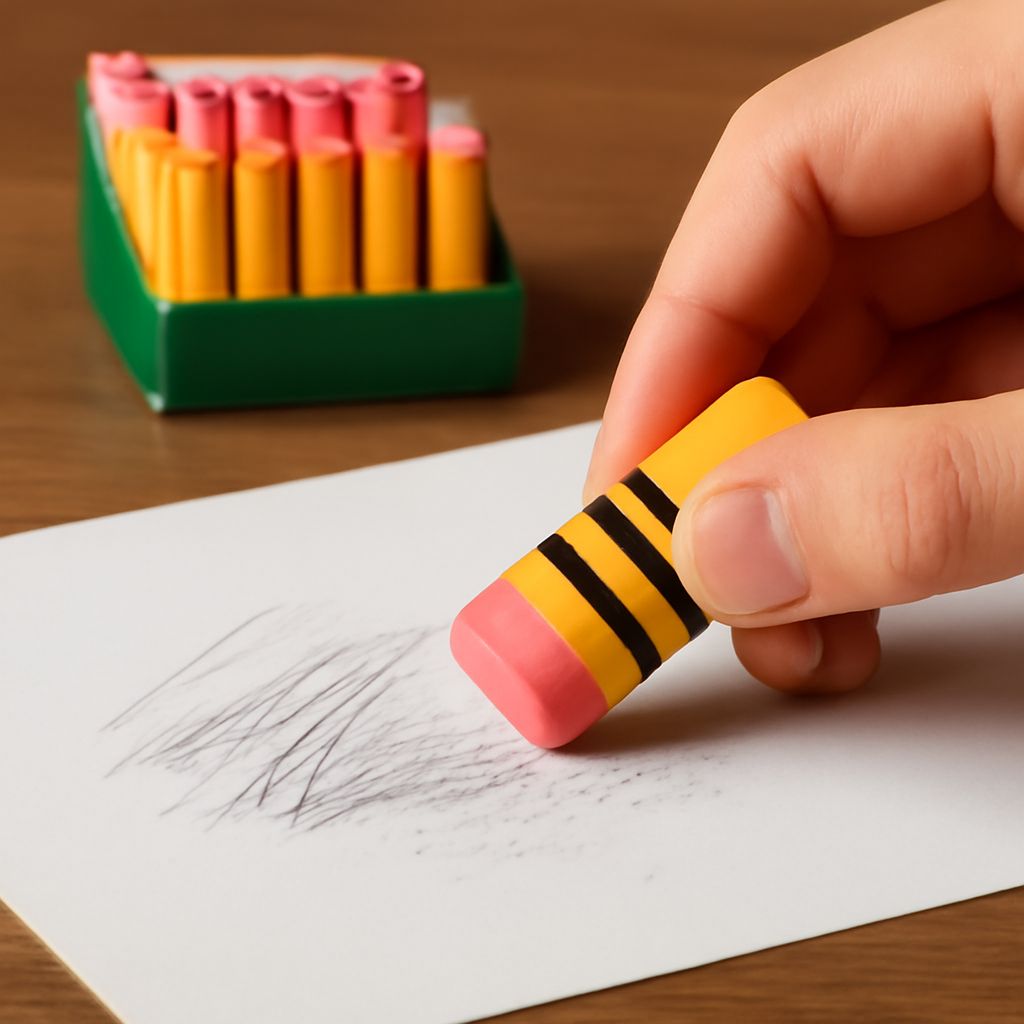
A narrow highlight in a graphite portrait can be made by lifting a little gray from the paper. The best eraser for a pencil drawing gives you control over that change in value, whether you need a soft glow or a crisp line.
Different brands of erasers offer different shapes and materials, but the surface beneath them matters just as much. A tool that clears a smooth sketchbook page may leave graphite in the hollows of textured paper. Choose by the mark you want to change, then test it on the paper you plan to use.
Start with the kind of mark you need
A kneaded eraser is a soft, pliable mass you can press into a broad pad or pull into a point. It lifts graphite gradually, making it a strong choice for lightening a shadow while keeping some of its texture. A white vinyl eraser is firmer. Its flat face and corners can remove a line more decisively, although rubbing too hard can disturb the paper.
The best eraser for soft pencil shading can be a kneaded one: press it flat onto the graphite and lift it away. For a sharp highlight, try the corner of a vinyl block or a slim eraser held like a pencil.
The best pencil eraser for a drawing session may therefore be a pair: kneaded material for gradual adjustments and a firmer tip for clean accents. The Metropolitan Museum of Art describes erasing as a way to reveal the lighter paper beneath graphite. That makes the tool part of the drawing process, not just a way to correct it.
Soft lifting and broad changes
Kneaded erasers from different manufacturers vary in firmness; choose one you can shape without it crumbling. Knead it to expose a clean face as it picks up graphite. Dab instead of dragging it across a finished passage; dragging can shift loose graphite into neighboring light areas. If the eraser becomes saturated and leaves gray marks on a test sheet, replace it.
A top pencil eraser for soft changes works best when you want a transition to stay gradual. For example, lift tone from the lit side of a cheek with several light presses. Kneaded material produces little loose debris, so it is convenient near fine details.
The best graphite pencil eraser for this gradual work should hold together as you reshape it. Its softness has a tradeoff: the point bends under pressure and may lift less graphite than a firm block. On heavily worked areas, graphite can remain in the paper’s texture. Plan the brightest whites early if you need them to remain exceptionally clean.
Crisp edges and small highlights
A white vinyl block has a flat surface for clearing a larger shape and corners for a narrower mark. Brands of drawing erasers sell blocks in different sizes: large for broad corrections, small for tight spaces. Drawing eraser brands also vary in grip, which affects control over a narrow mark. Use short, gentle strokes, checking the result between passes. Turn the block to a clean edge if it begins to leave gray streaks. Brush loose crumbs away with a clean, soft brush instead of sweeping them through the drawing with your hand.
For a catchlight in an eye or a strand of hair, a slim precision eraser gives your fingers a closer grip on the tip. Pull a short stroke through the graphite, then assess its width. A highlight can be widened easily; restoring its dark edge requires redrawing.
The best eraser for pencil marks depends on the surrounding tone. A firm edge can cut a bright, defined line, while a pointed kneaded eraser can make a quieter highlight that blends into a midtone. The best precision eraser for pencil details should give you a clear view of its contact with the page. On thin or soft paper, use a lighter touch and stop if the surface starts to roughen.
Eraser brands and the paper test
Comparing eraser brands is more useful when you hold the other variables steady. Take a scrap of the same paper, make several patches with the pencils and pressure you use in the drawing, and leave room between them. Include a light construction line, a midtone and a dark, layered patch.
Try each candidate on a separate patch. Make one gentle pass, then another, and look for four things: how much graphite lifts, whether the edge stays where you intended, whether the paper becomes shiny or fuzzy, and how much residue remains. Draw over the erased area afterward. If the new line looks uneven, the surface may have changed.
The best pencil eraser produces the degree of lifting you need while leaving a surface you can continue to work on. Eraser brands can differ in firmness even within the same material category, so compare the marks each leaves on your paper.
Match the tool to the next stroke
For a large area that only needs to become lighter, the best eraser for a graphite pencil drawing may be a pliable one: dab with a flattened face. For a bright line or a small correction, choose a firm corner or precision tip. If your drawing needs both, keep both within reach.
The best pencil drawing eraser is the one you can control at the scale of the mark. Test it against your paper and your darkest layers; then choose the tool that leaves the intended value and a workable surface. Among the brands of art erasers you consider, favor the one whose actual mark suits the drawing in front of you.