What is it about Rene Magritte’s “The Son of Man” that continues to capture our imagination? Is it the enigmatic presence of the bowler hat or the mysterious apple obscuring the subject’s face? As a hallmark of surrealism, the painting invites endless interpretations and inspires artists worldwide, particularly those working in watercolor art. In exploring the “bowler hat painting,” we delve into a world where reality and imagination blur, offering a profound commentary on human perception.
Introduction to The Son of Man Painting
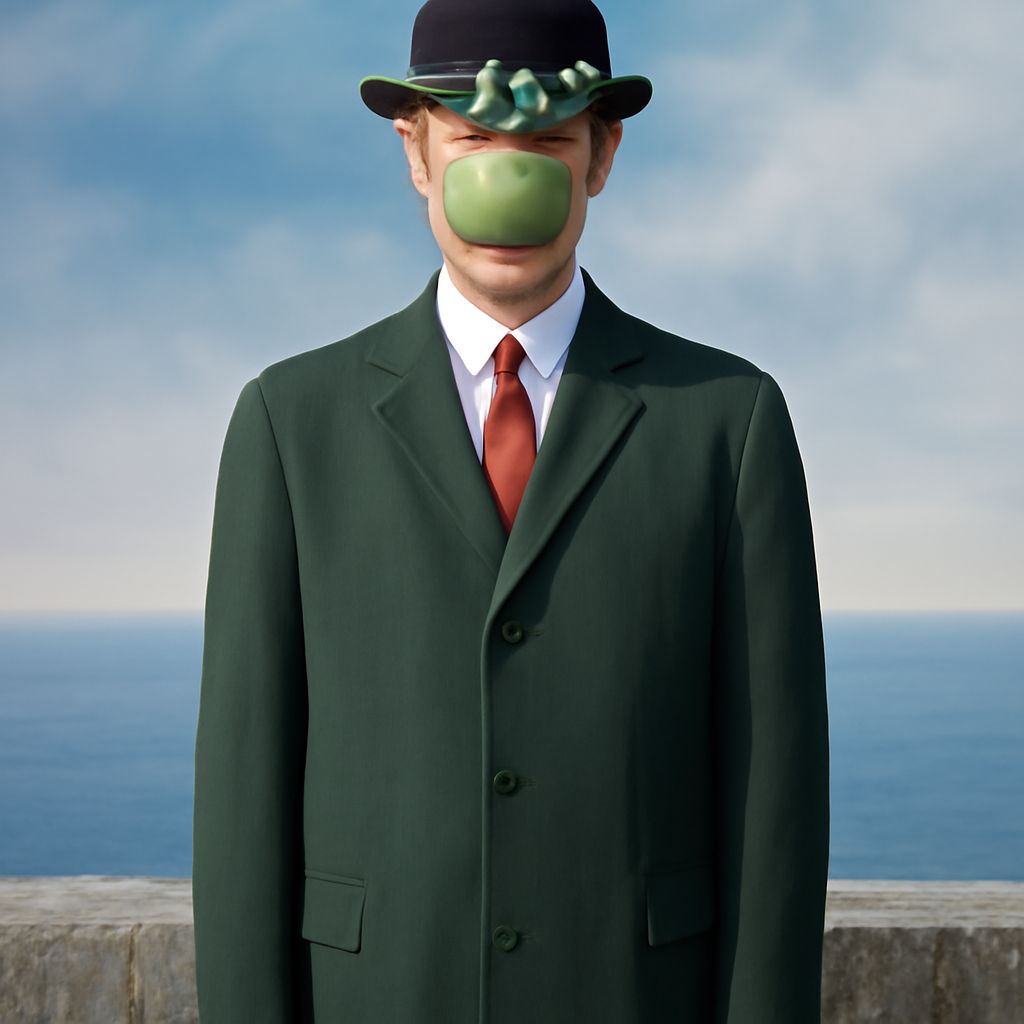
“The Son of Man” stands as an iconic piece in art history. Created by Rene Magritte in 1964, it presents a man in a suit and bowler hat, with a green apple hovering in front of his face. The scene is set against a cloudy sky, further adding to its mysterious aura. This artwork exemplifies Magritte’s ability to juxtapose ordinary objects in unusual contexts, challenging viewers to question what they see. The painting has not only influenced surrealism but also impacted modern art in unexpected ways.
Rene Magritte and His Artistic Vision
Rene Magritte, a Belgian surrealist, was renowned for his thought-provoking images that force viewers to reconsider their perceptions of reality. He often used mundane objects to create compositions that defied logic. This unique vision is embodied in “The Son of Man,” where familiar elements are presented with an extraordinary twist. Magritte’s art encourages you to look beyond the surface, compelling you to explore deeper meanings. His work remains influential, inspiring countless artists to embrace creativity without boundaries.
Exploring the Symbols in the Bowler Hat Painting
The bowler hat painting is rich with symbolism. The apple, a recurring motif in Magritte’s work, could represent knowledge, temptation, or the hidden aspects of identity. The bowler hat itself is emblematic of the bourgeoisie, suggesting a critique of societal norms. Furthermore, by obscuring the man’s face, Magritte plays with the idea of anonymity and the hidden self. Each element in the painting invites different interpretations, making it a perpetual subject of analysis for art enthusiasts.
Watercolor Techniques in The Son of Man
While “The Son of Man” was not originally created in watercolor, its themes and composition have inspired many watercolor artists. In translating such a complex work into watercolor, artists often employ various techniques to capture its essence. Wet-on-wet washes can mimic the ethereal quality of the sky, while layering and glazing can bring depth to the apple and suit. Watercolor’s translucency allows artists to play with light and shadow, echoing Magritte’s ability to blend realism with surrealism.
For those exploring watercolor art inspired by the bowler hat painting, experimenting with these techniques can evoke the original’s mysterious allure. Embracing fluidity and unpredictability inherent in watercolor, you can create pieces that resonate with Magritte’s surreal vision.
The Influence of The Son of Man on Modern Art
“The Son of Man” continues to shape modern art, its influence seen in various media from painting to digital art. Its themes of identity, perception, and reality remain relevant, resonating with contemporary artists who explore similar concepts. By challenging viewers to look beyond appearances, the painting has paved the way for new artistic expressions that question the nature of reality.
In watercolor art, the painting’s influence is evident in how artists interpret and reimagine its symbols. Many incorporate Magritte’s surreal elements into their work, creating pieces that push boundaries and defy expectations. The legacy of “The Son of Man” endures, inspiring innovation and creativity across the art world.
Conclusion: The Legacy of Rene Magritte’s Work
Rene Magritte’s “The Son of Man” is more than just a painting; it is a timeless exploration of the human condition. Through its surreal imagery and symbolic depth, it challenges you to see the world with fresh eyes. As artists continue to draw inspiration from this masterpiece, its legacy grows, influencing not only watercolor art but the broader spectrum of modern creativity.
Key takeaways: “The Son of Man” invites endless interpretation, blending realism with surrealism. Its influence on modern art is profound, inspiring artists across various media, especially watercolor. Magritte’s work encourages a continuous exploration of perception and identity.