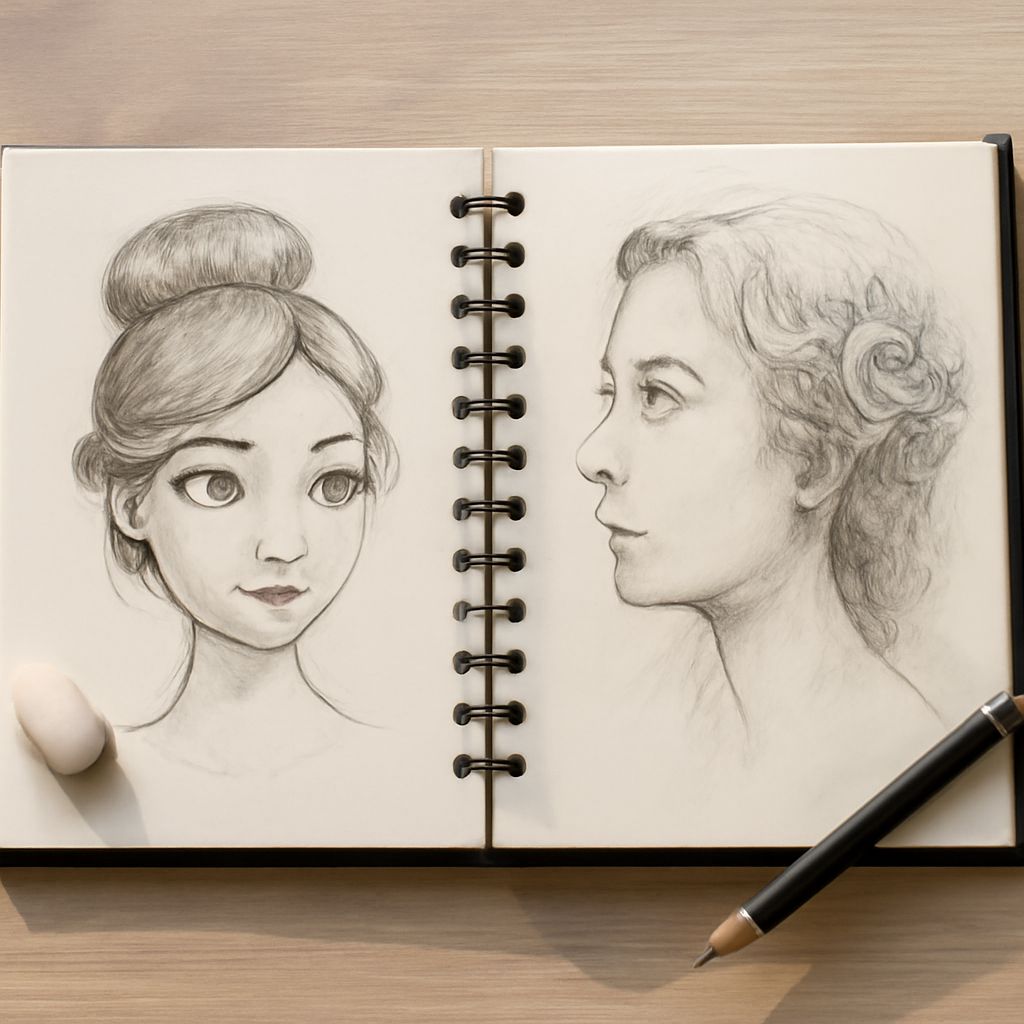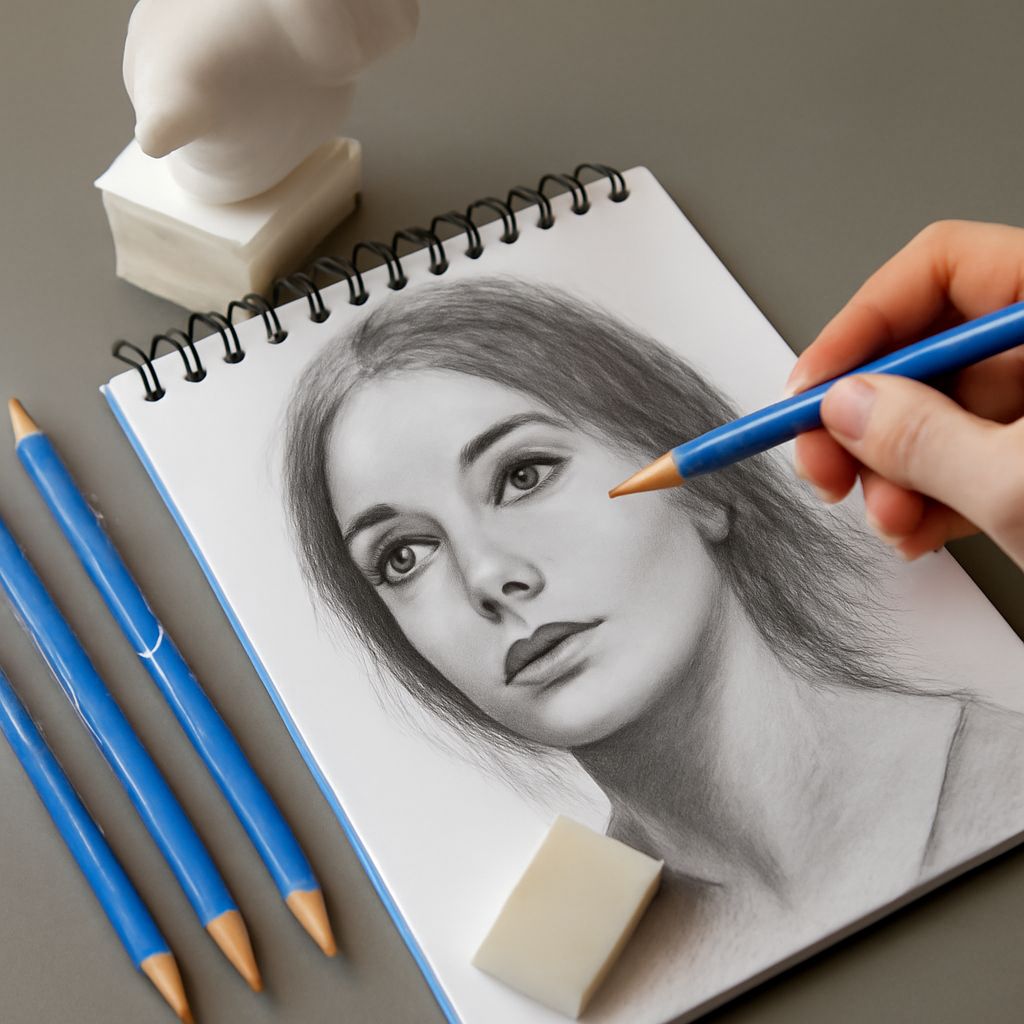
What should you actually look for in a drawing pencil set — and does the paper you use matter as much as the pencils themselves? Both questions have concrete answers. A drawing pencil set that includes the right grade range gives you the full value spectrum from delicate light construction lines to rich dark shadows. The best paper for pencil drawing holds graphite correctly and supports blending without tearing or buckling. And once your tools are in order, specific project types — from a statue of liberty pencil drawing to an ocean pencil drawing — teach different technical skills that a generic practice routine might skip. This guide covers all three areas: evaluating drawing pencil set options, choosing the best paper for pencil drawing, assembling a pencil drawing kit that works for your practice, and project ideas that build real skill.
What to Look for in a Drawing Pencil Set
Grade Range A useful drawing pencil set covers at minimum a range from 2H to 6B. The H grades (hard) deposit less graphite, stay sharp longer, and produce lighter marks — useful for construction lines, initial sketching, and fine detail work. The B grades (soft) deposit more graphite, produce darker, richer marks, and wear down faster. A set spanning this range gives you full control over the value scale from the lightest tracings to the darkest shadow areas. Sets that only include HB and a few adjacent grades force you to achieve the full value range through pressure variation alone, which is both limiting and inconsistent.
Brand Consistency
Within a single drawing pencil set, all grades should come from the same manufacturer. Mixing brands produces inconsistent results because each brand has a slightly different graphite formulation, which means a Faber-Castell 4B won’t behave identically to a Staedtler 4B on the same paper. This inconsistency makes it difficult to develop reliable expectations about how each grade will perform. The major reputable brands — Faber-Castell, Staedtler Mars Lumograph, Caran d’Ache, and Derwent — all produce consistent, grade-true pencil sets worth purchasing.
Best Paper for Pencil Drawing
Smooth vs. Textured Surfaces The best paper for pencil drawing depends on what you’re drawing. Smooth bristol (hot press) paper accepts fine detail, blends cleanly, and shows graphite marks with precision — the right choice for portraiture, technical illustration, and any work requiring subtle value transitions. Textured watercolor paper (cold press) creates a broken, grainy mark that suits expressive work, landscape drawing, and any subject where texture adds to the visual effect. A medium-texture drawing paper — cartridge paper in heavier weights, or a dedicated drawing paper like Canson XL — is the most versatile option for general practice.
Weight and Durability
Paper weight matters for pencil drawing because lighter papers (under 100gsm) can tear when erasing or indent under heavy pencil pressure. For any drawing that you expect to spend significant time on, use at minimum 120gsm paper, and preferably 160gsm or higher for work that will involve multiple layers, heavy shading, or frequent corrections. The best paper for pencil drawing at professional or display quality starts at 200gsm.
Assembling a Pencil Drawing Kit
A complete pencil drawing kit extends beyond the pencils themselves. The supporting tools that make a significant difference: a quality sharpener (the Dahle 133 or a precision handheld brass sharpener rather than a standard plastic pencil sharpener), a kneaded eraser for lifting graphite without damaging the paper surface, a tortillon or blending stump for smooth value transitions, and a hard plastic eraser (Staedtler Mars or Tombow MONO) for precise highlight restoration.
A sandpaper block or emery board for creating long, fine pencil points beyond what any mechanical sharpener can achieve is worth including in any serious pencil drawing kit. This allows you to create chisel-style points for broad shading or needle-fine points for detail work that a rotary sharpener can’t produce. Store your pencils horizontally in a case that prevents tip damage — broken pencil cores waste both material and sharpening time.
Project Ideas That Build Specific Skills
Statue of Liberty Pencil Drawing A statue of liberty pencil drawing is an excellent project for developing your ability to draw architectural and sculptural subjects with complex surface detail. The Statue of Liberty’s robes, torch, and crown require you to understand how fabric and metal forms catch light differently, how large-scale sculptural surfaces create broad value areas with subtle internal gradation, and how verdigris and oxidized copper tones translate into graphite value. Working from a clear reference photograph, this project builds both architectural rendering and figurative drawing skills simultaneously.
Ocean Pencil Drawing
An ocean pencil drawing teaches a completely different skill set: rendering the optical complexity of water, capturing movement in a static medium, and understanding how light interacts with reflective, transparent, and turbulent surfaces simultaneously. Ocean surface drawing requires you to observe and render the value patterns created by wave forms, the dark troughs, the bright crests, the foam texture, and the reflected sky and atmosphere. A close-up wave study is one of the most challenging and most instructive projects in the pencil drawing genre, and the technical solutions you develop for water texture transfer to other reflective surfaces in your future work.
Maintaining Your Drawing Pencil Set
Pencils degrade if stored poorly. Standing pencils tip-down in a cup allows the weight of the pencil to press against the graphite core at the tip, which creates internal fractures that cause breakage during sharpening. Store your drawing pencil set horizontally in a case, or in a cup with tips up. Dropped pencils often develop internal fractures even when the exterior looks undamaged — test a pencil by sharpening it; if the tip breaks repeatedly at the same grade, the core is fractured. Repair by rolling the damaged section gently in a cloth to stabilize the core, then sharpening at a very shallow angle.