What draws so many people to watercolor? Part of the answer is that the medium forgives certain kinds of imprecision while demanding patience with others. Watercolor painting ideas range from two-minute color experiments to finished paintings that take days, which means there is always something at your current skill level worth attempting. Whether you are just starting out or picking up brushes after a long break, the subject options are as wide as your imagination.
The challenge for most beginners is knowing where to start. Watercolor ideas can feel overwhelming when you look at what experienced painters produce. The key is beginning with watercolor pictures easy enough to finish in a single sitting, then building from there. Easy watercolor paintings to copy from reference are one of the fastest ways to understand how the medium behaves. Cool watercolor painting ideas for intermediate artists usually build on these same foundations but with more ambitious compositions or techniques layered on top.
Getting Started: Supplies and Setup
Paper Selection
Paper matters more in watercolor than in any other painting medium. Use at least 140 lb (300 gsm) cold-press watercolor paper. Lighter papers buckle badly when wet and make it nearly impossible to control washes. Cold-press paper has a slight texture that holds paint well and is forgiving for corrections. Hot-press paper is smoother and suited to fine detail work but is less beginner-friendly.
Brush Types
A round brush in sizes 4, 8, and 12 covers most watercolor painting ideas adequately. Round brushes hold a good belly of water and paint, taper to a fine point for detail, and handle broad washes when used flat. A flat wash brush is useful for large backgrounds. You do not need many brushes to start; a few quality rounds serve better than a large set of cheap alternatives.
Paint Quality Considerations
Student-grade watercolors are fine for practice. Artist-grade paints have higher pigment concentration and better lightfastness, meaning colors stay true rather than fading over years. A starter palette of 12 to 16 colors covers most watercolor ideas without requiring expensive commitments. Earth tones, a warm and cool version of each primary, and one neutral gray or neutral black cover the majority of subjects.
Easy Watercolor Paintings to Copy for Practice
Simple Sunset Gradients
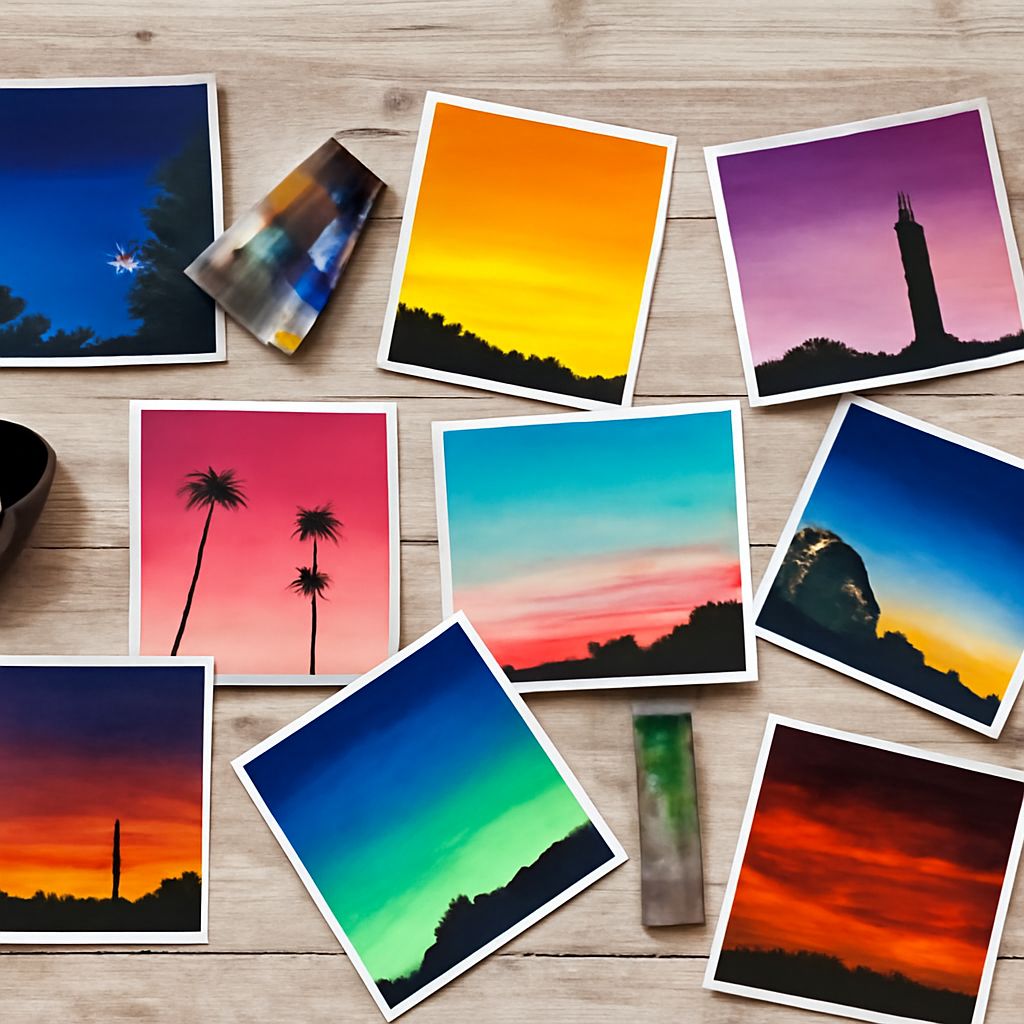
A gradient wash from orange to pink to purple across a wet page is one of the most accessible easy watercolor paintings to copy. Wet the entire paper surface, then drop in orange at the bottom, pink in the middle, and a violet at the top. The colors blend naturally where the paper is wet. Add a simple dark tree silhouette at the bottom once the wash dries. The result looks finished with minimal technical skill.
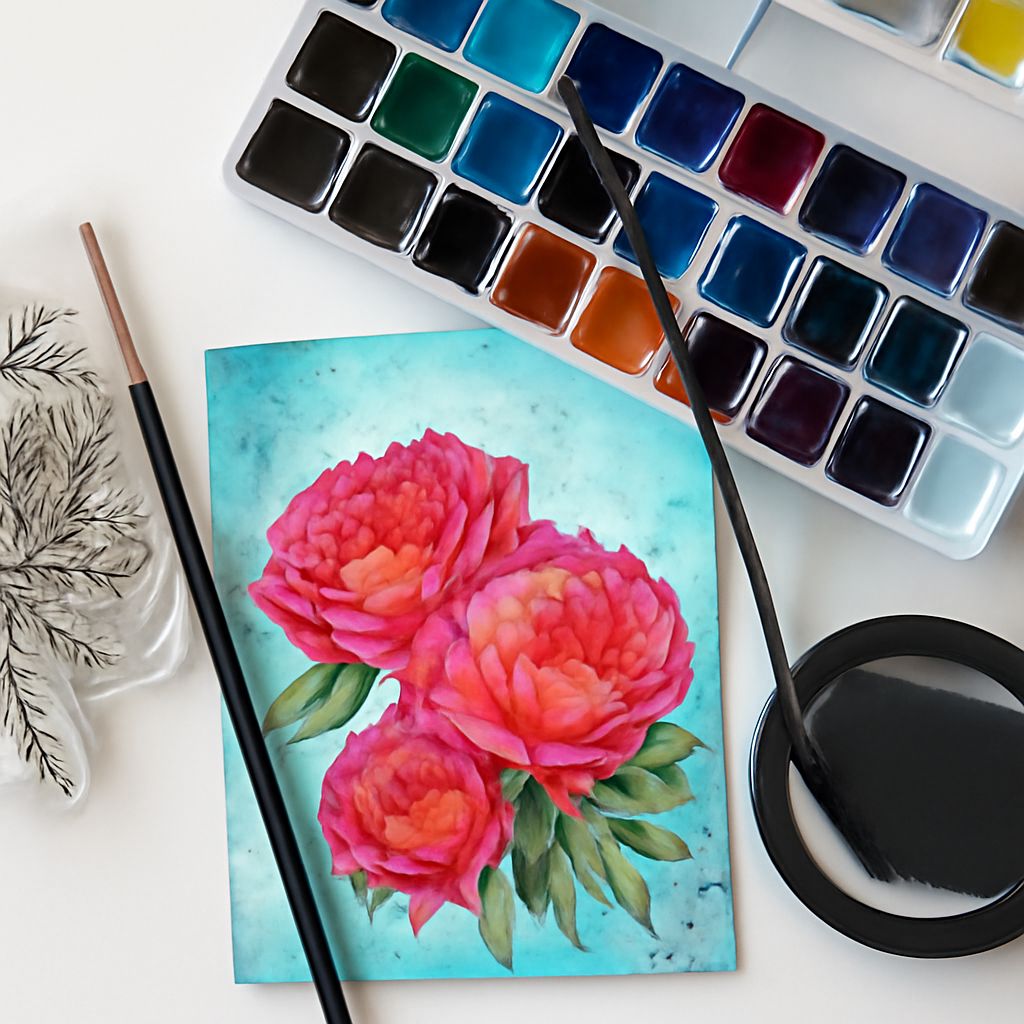
Single Flower Studies A single flower against a plain background is one of the best watercolor painting ideas for building brush control. Choose something with clear petal shapes: a tulip, a poppy, or a single rose. Paint the petals with a loaded brush, allowing colors to mix on the paper rather than forcing them together. A simple green stem and two leaves complete the composition. This kind of exercise appears in art school curricula for good reason.
Abstract Color Washes
Abstract watercolor pictures easy to create from intuition are genuinely worth making. Wet the paper, drop in several colors that complement each other, tilt the board in different directions, and let the paint flow. When it dries, the result is usually more interesting than it looked while wet. These pieces teach you how pigment behaves when wet without the pressure of trying to represent a specific subject.
Cool Watercolor Painting Ideas for Intermediate Artists
Wet-on-Wet Landscapes A landscape built entirely with wet-on-wet technique produces soft, atmospheric results that suggest distance and atmosphere without sharp lines. Start with a sky wash on wet paper, then add distant hills with a slightly less diluted wash while the sky is still damp. The hills bleed softly into the sky, creating the hazy quality of a distant ridge. Add foreground details on dry paper for contrast. This is one of the cool watercolor painting ideas that also builds technical understanding of wet versus dry surface behavior.
Botanical Illustrations
Botanical illustration uses watercolor with a more controlled, observational approach than expressive painting. You work from a real plant or a detailed reference, building color in thin, transparent layers rather than mixing wet puddles. The result has precision that pure expressionist watercolor does not aim for. Botanical work is demanding but deeply satisfying, and it builds skills that improve everything else you paint.
Loose Portraiture Loose portrait work, where you suggest a face with minimal brushstrokes rather than rendering every feature precisely, is among the most interesting watercolor painting ideas for artists with some experience. The challenge is knowing what to leave out. A few well-placed marks around the eyes, a soft wash for skin tone, and a bold stroke for hair can read clearly as a face. The restraint required is as much a skill as the painting itself.
Watercolor Pictures Easy Enough for One Sitting
Mushroom Studies
A single mushroom on a white background takes 20 to 30 minutes to paint and teaches you about curved surfaces and the way light wraps around a three-dimensional form. Use a warm ochre for the cap, a cooler tan for the stem, and a dark wash in the gills under the cap edge. These watercolor pictures easy in execution produce results that look skilled because mushroom forms are naturally appealing.
Leaf Patterns
Collect a few leaves and paint them directly from life. Press them flat on white paper and paint around them, or paint the leaves themselves in a loose botanical style. Leaf veins, the slight color variation from center to edge, and the gentle curl of a dried leaf give you plenty of visual information to work with in a short session.
Moon and Night Sky
A full moon against a dark watercolor sky requires masking fluid or careful negative painting to preserve the white circle of the moon. Once the moon is protected or reserved, a dark indigo wash across the rest of the paper creates the night sky. Stars are added by flicking a brush loaded with white gouache or by lifting wet paint with a brush handle end. The contrast between deep dark and the bright circle creates strong visual impact with relatively simple execution.
Building a Regular Watercolor Practice
Setting a Weekly Routine
Progress in watercolor painting ideas comes from consistent work rather than long occasional sessions. Painting for 30 minutes three times a week builds more skill than a single three-hour session once a month. The short sessions keep your brush instincts sharp and let you try more varied subjects over time.
Using References Effectively
References are not a crutch; they are a professional tool. Working from strong reference photos teaches you to observe accurately, which is the foundation of any painting skill. Build a library of references organized by subject so you always have options when you sit down to paint.
Keeping a Sketchbook
A dedicated watercolor sketchbook for daily or weekly quick studies keeps your experiments organized and lets you track your progress. Looking back three months of watercolor ideas in sketchbook form shows you clearly how much your understanding of the medium has grown, which is its own form of motivation.