Have you ever wondered how starfish, those captivating creatures of the deep, navigate the ocean floor with such grace? Understanding sea star anatomy not only fuels our curiosity but also offers insights into their fascinating world. The anatomy of starfish reveals a complexity that rivals many terrestrial creatures, intertwining with the broader tapestry of marine life. As you dive into starfish internal anatomy, you’ll uncover secrets of their survival and adaptation strategies.
Starfish, or sea stars, share striking similarities with sea urchins, raising intriguing questions about their evolutionary paths. By comparing sea urchin anatomy with that of starfish, you gain a deeper appreciation for the ecological roles these echinoderms play. This exploration guides you through the intricacies of starfish anatomy, uncovering the hidden marvels beneath their iconic forms.
Introduction to Starfish Anatomy
What Makes Starfish Unique?
Starfish are part of the echinoderm family, a group known for their radial symmetry and unique regenerative abilities. What sets starfish apart is their ability to regenerate lost limbs, an adaptation that aids survival in their often-harsh underwater environments. This regenerative capability is just one aspect of sea star anatomy that fascinates scientists and researchers alike.
Overview of Sea Star Anatomy
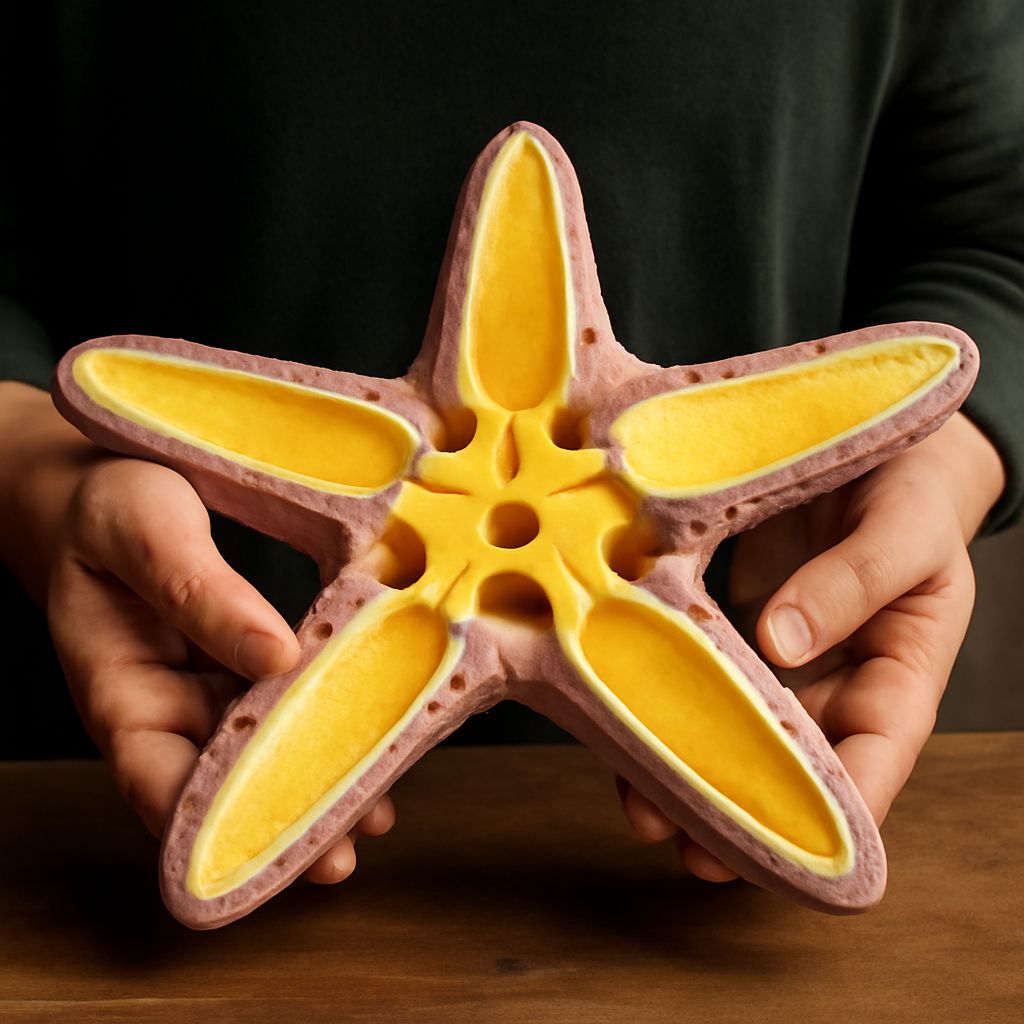
At the core of starfish anatomy is their radial symmetry, typically displaying five arms extending from a central disc. This structure allows them to move, feed, and interact with their environment in unique ways. The water vascular system, a network of hydraulic canals, plays a crucial role in their locomotion and feeding, highlighting the complexity of starfish internal anatomy.
Detailed Starfish Internal Anatomy
The Role of the Water Vascular System The water vascular system is a defining feature of sea star anatomy. This system operates like a hydraulic system, using seawater to facilitate movement and feeding. Tube feet, extensions of this system, allow starfish to adhere to surfaces and capture prey, demonstrating how integral the water vascular system is to the anatomy of starfish.
Through the madreporite, a sieve-like structure on the starfish’s surface, seawater enters the water vascular system. This water is then distributed to the tube feet, enabling movement and the ability to open shells of prey such as clams and mussels. This process exemplifies the intricate design of starfish internal anatomy.
Digestive and Reproductive Systems
The digestive system of starfish is as interesting as their feeding habits. They possess a two-part stomach system, allowing them to extend part of their stomach outside their body to digest food externally. This adaptation enables them to consume larger prey, a testament to the efficiency of starfish internal anatomy.
In terms of reproduction, starfish have both sexual and asexual methods. Some species can regenerate from a single arm, provided a portion of the central disc remains, showcasing another layer of complexity in sea star anatomy. This regenerative prowess is supported by their intricate internal structures, which facilitate rapid cellular repair.
Comparative Anatomy: Starfish vs. Sea Urchins
Key Differences and Similarities While starfish and sea urchins share a common lineage, their anatomical differences are significant. Both exhibit radial symmetry and possess a water vascular system, yet their external appearances and feeding mechanisms differ notably. Sea urchin anatomy includes a hard, spiny exterior, contrasting with the softer, more flexible bodies of starfish.
Despite these differences, the similarities in their internal structures speak to their shared evolutionary history. The complexity of the water vascular system in both starfish and sea urchin anatomy underscores the efficiency of this design in marine environments, supporting their survival in diverse ecological niches.
Ecological Roles and Adaptations
The ecological roles of starfish and sea urchins are crucial to maintaining oceanic balance. Starfish often serve as keystone species, controlling the population of their prey and thus influencing the broader ecosystem. Their adaptations, such as limb regeneration and external digestion, are vital to their success as predators.
Sea urchins, on the other hand, play a pivotal role in controlling algae growth, which can otherwise overwhelm coral reefs. The study of sea urchin and starfish anatomy not only reveals their individual adaptations but also highlights their collective impact on marine ecosystems.
Conclusion: The Fascinating World of Echinoderms
The Importance of Studying Starfish Anatomy
Studying the anatomy of starfish provides essential insights into the evolutionary adaptations that have allowed these creatures to thrive for millions of years. By understanding their complex systems, researchers can better appreciate the delicate balance of marine ecosystems and the role these animals play within them.
Future Research and Discoveries
The field of echinoderm research continues to evolve, with new discoveries shedding light on the intricate anatomy of these fascinating creatures. As technology advances, so too does our ability to explore the depths of starfish internal anatomy, promising exciting developments in the years to come.
Bottom line: By exploring sea star anatomy, you gain a deeper understanding of the intricate designs that enable these creatures to navigate and thrive in their underwater world. The study of starfish and sea urchin anatomy not only enriches our knowledge of marine life but also underscores the interconnectedness of all living organisms.