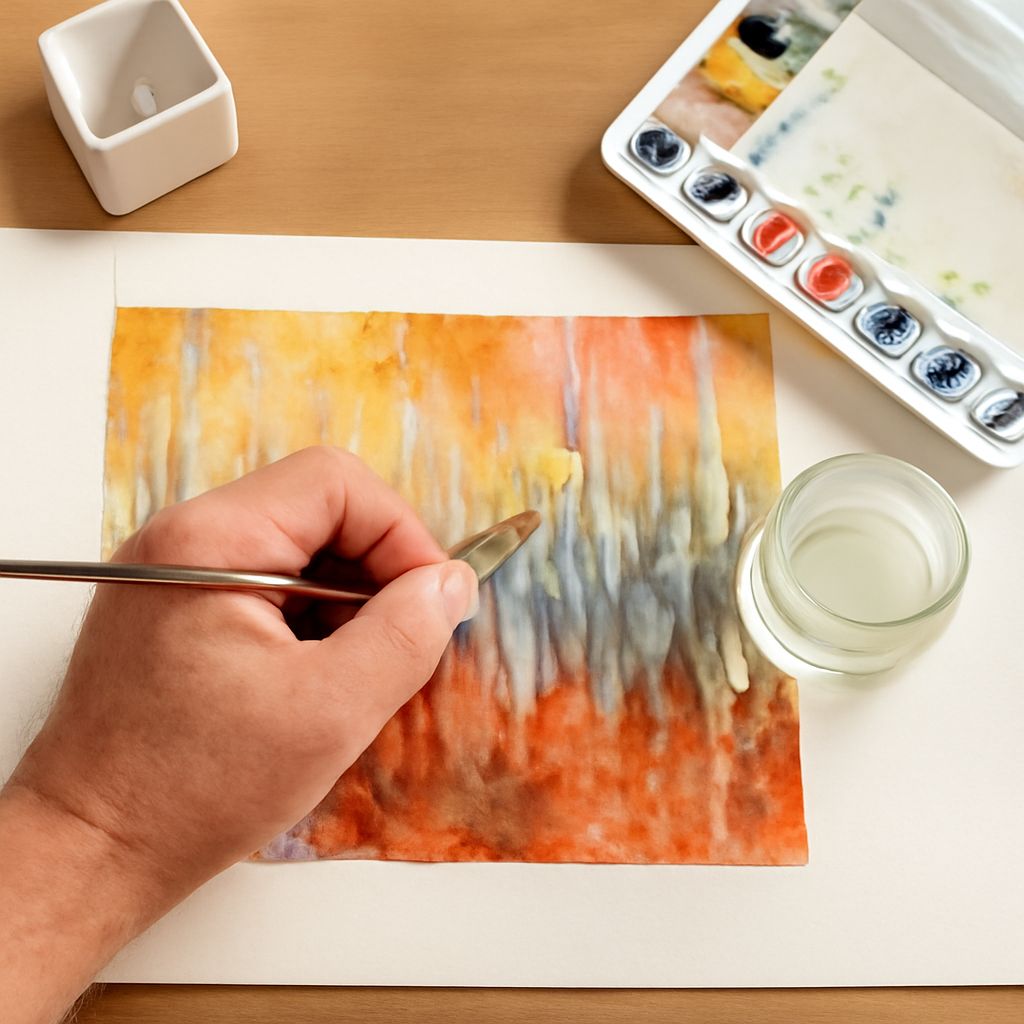
Have you ever struggled with creating precise details in your watercolor paintings? Perhaps you’ve found yourself wishing for a tool that could help you achieve the intricate details your artwork deserves. Watercolor masking fluid might just be the answer you’re looking for. This essential tool is key for achieving those precise details, whether you’re exploring watercolor 101 basics or creating a watercolor duck or river scene. By mastering this tool, you can elevate your art to new levels.
In this guide, you will discover how to incorporate masking fluid into your watercolor practice effectively. From understanding its benefits to applying and removing it correctly, you’ll learn how to use this medium to enhance your artistic expression. Whether you’re a seasoned artist or just beginning your journey into watercolors, these tips and techniques will help you master the art of using masking fluid. Let’s dive into the world of masking fluid watercolor and explore its potential.
Introduction to Watercolor Masking Fluid
What is Watercolor Masking Fluid?
Watercolor masking fluid is a latex-based liquid used to block out areas on your paper that you want to remain white or untouched by paint. It’s particularly useful when you’re aiming to preserve the highlights or intricate details that should stand out in your final piece. By applying masking fluid, you create a barrier that prevents the watercolor from touching certain parts of the paper, allowing for crisp, clean details.
Benefits of Using Masking Fluid in Watercolors Using masking fluid allows you to focus on broad strokes without worrying about losing intricate details. It provides the ability to protect these details, even as you apply washes of color across your paper. Additionally, masking fluid can make your work more efficient; you can work on different sections of your painting without risking mistakes in more delicate areas. It’s a brilliant way to save time and improve the overall look of your watercolor projects.
Common Types of Masking Fluid
There are various types of masking fluid available, each catering to different needs. Some are colored to stand out clearly, while others are transparent. You might also find masking fluid pens, which offer precision for smaller details. Depending on your project, choosing the right type of masking fluid can make a significant difference in ease of use and results.
Techniques for Using Masking Fluid Watercolor
How to Apply Masking Fluid
Applying masking fluid requires some practice to get the technique just right. Use a brush, dip pen, or a dedicated applicator to apply it. For first-timers, it’s advisable to use an old brush, as the fluid can be harsh on bristles. Ensure the paper is dry before applying the masking fluid, and let it dry completely before painting over it.
Tips for Removing Masking Fluid
Removing masking fluid is a delicate process that requires patience. Once your painting is completely dry, gently rub the masked areas with your fingers or a rubber cement pick-up tool. Avoid pulling too hard, as this might damage the paper. Proper removal ensures that the crisp details you preserved remain intact and seamless with the rest of your artwork.
Creating Sharp Edges and Details
To achieve sharp edges and details, apply masking fluid thinly and evenly. This precision allows you to maintain the integrity of the design you envisioned. For those tiny details in a watercolor duck or intricate patterns, a fine-tipped applicator can help maintain control and accuracy. This technique is invaluable for artists who wish to highlight specific features in their work.
Watercolor 101: Basic Tips
Essential Watercolor Supplies
Before diving into your watercolor projects, ensure you have the essential supplies: quality watercolor paints, brushes of various sizes, watercolor paper, and a palette. Masking fluid is an additional tool that can expand your creative possibilities. Investing in good materials will pay off in the quality and longevity of your art.
Basic Watercolor Painting Techniques
Understanding basic techniques such as wet-on-wet, dry brush, and glazing is crucial in watercolor painting. Each technique offers a different texture and depth to your artwork. Masking fluid complements these techniques by preserving areas for detail and contrast. Practicing these fundamental skills will provide a solid foundation for your artistic endeavors.
Painting a Watercolor Duck
Sketching Your Duck
Begin your watercolor duck painting by sketching a light outline of your subject. Focus on the major shapes and positions before detailing. This stage sets the foundation for where you will apply masking fluid to protect the highlights and textures, such as feathers and reflections.
Using Masking Fluid for Details
Apply masking fluid to the areas of your duck that require preservation. These may include the shiny eye, intricate feather details, and any highlights. This careful application ensures that when you wash over the duck with layers of color, these details stand out sharply against the darker washes.
Layering Watercolors for Depth
With your details protected, apply layers of watercolor to build depth and richness in your duck. Utilize techniques like wet-on-wet to create soft transitions and dry brush for texture. The masked areas will reveal crisp, untouched details once removed, adding to the overall depth and realism of your piece.
Creating a Watercolor River Scene
Planning Your River Composition
When painting a watercolor river scene, start with a well-thought-out composition. Consider where the light will fall and where reflections will occur. This planning stage helps determine where to place masking fluid to preserve highlights and reflections on the water’s surface.
Using Masking Fluid for Reflections
For realistic reflections, apply masking fluid to represent the lines of light on the water. This technique captures the dynamic nature of a river, giving it depth and movement. As you paint over these areas, the masking fluid helps maintain the pristine quality of these reflections.
Blending Techniques for Water
To achieve a natural look in your river scene, practice blending techniques such as wet-on-wet for smooth transitions and wet-on-dry for defined edges. These methods, combined with the strategic use of masking fluid, can create a compelling and lifelike depiction of water, enhancing the overall composition of your artwork.