Fashion Drawing: Model Drawing, Figure Illustration, and Sketching Techniques
Is fashion drawing the most technically demanding yet creatively exhilarating specialization in illustration? Many professional artists would say yes. A fashion model drawing requires you to simultaneously master the elongated proportions of the fashion figure, the behavior of different fabrics in motion, and the expressive line quality that makes fashion illustration sketches come alive on the page. Whether you’re a student just beginning to explore drawing fashion or an experienced illustrator looking to sharpen your technique, the fundamentals covered here apply at every level.
Fashion drawing has its own visual grammar distinct from fine art figure drawing — and understanding those differences is the first step toward developing work that communicates effectively to fashion industry professionals and audiences.
Fashion Figure Drawing Proportions
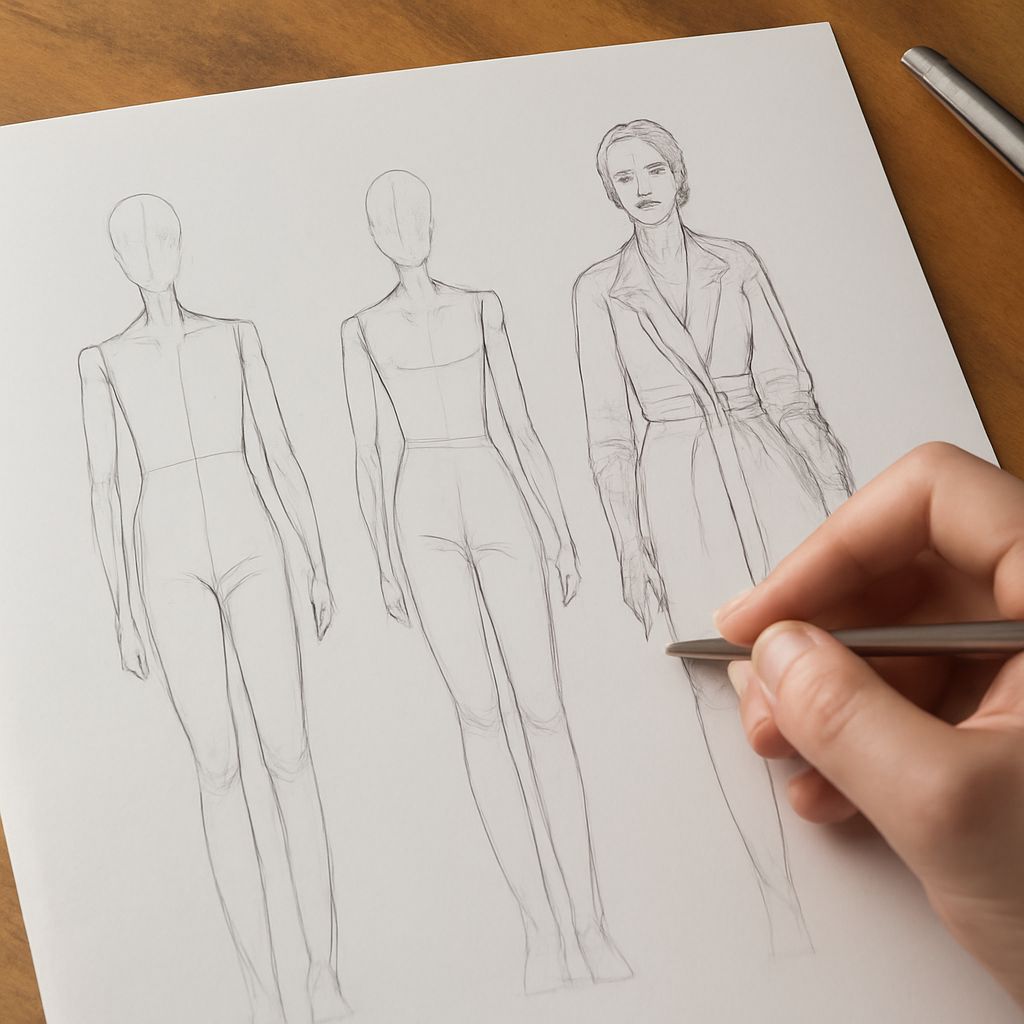
The fashion figure drawing standard departs dramatically from realistic human proportions. Where a realistic figure is approximately 7.5 to 8 heads tall, a classic fashion croquis runs to 9, 10, or even 12 heads — the extra height concentrated in elongated legs that convey the fluid, graceful movement associated with runway presentation. This exaggeration isn’t anatomical error; it’s deliberate stylization that creates the visual elegance fashion illustration demands.
When you begin a fashion model drawing, establish your croquis proportions before adding any garment details. Lightly mark the head unit, then count down: shoulders at the 2-head mark, waist at 3.5, hips at 4, knees at 6, ankles at 8.5 (or wherever your chosen proportion places them). This structural skeleton keeps every fashion figure drawing proportionally consistent across your entire sketchbook.
Drawing Fashion: Line Quality and Gesture
Line quality is the single most expressive tool in fashion drawing. A confident, varied line — thick where fabric falls heavy and thin where it pulls taut — communicates far more about garment construction and material than a uniform outline ever could. Practice long, sweeping strokes that travel the full length of a seam or a fabric fold in a single mark, lifting slightly at the end to create a tapered point that implies flow and movement.
Drawing fashion effectively also requires understanding pose. The classic contrapposto stance — weight on one hip, opposite shoulder dropped, one leg bearing weight while the other relaxes — creates the dynamic, three-dimensional quality that distinguishes professional fashion illustration sketches from static student work. Practice this pose from life, from fashion photography, and from runway video to internalize the subtle shifts that make it feel natural rather than posed.
Fashion Illustration Sketches: Fabric and Detail
Different fabrics behave differently, and capturing those differences is what makes fashion illustration sketches read as specific garments rather than generic clothing shapes. Stiff fabrics (denim, structured shirting, tailored suiting) hold angular folds and break at sharp edges. Fluid fabrics (silk, chiffon, jersey knit) cascade in smooth, continuous curves. Textured fabrics (tweed, bouclé, velvet) require surface mark-making that suggests texture without overworking the illustration.
In fashion illustration, restraint is a virtue. Capture three to five key folds that convey the garment’s drape and construction; don’t attempt to render every fold literally. The fashion illustration tradition from Erté and Gruau to contemporary illustrators like David Downton emphasizes elegant simplification over photographic completeness. Let a single confident mark say what ten labored lines cannot.
Building a Fashion Drawing Practice
Consistent fashion drawing practice builds the visual library and muscle memory that professional work requires. Dedicate weekly sessions to croquis practice, fabric studies, and full-garment illustrations. Study the fashion illustration masters — both historical figures and contemporary practitioners — to understand how personal style develops from a foundation of technical mastery.
Build relationships with fashion designers, stylists, and brands who might commission fashion illustration sketches for lookbooks, press materials, or editorial features. The fashion illustration market rewards distinct personal style and technical reliability in equal measure. Develop both by committing to regular, deliberate practice across the full range of garment types and fashion contexts you want to master.