Botanical Illustrations: Vintage Art, Tattoo Designs, and Modern Techniques
Why do botanical illustrations feel timeless in a way that few other art forms manage? The answer lies in their dual commitment: to scientific accuracy on one hand and to genuine aesthetic beauty on the other. Vintage botanical illustrations from the 18th and 19th centuries remain among the most admired examples of natural history art ever produced, and their influence continues to shape everything from modern botanical sketches to botanical illustration tattoo designs worn by nature lovers worldwide.
Whether you’re a traditional artist learning the craft, a digital illustrator building a botanical portfolio, or someone looking for guidance on vintage botanical illustration styles for personal or commercial projects, this guide gives you a comprehensive foundation. We’ll cover historical context, technical approaches, and the enduring appeal of the botanical tattoo aesthetic.
The History of Botanical Illustrations
From Scientific Documents to Fine Art
Botanical illustrations originated as scientific documents. Before photography, detailed hand-rendered images of plants were essential for botanical classification, medical reference, and agricultural guidance. The great herbals of the Renaissance — lavishly illustrated manuscripts that catalogued medicinal plants — established the basic conventions: full-plant views showing root, stem, leaf, flower, and fruit in the same image, with precise color rendering that allowed accurate species identification.
By the 18th century, exploratory voyages sponsored by scientific societies like the Royal Botanic Gardens at Kew began commissioning dedicated botanical artists to document newly discovered plant species from across the globe. These artists, working in watercolor and later in engraving, produced the vintage botanical illustrations that collectors and decorators prize so highly today.
The Golden Age of Vintage Botanical Illustration
The golden age of vintage botanical illustrations spans roughly 1700 to 1900, encompassing the work of artists like Georg Ehret, Pierre-Joseph Redouté (famous for his rose illustrations), and the prolific output of Kew Gardens commissions. Vintage botanical illustration work from this period is characterized by precise linework, luminous watercolor washes, and a compositional elegance that transforms scientific documentation into genuine art objects.
Creating Botanical Sketches
Modern botanical sketches continue the tradition of careful plant observation, though the purposes have diversified beyond pure science. For contemporary botanical artists, botanical sketches serve as the essential foundation layer before color is applied — a careful, measured drawing that maps every leaf edge, petal arrangement, and stem angle with precision.
Start your botanical sketches from life whenever possible. Even a common houseplant or grocery store herbs offer enough botanical complexity for rich observational studies. Work in pencil first, measuring proportions with a ruler or by eye-measurement techniques. Transfer the finalized sketch to watercolor paper before applying paint, or develop the sketch to a fully rendered graphite study in its own right.
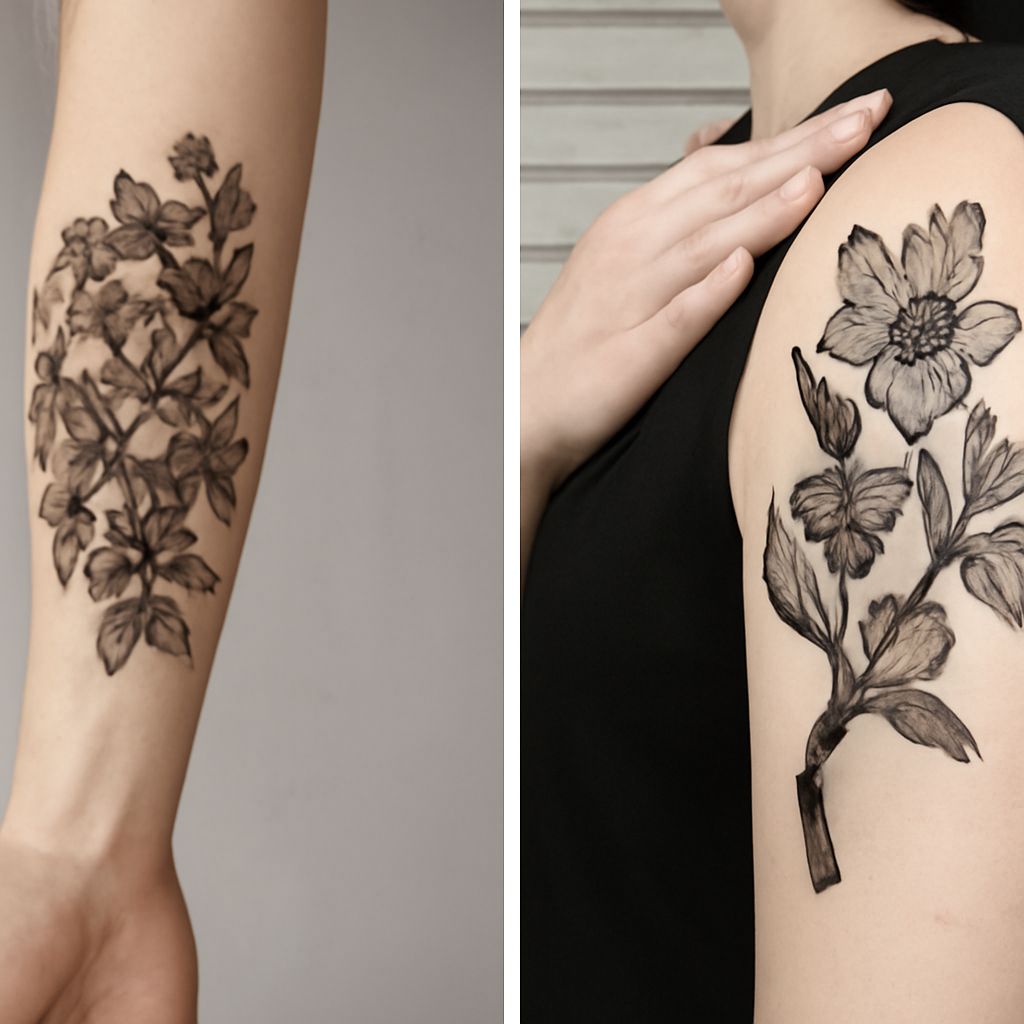
Botanical Illustration Tattoo Designs
The botanical illustration tattoo genre draws directly from vintage botanical prints, adapting their fine linework and botanical accuracy to the constraints and possibilities of skin as a medium. Botanical illustration tattoo designs typically feature single plant specimens — roses, lavender, ferns, eucalyptus branches — rendered in the precise, scientific style of 19th-century illustration, sometimes with added hand-lettered botanical names or Latin inscriptions.
The popularity of botanical illustration tattoo work stems from its versatility: the designs read beautifully in both black-and-grey and full color, scale well from small wrist tattoos to large back pieces, and suit a wide range of body placements. For artists developing botanical illustration for the tattoo market, studying how botanical linework translates to different skin tones and how fine lines age over time is essential professional knowledge.
Building a Botanical Illustration Portfolio
A strong botanical portfolio demonstrates both technical skill and a personal point of view. Document a plant across its full life cycle — bud to full bloom to seed. Create a series of vintage botanical illustrations-inspired pieces that show depth within a single style. Include both scientific-style renderings and more interpretive or decorative botanical works to demonstrate range.
Platforms like Society6, Etsy, and Fine Art America support strong botanical print sales. Publishers of field guides, gardening books, and herbal reference works actively seek botanical illustrators with documented expertise. Build your client network by connecting with botanical gardens, horticultural societies, and natural history publishers who regularly commission original work.