Dog Watercolor: Practice Exercises and Projects for Every Skill Level
What makes a dog watercolor portrait challenging — and why is it one of the most satisfying subjects to get right? Dogs combine fur texture, wet-nosed highlights, dark liquid eyes, and complex individual coloring that pushes your watercolor technique in multiple directions at once. They’re also subjects people care about deeply, which means the pressure to produce something that actually looks like a specific animal is higher than with most other subjects. The good news is that watercolor exercises designed around dog portraiture build skills that carry over to every other challenging subject you’ll encounter. And if you’re looking for drawing practice worksheets that work alongside your watercolor sessions, combining both mediums in a structured practice plan accelerates your development faster than either approach alone.
This article covers dog-specific watercolor technique, gives you a structured set of watercolor exercises for building relevant skills, explains how watercolor practice plans for dogs differ from general watercolor work, and briefly addresses how watercolor wedding portrait commissions — a growing market for pet artists — fit into a working practice.
Why Dogs Are Excellent Watercolor Subjects
The Technical Challenges They Pose
A dog watercolor portrait challenges you with fur direction and texture, reflected light in dark eyes, wet-surface highlights on the nose and lips, and the transition between areas of different fur density and color. Each of these challenges requires a specific technical approach, and mastering them through dog subjects gives you tools that apply to portraits, wildlife, and other complex subjects. Dogs are better learning subjects than cats for many artists because their features are generally larger and more boldly defined, which makes them more forgiving at beginner and intermediate levels.
Building an Emotional Connection Through Painting
The emotional weight of painting someone’s beloved animal companion — whether for yourself or as a commission — adds intentionality to your practice that purely technical exercises can’t provide. That intentionality improves your observation and your willingness to spend time on difficult areas. Many artists who started with dog watercolor portraits as personal projects have developed into successful commission painters precisely because the emotional investment pushed them to develop technique faster than abstract exercises would have.
Watercolor Exercises for Dog Portrait Skills
Wet-on-Wet Fur Simulation
This is a foundational watercolor exercise for anyone working on animal subjects. Wet your paper in the fur area and drop in your base color. While still wet, add a slightly darker value of the same color in the direction of fur growth. The colors will bloom and diffuse, creating the soft, variable texture of natural fur more convincingly than dry brush techniques. Practice this on scrap paper until you can predict how wet the paper needs to be to get the bloom speed you want.
Eye and Nose Studies
Eyes and noses are the focal points of any dog watercolor portrait, and they deserve dedicated watercolor practice sessions. For eyes: paint the dark outer ring of the iris first, then the lighter center, leave a hard white highlight unpainted. For noses: the key is the three-part value structure — dark nostrils, midtone bridge, and bright reflected highlight at the tip. Drawing practice worksheets that focus specifically on these features before you attempt a full portrait save you from struggling with them in the middle of a painting when you can’t start over as easily.
Fur Color Layering
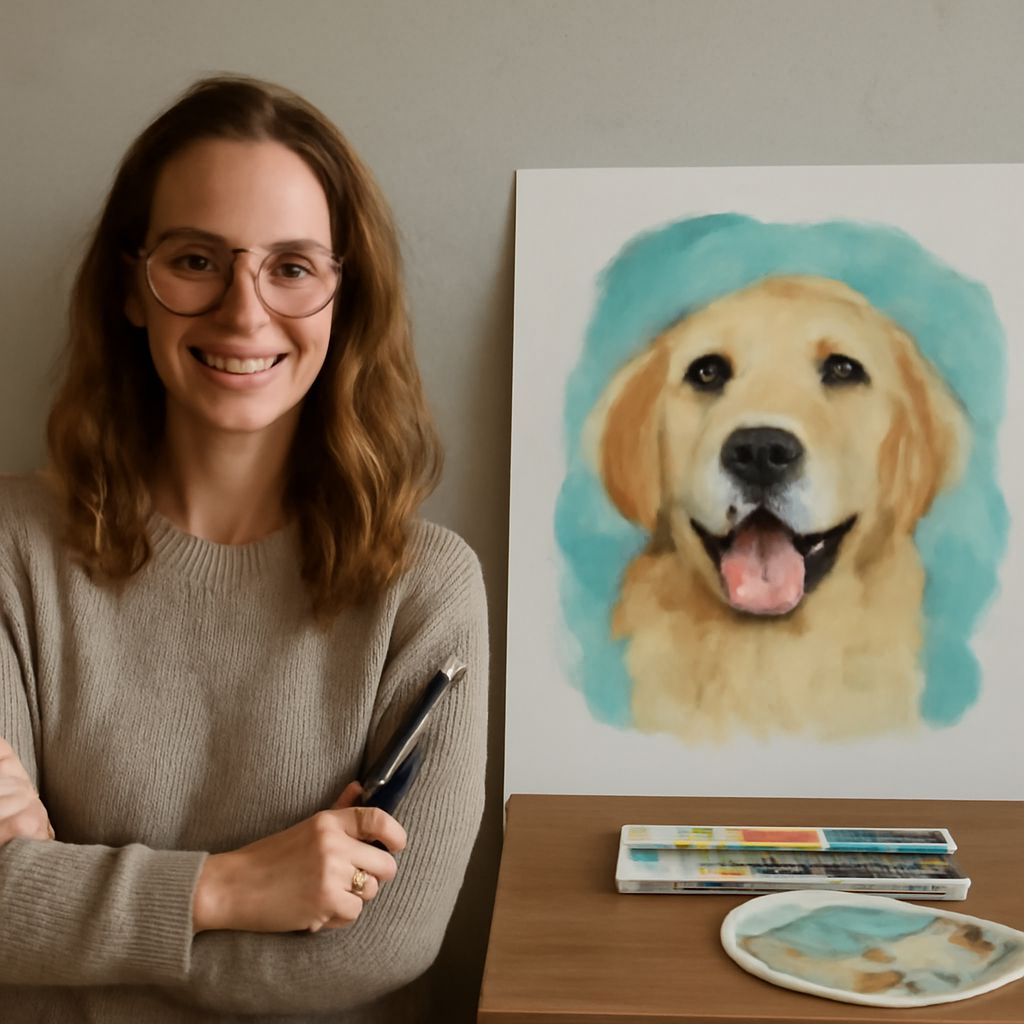
Most dog coats aren’t a single flat color — they’re built from multiple layers of warm and cool tones. A golden retriever’s coat, for example, moves from warm yellow-gold in sunlit areas through orange and burnt sienna in midtones to a muted cool brown in shadows. Practice this layering in isolation before applying it to a portrait. Mix each layer, let it dry completely before adding the next, and observe how the layers interact as you build depth.
Watercolor Practice Plans and Drawing Practice Worksheets
Structured watercolor practice separates artists who improve consistently from those who spend every session fighting the same problems. A practical plan for dog watercolor development might look like this: two sessions per week on isolated exercises (eyes, noses, fur texture, wet-on-wet washes), one session per week on a complete dog study from reference, and one session per week on drawing practice worksheets focused on dog anatomy, proportions, and mark-making without color.
Drawing practice worksheets specifically focused on dog heads — mapping the skull and muzzle proportions, practicing eye placement, mapping the nose shape — make your painting process more confident because you arrive at the paper knowing the structure before you pick up a brush. Many painters who struggle with watercolor portraits are actually struggling with an underlying drawing problem, not a painting problem.
Watercolor Wedding and Special Occasion Pet Portraits
The watercolor wedding portrait market has expanded to include pets in a major way. Couples routinely commission portraits of their dogs alongside wedding party illustrations, for save-the-dates, ceremony programs, and keepsake art. This is a distinct skill set from standard dog portraiture because you’re often working from a single photograph taken in specific lighting conditions, with a deadline, and with client expectations tied to an emotionally significant event.
If you’re developing toward commission work, the watercolor exercises and drawing practice worksheets in this guide will build your foundational technique. The watercolor wedding market specifically rewards artists who can work cleanly, meet deadlines, and communicate clearly with clients about what a watercolor medium can and can’t deliver compared to photographic reproduction.
Paper, Brushes, and Pigment for Dog Portraits
For dog watercolor work, 140lb cold-press paper is the standard starting point — it handles wet-on-wet techniques without buckling badly and accepts multiple glazing layers. A round brush in sizes 4, 8, and 12 covers most situations: the 12 for washes, the 8 for general fur work, the 4 for details around eyes and nose. For pigments, cadmium-free alternatives to yellow and orange earth tones work well for most warm-coated breeds. A tube of burnt sienna, yellow ochre, and raw umber alongside your primary warm and cool palette handles the majority of dog coat colors you’ll encounter.