Construction Drawing, Chinese Drawing, and Creative Drawing Exercises Guide
Why does construction drawing form the foundation of so many professional art and architecture programs? And what can drawing worksheets and creative drawing exercises offer artists who already have solid technical skills? These questions point to different purposes that drawing serves: technical communication on one hand and personal artistic development on the other. Understanding construction drawing prepares you for professional technical work; exploring drawing fantasy and Chinese drawing traditions opens up entirely different visual possibilities.
This guide covers the main principles of construction drawing, introduces Chinese drawing traditions and their distinct philosophy, and provides a set of drawing worksheets and creative drawing exercises you can use immediately.
Construction Drawing: Technical Drawing for Professionals
What Construction Drawing Is
Construction drawing is the technical documentation used to communicate building and engineering designs between architects, engineers, contractors, and builders. Unlike artistic drawing, construction drawing follows precise conventions for scale, line weight, notation, and symbology. A set of construction drawings for a building typically includes floor plans, elevations, sections, details, and specifications, each type communicating different information about the design.
The line types in construction drawing are standardized. A solid heavy line indicates visible edges. A dashed line indicates hidden edges or features. A dot-dash line indicates center lines or reference axes. Dimension lines with arrowheads indicate measurements. These conventions are consistent across the industry, which means a contractor in one country can read drawings produced by an architect in another country with minimal adjustment.
Key Skills for Construction Drawing
Precision is the primary skill in construction drawing. Measurements must be accurate and consistently scaled. Lettering must be legible and standardized. Spatial relationships between elements must be correct in plan, section, and elevation simultaneously. CAD software has taken over most production work, but hand drafting skills remain valuable for quick sketching and for understanding the underlying logic of technical drawing conventions.
Chinese Drawing: Brush, Ink, and the Xieyi Tradition
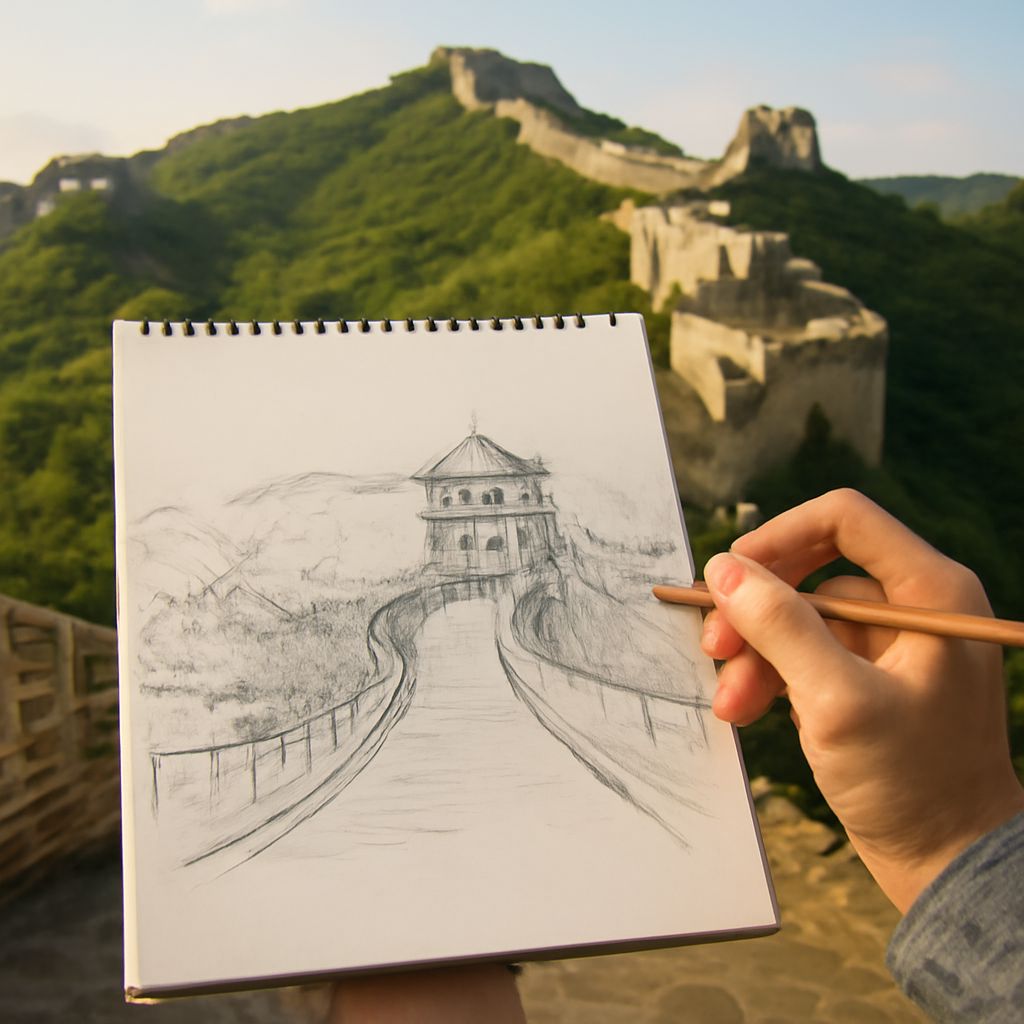
Chinese drawing encompasses a broad range of traditions but is most recognizable in its brush and ink form. The tools of traditional Chinese drawing, a soft brush, carbon ink, and absorbent xuan paper, require a completely different approach from Western pencil or pen drawing. The brush holds a large volume of ink and responds to pressure variations across a single stroke, producing lines that go from fine to broad within a single movement.
The xieyi tradition of Chinese drawing prioritizes capturing the spirit or essence of a subject over its literal appearance. A bamboo stalk in xieyi Chinese drawing is rendered with confident, economical strokes that suggest bamboo rather than describing every detail. The white of the paper is as important as the ink; negative space is active and considered rather than simply the absence of marks.
Studying Chinese drawing is valuable for any artist because it forces a complete rethinking of mark-making. Brush and ink do not allow the tentative, re-tracing approach that pencil permits. Each stroke must be committed, which builds decisiveness and improves your overall mark quality regardless of what medium you return to afterward.
Drawing Worksheets for Structured Practice
Drawing worksheets provide structured exercises in a repeatable format. A good set of drawing worksheets covers the range of fundamental skills: proportion grids, value scales, perspective grids, gesture warm-up prompts, and form studies. Worksheets are particularly useful for beginners because they remove the decision about what to practice, allowing full attention to go into the practice itself.
Make your own drawing worksheets by identifying the specific weaknesses in your current work. If your proportions are consistently off, create a worksheet with proportion comparison exercises. If your value range is too compressed, create a ten-step value scale exercise to fill out in pencil. Targeted drawing worksheets that address your actual gaps are more efficient than generic ones.
Creative Drawing Exercises for Artistic Development
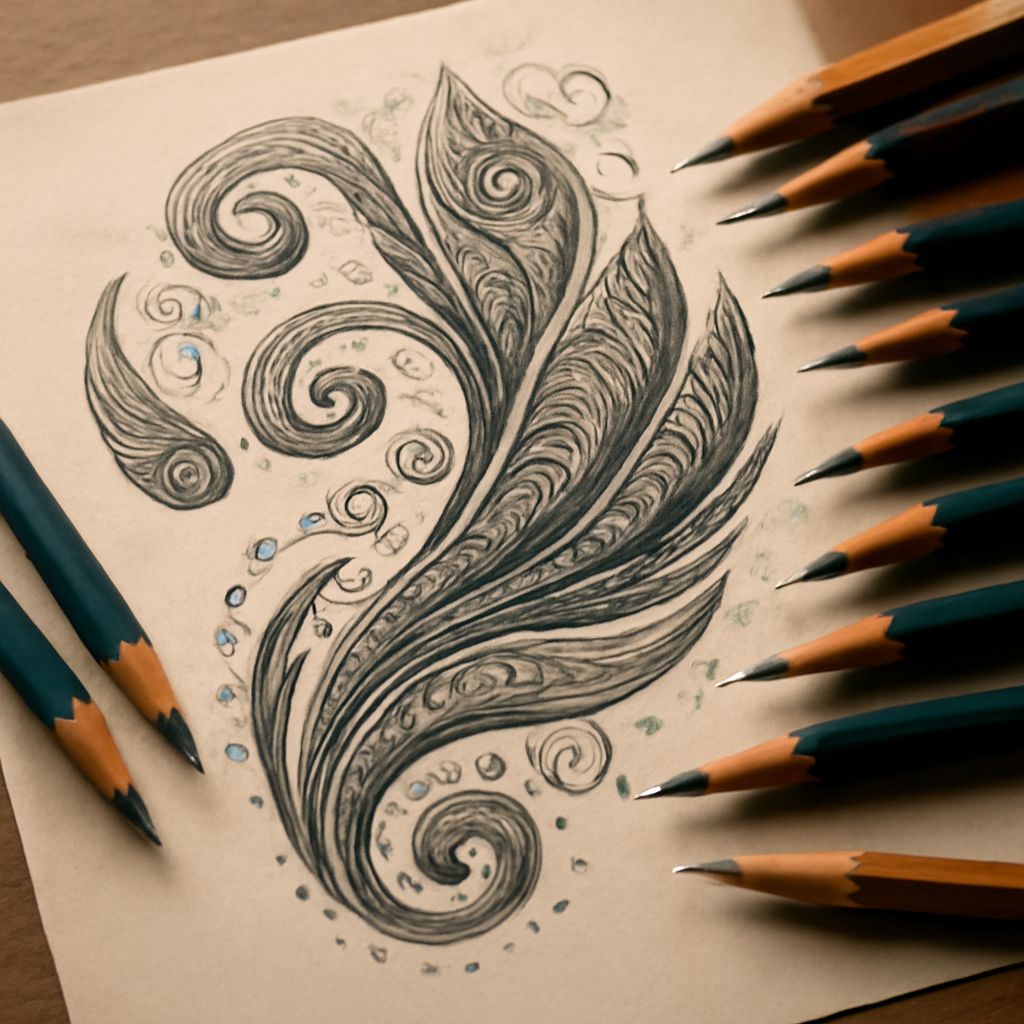
Creative drawing exercises push beyond technical practice into personal artistic voice. Drawing fantasy subjects, imaginary creatures, invented landscapes, and impossible architecture, requires you to invent rather than observe. That invention process builds your visual imagination, which is a different capacity from observation skill but equally important for a complete artist.
Some of the most productive creative drawing exercises use constraints: draw a landscape using only circles; create a creature using only triangles; draw a building that could not physically exist. These constraints prevent the creative paralysis that open-ended prompts sometimes cause and channel your invention into specific visual problems. The drawing fantasy genre in particular benefits from constraint-based creative drawing exercises because the absence of any real-world reference can make open-ended fantasy drawing feel overwhelming.