A secondhand press and dryer can get your studio printing for less, provided the savings survive the first repair bill. When you compare pre-owned equipment for screen printing offered for sale, ask to see it run, print, and cure a sample. A clean frame is pleasant; repeatable registration and a complete set of working parts are more valuable.
Used Screen Printing Equipment for Sale: Start With the Whole Setup
Ask for the make, model, age, serial number, manuals, and a list of everything included. A press may be advertised with several print heads but arrive without enough platens, clamps, or adjustment hardware for your work. Count each item in person and compare it with the manufacturer’s parts list. Record any missing component and its replacement cost.
Before traveling, measure your available floor space, doorways, and access route. Check the press’s footprint in operation, not just its dimensions when idle. For an automatic machine, ask about compressed air, electrical supply, and any required accessories. The dryer needs its own space, power or gas supply, clearances, and exhaust arrangement. A bargain that requires a major utility upgrade belongs in a different budget.
Look at the seller’s maintenance history and ask why the equipment is being sold. A service log and a working demonstration give you a better basis for pricing than an assurance that the machine ran beautifully several years ago. For secondhand screen-printing equipment on the market, ask the manufacturer or a service provider whether replacement parts and local support remain available.
Test the Press for Repeatability
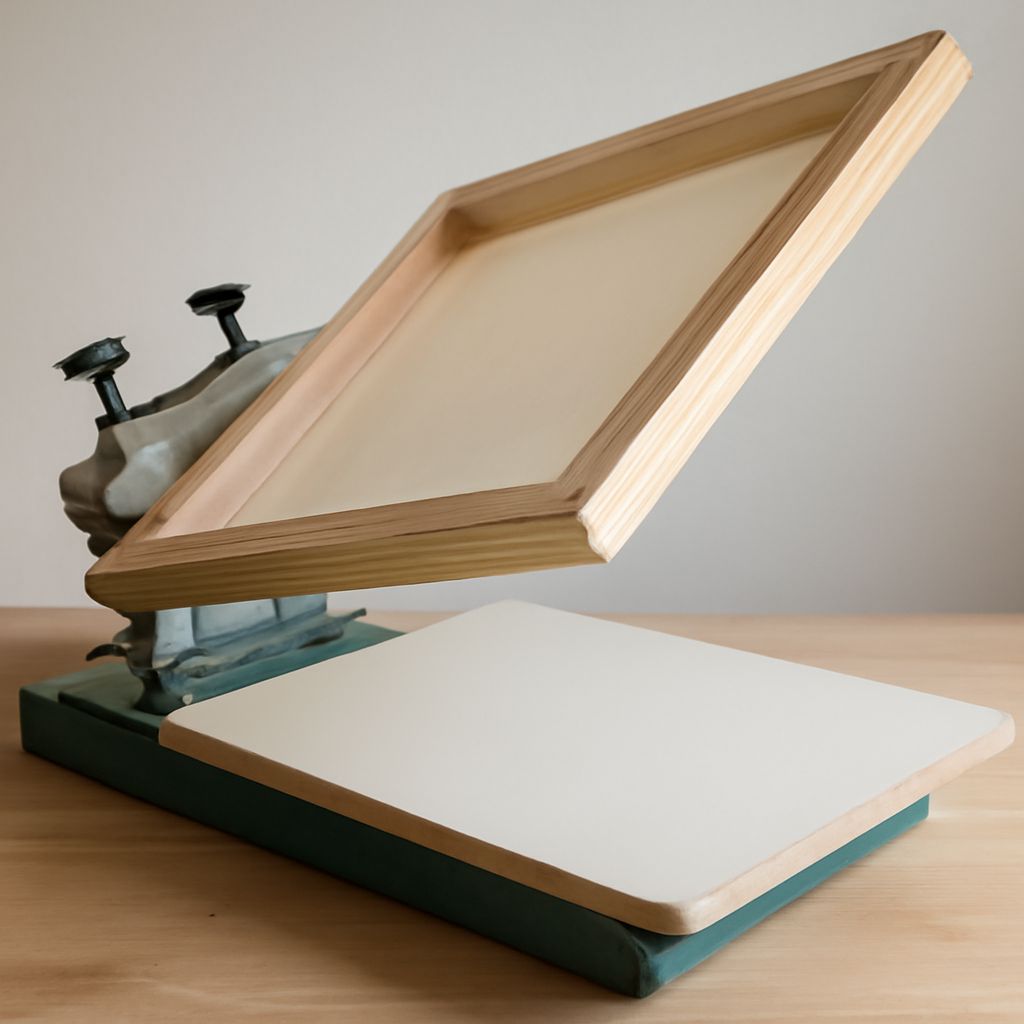
Inspect a used screen printing press for cracks, bent arms, damaged clamps, corrosion, loose fasteners, and wear around bearings or pivots. Move each arm through its range and check for unusual play. Minor surface ink is ordinary in a working shop; a cracked structural part or a platen that rocks under pressure needs a repair assessment.
Ask the seller to set up two screens with registration marks and print several impressions. Cycle the press as it would be used in production, returning each head and platen to position. Examine whether the marks remain aligned across the run and after an adjustment. A repeatable result, smooth movement, and adjustments that lock securely are encouraging signs. If alignment drifts, determine whether a loose adjustment, worn component, or bent part is responsible before agreeing on a price.
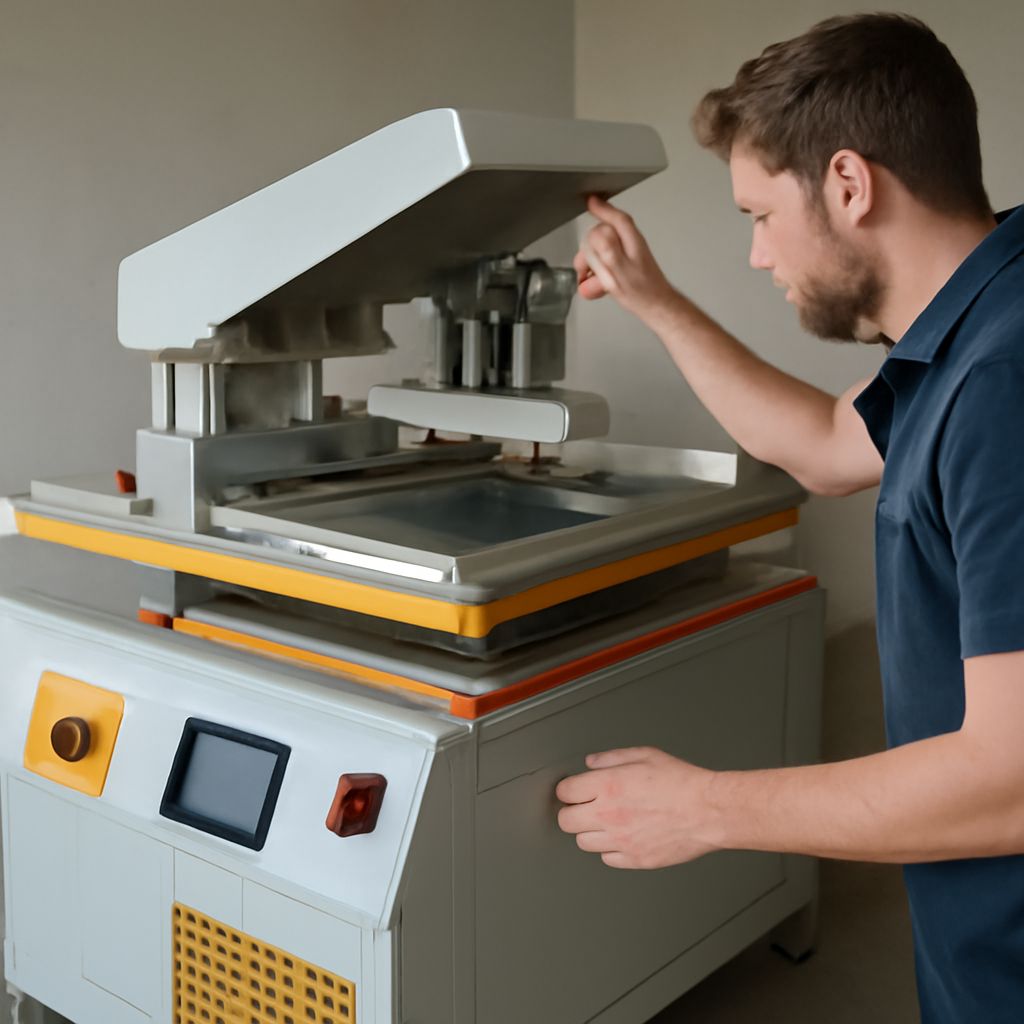
For a used automatic screen printing press, watch a full cycle with the guards and safety features in place. Listen for uneven movement or air leaks, and confirm that controls, indexing, print heads, and stops work as intended. Have the seller demonstrate the operating modes you need. An automatic screen-printing press bought secondhand may require a technician to assess faults you cannot identify from a short run; include that inspection in your decision.
Check that replacement platens and screen frames fit the mounts, and that the print area suits your largest intended image. If the package has a flash unit, ask to see it operate as well. The press is useful only when its configuration supports the jobs you actually plan to take.
Check the Dryer With Your Ink and Garments
A used screen printing dryer should reach and maintain its operating setting, move the belt smoothly at adjustable speeds, and have working controls and guards. Ask the seller to run it long enough to warm up, then observe the belt tracking and listen for irregular noises. Look for damaged wiring, missing covers, or evidence of overheating. Leave internal electrical and gas inspection to a qualified technician.
Compare the dryer’s capacity and airflow with your ink, garment, and expected production rate. A flash unit used between colors and a conveyor dryer for production have different roles. Check the manufacturer’s requirements for power, exhaust, and installation before treating either as ready for your shop.
The temperature on a controller is not the temperature throughout the ink film. Arrange a test using your intended ink and garment, measure temperature as appropriate for the process, and follow the ink manufacturer’s cure instructions. Lawson’s curing guide explains why the full ink film must reach the specified cure temperature. Follow with a wash test where appropriate. If the seller cannot demonstrate the secondhand dryer for screen printing, treat its performance as unverified and price an inspection accordingly.
Price the Complete Return to Work
Add the asking price to transport, rigging, installation, utility work, inspection, missing parts, repairs, and initial consumables. Request written estimates for known faults. For example, a $4,000 package needing $600 in transport, $500 in parts, and $400 in setup costs $5,500 before any unexpected repair. Compare that total with another set of pre-owned screen-printing machinery offered for sale and with the work each can produce.
A pre-owned automatic printing press that holds registration but needs a priced replacement platen may be a reasonable purchase at the right total. Walk away, or make the deal conditional on professional inspection, when the frame is damaged, parts are unavailable, safety controls fail, or the seller refuses a meaningful test. Compare used screen printing equipment for sale by the cost of getting a complete, serviceable setup running—not by the number on the listing alone.