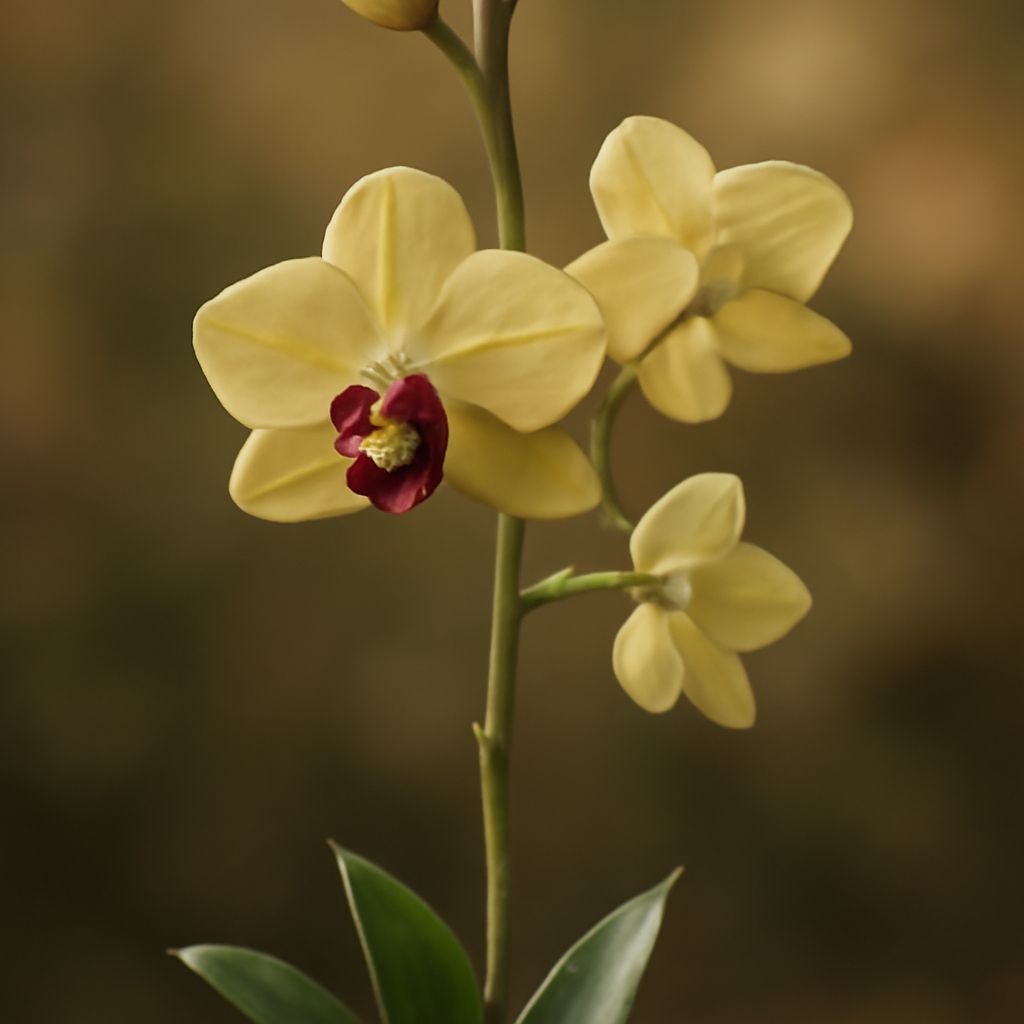
What makes orchids such a compelling subject to draw? Their flowers combine symmetry with unexpected asymmetry, simple petal shapes with intricate labellum details, and a clean elegance that rewards careful observation. An orchid drawing can range from a quick gestural sketch to a detailed botanical study, and both have value depending on what you want to practice. Whether you are interested in orchids drawing for artistic development or for practical illustration work, the techniques transfer directly to other complex floral subjects.
One of the most useful starting points for orchid drawings is understanding the flower’s structure before putting pen to paper. Orchid flowers have three sepals and three petals, but one petal is highly modified into a lip called the labellum, which is the most distinctive part of the flower. A confident orchid sketch relies on getting this structural understanding first, then letting the line work follow. For an orchid line drawing in particular, that early structural clarity determines whether the finished piece reads as a believable flower or an ambiguous shape.
Understanding Orchid Flower Structure
The Three Sepals
Orchid sepals are often mistaken for petals because they are petal-like in shape and color. In most orchid species, the three sepals alternate with the three petals when viewed from the front. Understanding their position around the flower center helps you place all elements correctly in an orchid drawing without guessing.
The Labellum
The labellum, or lip, is the most visually complex part of the orchid. It is typically larger, more intricately shaped, and often differently colored from the other petals. This is the part of orchid drawings that most beginners simplify too aggressively, losing the character of the flower in the process. Spend extra time studying the labellum’s specific shape in whatever orchid species you are drawing.
Column and Reproductive Parts
At the center of the orchid sits the column, a fused structure that combines the reproductive parts. It projects forward from the flower’s throat. Including the column in an orchid sketch gives the drawing botanical accuracy and visual interest, even if you render it simply.
Tools for Orchid Line Drawing
Pencils and Erasers
For preparatory orchid sketch work, HB and 2H pencils work well. Lighter marks erase cleanly and leave room for adjustment. A kneaded eraser lifts graphite without roughening the paper surface, which matters when you layer ink on top of pencil guidelines.
Ink Pens for Line Work
Fineliner pens in sizes 0.1, 0.3, and 0.5 mm cover most needs for orchid line drawing. Use the finest tip for delicate petal veins and labellum details, and a heavier tip for outer contours and stems. Varying line weight in this way gives the drawing visual hierarchy and helps the viewer’s eye move naturally through the composition.
Brush and Ink
A pointed brush with India ink gives orchid drawings a more expressive quality than a pen. The brush allows for dynamic line weight variation within a single stroke, which suits the organic shapes of orchid petals. The trade-off is less control at fine detail scales, which requires practice to manage.
Step-by-Step Orchid Sketch Process
Establishing the Central Axis
Start your orchid sketch by drawing a light vertical line representing the stem and a horizontal guide through the widest point of the flower. These axes help you keep the flower symmetrical around its central column before any detail work begins. Many orchid drawings go wrong at this stage because the flower drifts off-center.
Blocking In Petal Shapes
Place the three sepals first as simple elliptical shapes in their correct positions. Then add the two lateral petals. Leave the labellum for last because its shape requires the most adjustment. Working from the outside structures inward helps you understand the overall silhouette of orchids drawing before committing to internal detail.
Refining the Labellum
The labellum typically has a ruffled or lobed edge, internal color patterns, and a more three-dimensional form than the flat petals beside it. Sketch its outer edge, then add the internal divisions and texture marks. In an orchid line drawing, the labellum often gets more linework than the other petals, which helps it read as the visual focus it is in life.
Adding Veination and Texture
Orchid petals have fine veins radiating from the base. In pencil, soft parallel lines in the direction of petal growth suggest this texture without overwhelming the form. In ink orchid drawings, keep these lines fine and spaced enough to read as texture rather than heavy shading.
Composition Ideas for Orchid Drawings
Single Bloom Study
A single orchid bloom against a white background is the purest form of botanical orchid drawing. This composition demands that every element be correct because there is nowhere to hide weak areas. It is also the most informative format for learning about the flower’s structure.
Spray Composition
Many orchid species produce a stem carrying multiple blooms at different stages of development. Drawing a whole spray, including open blooms, buds, and the occasional spent flower, gives an orchid sketch more visual interest and tells a more complete biological story than a single bloom can.
Loose Gestural Studies
Speed studies of orchid flowers, drawn in two to five minutes each, train your hand to capture the essential gesture of the form without overthinking line placement. These quick orchid drawings develop the visual memory that makes slower, more detailed work easier to approach.
Common Mistakes in Orchid Drawing
Symmetry Errors
Orchid flowers have a plane of symmetry running vertically through the labellum and the upper sepal. Violating this symmetry makes orchid drawings look structurally wrong even if the viewer cannot identify why. Check your work against this axis regularly during the blocking-in stage.
Flattening the Labellum
The labellum projects forward from the flower plane, giving it a three-dimensional presence the other petals lack. Orchid line drawing should capture this forward tilt through foreshortening. If you draw the labellum as a flat shape on the same plane as the other petals, the flower loses its characteristic depth.