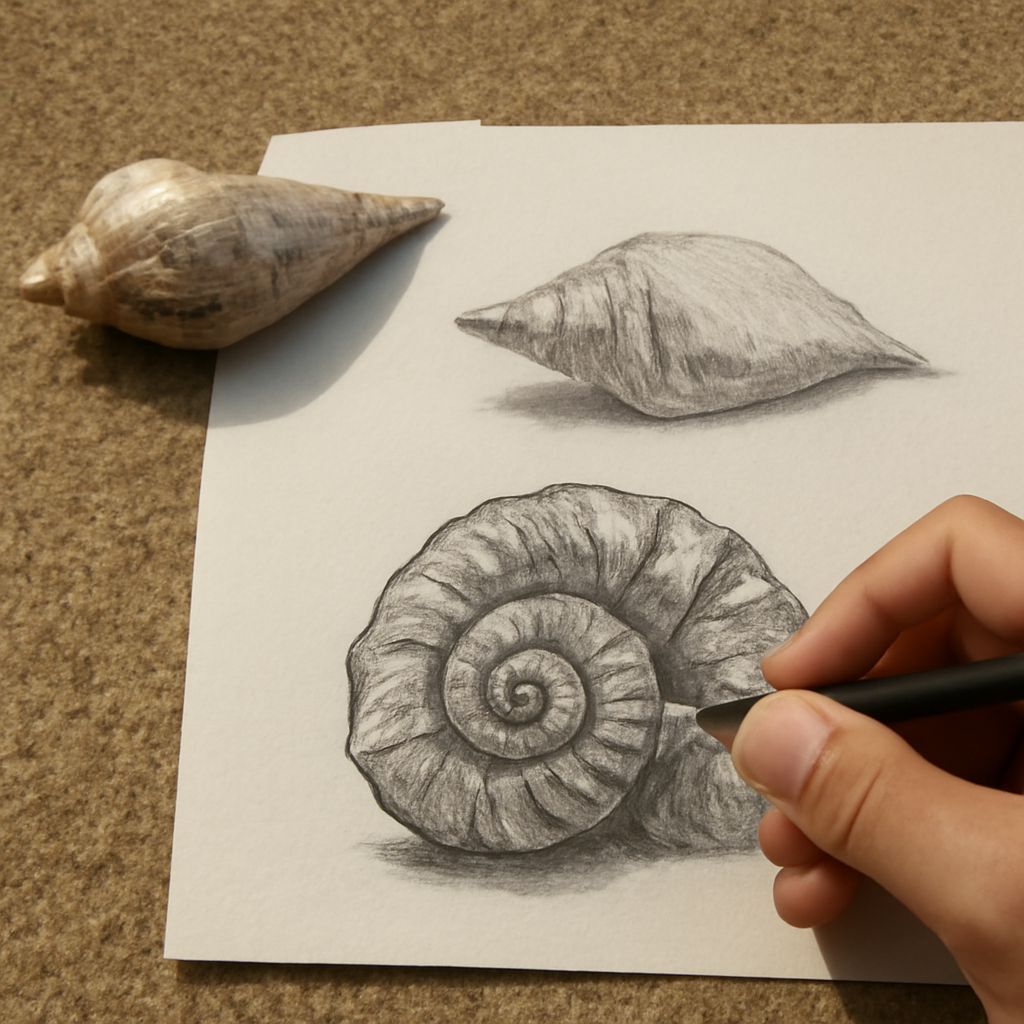
Shell Drawing Techniques: Mastering Value and Thumbnails
Have you ever considered how mastering value drawing can transform your artistic skills? As an artist, understanding the art of shell drawing opens a new dimension in enhancing your work. Whether you’re working on value scale drawing or exploring the benefits of thumbnail drawing, these techniques provide a solid foundation to elevate your craft. Let’s delve deeper to understand how these methods can refine your skills and improve your artwork.
Introduction to Shell Drawing
What is Shell Drawing?
Shell drawing is an exercise that involves observing and replicating the intricate details of shells. This practice is not just about drawing shells as subjects but involves a deeper study of texture, form, and shadow. By focusing on these elements, you can learn to capture the essence of any object, making it a fundamental skill in art.
Importance of Shell Drawing in Art
The importance of shell drawing in art lies in its ability to teach attention to detail and enhance observational skills. This practice encourages artists to see beyond the obvious and delve into the subtleties of form and texture. By mastering shell drawing, you improve your ability to depict complex structures realistically, which is invaluable across various art forms.
Understanding Value Drawing
The Basics of Value Drawing
Value drawing refers to the technique of using different shades from light to dark to add depth and dimension to your art. Learning to manipulate values effectively allows you to create the illusion of light, shadow, and form. This technique is crucial when aiming to render objects realistically.
Tools for Effective Value Drawing
To succeed in value drawing, you’ll need the right tools. Essential materials include a range of pencils from hard to soft, erasers, blending stumps, and quality paper. These tools help you in achieving the subtle gradations necessary for realistic rendering.
Creating a Value Scale Drawing
Steps to Create a Value Scale
A value scale is a guide that shows a gradual transition from light to dark. To create a value scale drawing, start by drawing a series of squares. Within each square, increase the intensity of shading from light on the left to dark on the right. This exercise trains your eye to distinguish between various shades.
Using Value Scale in Shell Drawing
When applied to shell drawing, a value scale helps in accurately depicting the light and shadow on the shell’s surface. By referring to your value scale, you ensure consistency in shading, which enhances the realism of your artwork.
Enhancing Art with Thumbnail Drawing
What is Thumbnail Drawing?
Thumbnail drawing involves creating small, quick sketches to explore composition and layout before committing to a detailed work. These mini-drawings help you experiment with ideas and visualize the final piece without investing too much time initially.
Benefits of Thumbnail Drawing
Using thumbnail drawing allows you to quickly iterate on ideas and test different compositions. This technique can save time and improve the overall composition of your artwork by letting you address potential issues early in the creative process.
Incorporating Thumbnails in Shell Drawing
Incorporating thumbnails in shell drawing provides a preliminary blueprint for your artwork. By sketching various angles and compositions, you can identify the most compelling perspective for your shell drawing, ensuring a visually strong piece.
Practical Tips for Drawing Value
Tips for Beginners
As a beginner, start with simple shapes and practice shading them using your value scale. Focus on smooth transitions between different shades. Patience and consistency are key; with practice, your understanding of value will grow.
Advanced Techniques
For more experienced artists, try challenging yourself with complex subjects and lighting conditions. Experiment with different textures and surfaces to see how values change and affect the overall composition. Techniques such as cross-hatching and stippling can add variety and depth to your drawings.
Conclusion
Mastering shell drawing, value scale drawing, and thumbnail drawing enhances your artistry by developing your eye for detail, composition, and value manipulation. These techniques are not just exercises but essential skills that contribute to creating compelling and realistic artwork. Embrace these practices, and watch your artistic capabilities flourish.