Bee Anatomy: Complete Guide to Honeybee, Bumble Bee, and Bee Diagrams
Have you ever looked closely at a bee and wondered what’s going on beneath those fuzzy thorax hairs? Bee anatomy is a fascinating subject that rewards careful study — whether you’re a beekeeper trying to understand your hives, a student preparing for an entomology exam, a biologist, or simply a curious nature enthusiast. The anatomy of a bee reveals one of evolution’s most sophisticated solutions to the challenges of flight, food collection, social organization, and environmental sensing.
This guide covers the complete bee body plan: from the three main divisions visible in any honey bee anatomy diagram, through the remarkable specializations of bumble bee anatomy, to the specific structures that make bees such effective pollinators. Alongside the anatomical detail, you’ll find guidance on how to use a bee diagram for learning and reference.
The Three Body Divisions
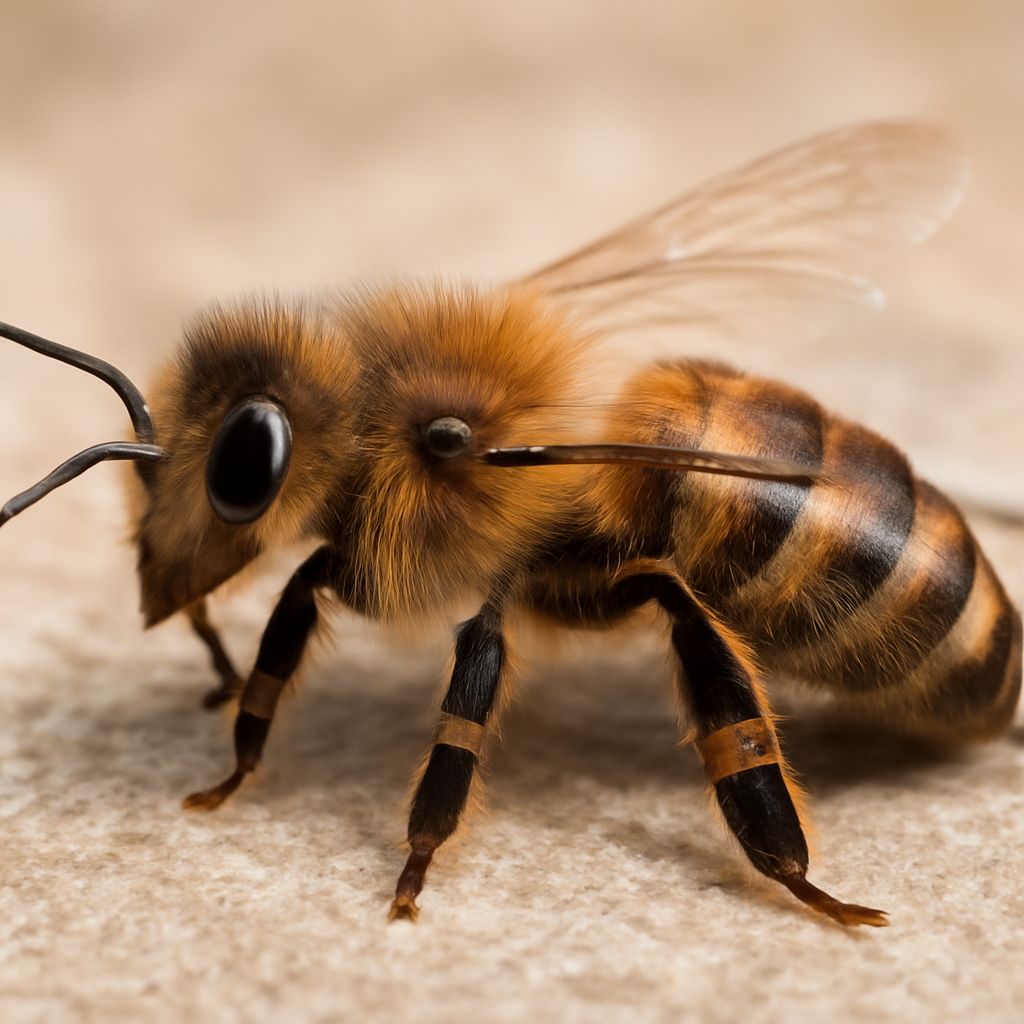
Like all insects, bee anatomy follows the basic arthropod body plan of head, thorax, and abdomen. These three divisions are visible in even a basic honeybee anatomy reference and represent the primary organizational units of bee structure and function.
The head houses the brain, compound eyes, three simple eyes (ocelli), two antennae, and the mouthparts. The thorax carries the three pairs of legs and two pairs of wings, along with the flight muscles that make bees among the most energetically efficient flying insects. The abdomen contains the digestive system, reproductive organs, and in worker bees, the venom sac and stinger apparatus. Understanding this three-part organization is the foundation of any bee anatomy study.
Head Structures in Honeybee Anatomy
The head of a honeybee anatomy reveals extraordinary sensory sophistication. The two compound eyes each contain thousands of individual facets (ommatidia) that provide a nearly 360-degree field of vision and exceptional sensitivity to ultraviolet light — allowing bees to see flower patterns invisible to humans. The three simple eyes (ocelli) detect light intensity and help orient the bee relative to the sun.
The antennae are dual-function organs combining olfactory (smell) and tactile (touch) sensing in a single structure. Bees have approximately 170 olfactory receptors in their antennae, making them capable of detecting floral scents, chemical communication signals (pheromones), and environmental chemicals at extraordinarily low concentrations. The proboscis extends to lap up nectar and feeds back into a crop for transport to the hive.
Bumble Bee Anatomy vs. Honeybee
While bumble bee anatomy follows the same basic insect plan as honeybees, there are meaningful differences. Bumble bees are generally larger and more robustly built, reflecting their adaptation for foraging in cooler temperatures and their production of buzz pollination — a rapid vibration of the flight muscles that dislodges pollen from certain flowers that honeybees cannot access effectively.
Bumble bee anatomy features a corbicula (pollen basket) on the hind tibia that’s visible as a slightly concave smooth surface surrounded by stiff hairs — you can often see this structure loaded with bright yellow or orange pollen when observing bumble bees on flowers. Queen bumble bees overwinter alone in soil, unlike honeybee colonies, which reflects differences in their reproductive and nutritional anatomy compared to the honeybee’s more complex colony structure.
The Stinger and Venom System
The honey bee anatomy diagram always highlights the stinger apparatus because of its practical importance. Worker bee stingers are barbed — the stinger lodges in mammalian skin and the entire venom apparatus (including the venom sac) tears free from the bee’s abdomen, killing the bee but allowing the venom pump to continue delivering venom for several seconds after the sting. Queen bees have smooth stingers and can sting repeatedly; drone bees have no stinger at all.
Bumble bee stingers are smooth and can be used multiple times, which is why bumble bees sting less frequently than honeybees — they retain the ability to sting again, so there’s less incentive to use it defensively except under genuine threat.
Using a Honey Bee Anatomy Diagram
A well-constructed honey bee anatomy diagram serves as the most efficient learning tool for understanding bee body systems. Look for diagrams that label both external structures (compound eyes, antennae, wings, leg segments, abdominal segments) and internal systems (digestive tract, honey stomach, heart, nerve cord). Cross-section diagrams showing the stinger mechanism and the head mouthparts provide valuable detail beyond what any external photograph can show.
Pro tips recap: Use multiple reference sources when studying bee anatomy — a single honey bee anatomy diagram rarely captures all the detail you need for thorough understanding. Compare honeybee and bumble bee anatomy side by side to appreciate the adaptive differences between these closely related pollinators. For beekeeper education, anatomy of a bee knowledge directly informs hive management decisions about health monitoring and disease detection.