Cartoon Dogs: A Look at the Most Famous Characters in Animation History
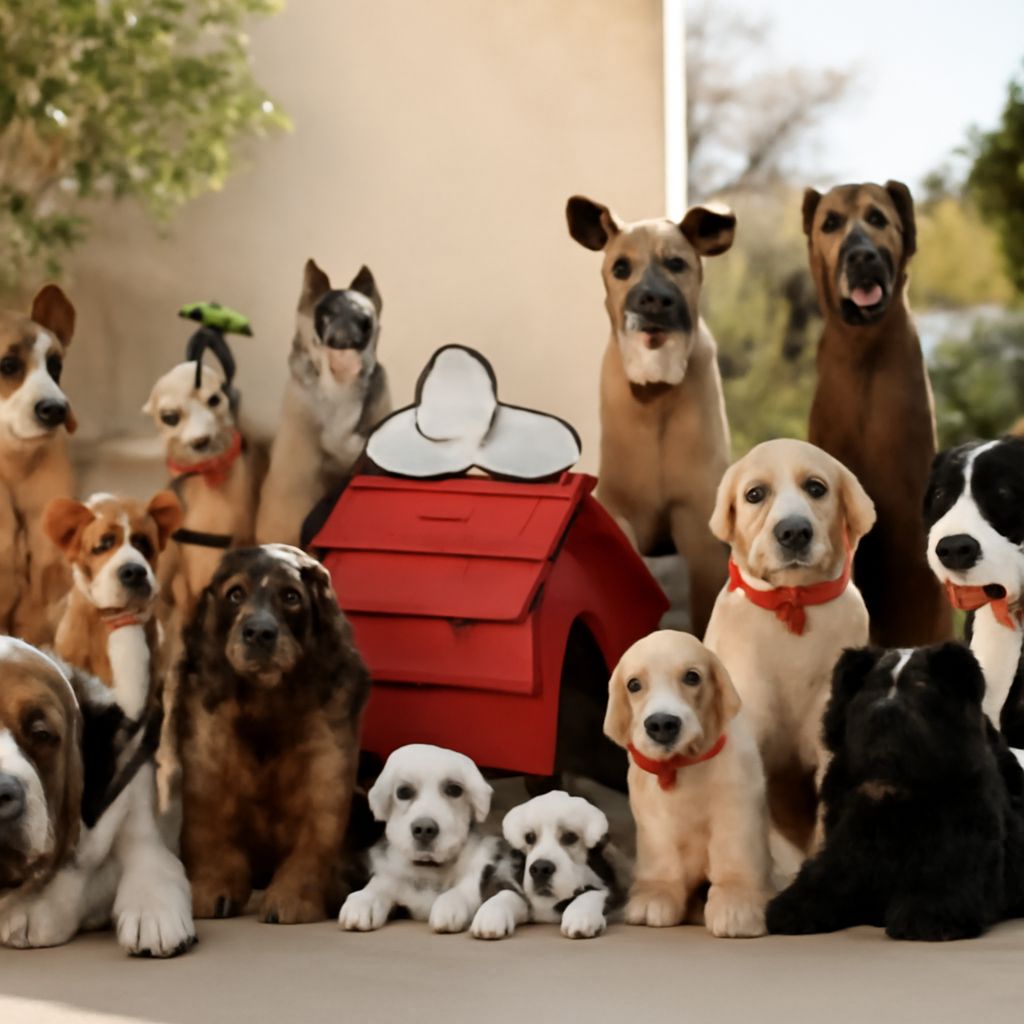
Why do cartoon dogs keep showing up as the most memorable characters in animated storytelling? Part of it is the dog’s natural role as a companion, which translates effortlessly to animation’s need for a character the audience can root for or rely on. Famous cartoon dogs have appeared in virtually every genre, from slapstick comedy to tearjerking drama, and they consistently generate some of the strongest audience attachment of any animated character type.
Cartoon dog characters also give animators a useful design challenge. The dog form is flexible enough to push in almost any visual direction while remaining instantly recognizable. Dogs in cartoons can be anthropomorphic and talking, like Scooby-Doo or Brian Griffin, or they can remain fully animal while still carrying enormous emotional weight, like Lassie. Famous dog cartoon characters have appeared in theatrical shorts, television series, feature films, and web animations, and the best of them have outlasted the productions that created them.
Why Cartoon Dogs Dominate Animation
Relatability and Personality
Dogs are among the most familiar animals in human life, which gives cartoon dogs a built-in emotional shortcut with audiences. Viewers already understand loyalty, playfulness, and the desire to please. Animators can take those existing associations and push them in specific directions to build distinct character personalities quickly. A cartoon dog that is slightly too eager or comically overprotective reads immediately because people have met dogs like that in real life.
Design Simplicity That Works
The dog silhouette, with its four-legged body, tail, floppy or pointed ears, and expressive snout, gives character designers enough variation to create hundreds of distinct-looking characters while staying within a recognizable category. Famous cartoon dogs like Pluto and Snoopy look nothing alike, yet both are unmistakably dogs. This design flexibility is a practical advantage that keeps dogs in cartoons fresh across generations of animation.
The Most Famous Cartoon Dogs of All Time
Scooby-Doo
Scooby-Doo debuted in 1969 on CBS and has appeared in more animated productions than almost any other character in history. He is a Great Dane with a speech impediment, an inexhaustible appetite, and a cowardly personality that somehow makes him endearing. Scooby is perhaps the defining example of cartoon dogs that function as a full ensemble member rather than simply a pet sidekick.
Lassie
Lassie began as a novel character in 1940 and moved through film, television, and animation. The animated Lassie maintains the source material’s emphasis on loyalty and problem-solving, with the dog operating more as a hero than as a comedic element. Lassie represents one of the most serious treatments of dogs in cartoons in the history of the medium.
Pluto and Goofy
Disney’s approach to cartoon dog characters is fascinating precisely because both Pluto and Goofy are dogs in the same fictional universe but behave completely differently. Pluto behaves like a dog; Goofy behaves like a human. The studio never addressed this contradiction, and it never needed to. Both are among the most famous cartoon dogs in the Disney catalog.
Snoopy
Snoopy from Charles Schulz’s Peanuts has appeared in animated television specials since 1965 and in a feature film in 2015. He is a beagle with an elaborate inner fantasy life, an obsession with his food bowl, and a complicated relationship with his owner Charlie Brown. Few famous dog cartoon characters have achieved the cultural penetration that Snoopy has over more than six decades.
Brian Griffin
Brian Griffin from Family Guy, which premiered in 1999, is a talking white Labrador who drinks martinis, writes unpublished novels, and has more human anxieties than most of the human characters in the show. Brian represents a specific category of cartoon dog characters in which the dog’s personality is built entirely on adult humor and self-aware irony.
Clifford
Clifford the Big Red Dog, created by Norman Bridwell in 1963 and adapted to animation in 1988 and again in 2000, is distinctive for the literal scale of his design. He is house-sized, which creates the entire premise of the show. Among dogs in cartoons aimed at children, Clifford has one of the most immediately recognizable visual concepts in the category.
Cartoon Dog Characters by Era
Golden Age Classics
The golden age of animation, roughly the 1930s through the 1950s, gave us Pluto, Goofy, and a range of shorter-lived characters from competing studios. These early cartoon dogs relied heavily on physical comedy and reaction timing. The designs were simple enough to animate economically but expressive enough to carry a full short film.
Saturday Morning Icons
Saturday morning television in the 1960s and 1970s produced a wave of cartoon dog characters aimed specifically at children. Scooby-Doo, Dynomutt, and Astro from The Jetsons all came from this era. These famous cartoon dogs were designed for long-running serial formats rather than self-contained theatrical shorts, which changed how their personalities were developed over time.
Modern Animation Stars
Contemporary famous dog cartoon characters tend to appear in shows designed for streaming, which allows for more serialized storytelling and more complex character development than the episodic Saturday morning format allowed. Dogs in cartoons like BoJack Horseman, where dogs appear as recurring characters, occupy more nuanced roles that reflect the expanded ambitions of modern animation writing.
Dogs in Cartoons: What Makes Them Work
Character Archetypes
Most cartoon dog characters fall into a small number of archetypal roles: the loyal companion, the comic relief, the unexpected hero, or the anthropomorphic everyman. These archetypes persist because they map onto the actual behavioral range of real dogs, which audiences already understand intuitively.
Color and Visual Design
Famous cartoon dogs tend to have bold, high-contrast color schemes. Scooby’s blue collar against his brown fur, Clifford’s solid red against green grass, Snoopy’s white against black-and-white panel backgrounds. These design choices make the character readable at small sizes and in fast-moving animation.
Voice and Personality
Where a cartoon dog character speaks, the voice is often its most distinctive feature. Don Messick’s Scooby voice, Seth MacFarlane’s dry Brian Griffin delivery, and the non-verbal but highly expressive communication of Pluto all demonstrate that the voice, or the absence of one, shapes the character’s entire identity.
Drawing Inspiration from Famous Dog Cartoon Characters
Stylization Choices
Studying how professional animators and character designers handle cartoon dogs teaches you a lot about stylization decisions. Compare Snoopy’s extremely simple oval head to Scooby’s more realistic dog proportions. Both work for their respective shows because the stylization choices match the tone and humor of the writing.
Posing and Expression
The best cartoon dog characters communicate as much through body posture as through facial expression. A dog’s tail, ears, and overall body lean convey emotional states efficiently and naturally. When you study famous cartoon dogs for drawing reference, pay as much attention to the full-body pose as to the face.