Horse Muscle Anatomy: Equine Anatomy for Artists and Students
Why do so many artists struggle with drawing horses convincingly? The answer usually comes down to insufficient understanding of what lies beneath the surface. Horse muscle anatomy is more complex than the smooth, rounded exterior suggests, with dozens of individual muscles creating the contours and movement patterns visible in a living horse. Equine anatomy study, both skeletal and muscular, gives you the structural framework to understand why a horse looks the way it does and how those appearances change with movement and breed variation.
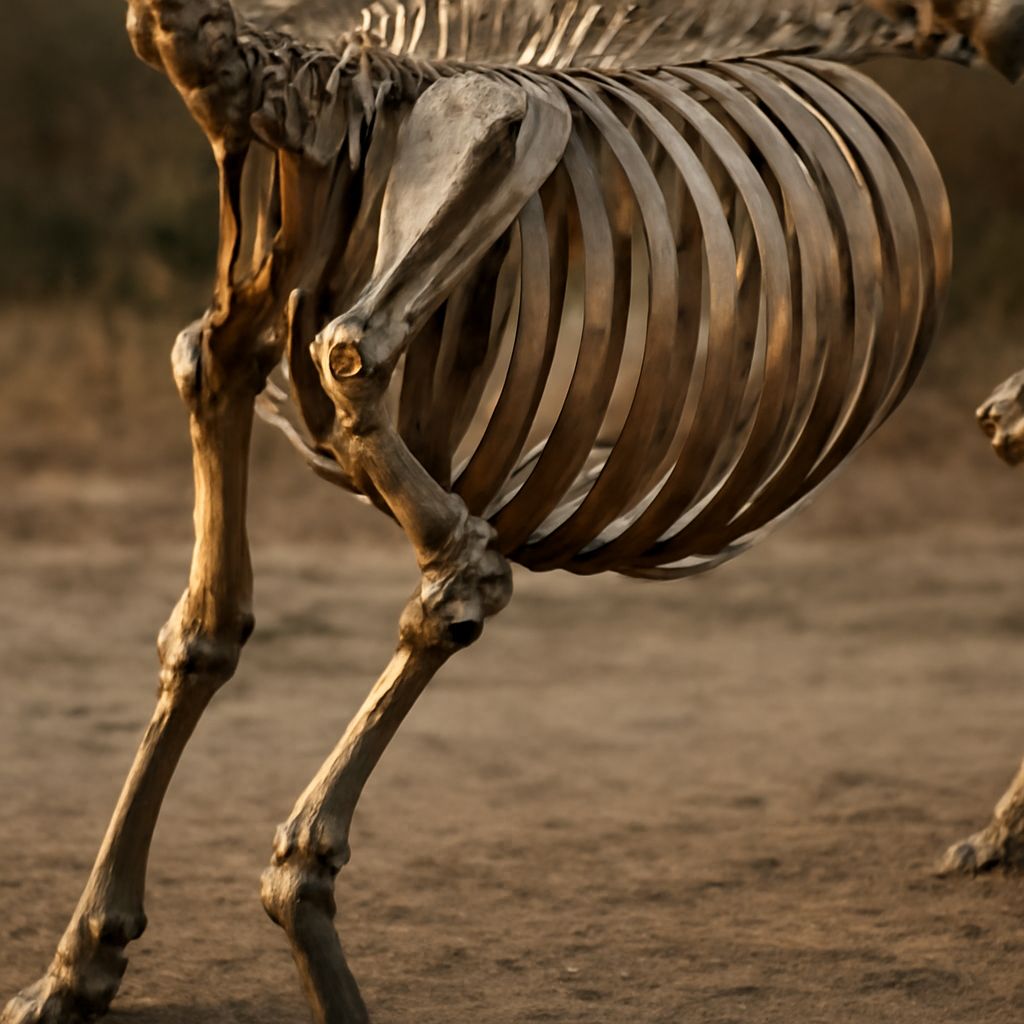
Horse bone anatomy provides the fixed framework around which all surface form is organized. Horse skeletal anatomy in particular reveals why the horse’s proportions are what they are: the long cannon bones, the massive shoulder blade, and the deep rib cage create the form silhouette before any muscle is added. Equine muscle anatomy builds on this foundation to produce the specific contours visible in a standing or moving horse. Understanding both layers simultaneously is the most efficient path to drawing horses with accuracy and confidence.
Horse Bone Anatomy: The Structural Framework
The Skull and Neck
Horse bone anatomy at the skull shows an elongated face with large eye sockets positioned high and to the sides, giving the horse nearly 360-degree vision. The neck attaches to the skull at the poll (the top of the head between the ears) and runs in a slight arch to the withers. Horse skeletal anatomy in the neck region includes seven cervical vertebrae, the same number as in humans, but arranged to support a head that weighs 40 to 50 lbs at the end of a long lever arm. The nuchal ligament running along the top of the neck provides elastic support for this weight without constant muscular effort.
The Back and Withers
In horse bone anatomy, the withers are formed by the elongated spinous processes of the first few thoracic vertebrae. This is the highest point of the horse’s back and the standard point for measuring height in hands. Horse skeletal anatomy in the back region shows a long thoracic spine (18 vertebrae), a shorter lumbar spine (6 vertebrae), and a fused sacrum. The relatively fixed lumbar spine, compared to a dog or cat, limits how much a horse can flex its back laterally, which affects how the hind legs drive under the body during movement.
Limb Bones
Horse bone anatomy in the limbs reflects the horse’s identity as a digitigrade animal that evolved to run on a single functional digit per foot (the third digit, which forms the hoof). The limb bones include the humerus, radius, and cannon bone (metacarpus) in the forelimb, and the femur, tibia, and cannon bone (metatarsus) in the hind. The “knee” of the horse’s foreleg is actually the carpus, corresponding to the human wrist. The horse’s hock joint corresponds to the human ankle and heel. Understanding these correspondences in horse skeletal anatomy prevents the structural errors that make horse drawings look wrong.
Horse Muscle Anatomy: Surface Form
Shoulder and Foreleg Muscles
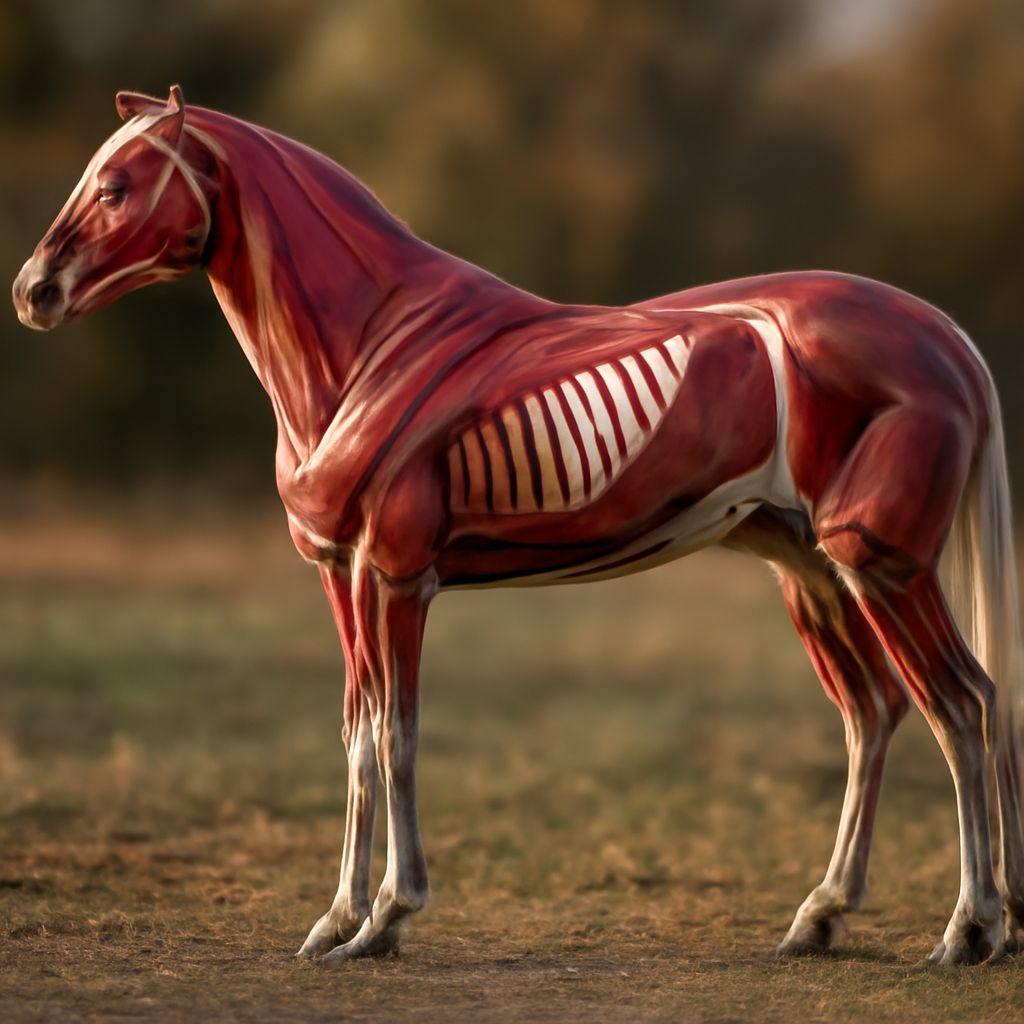
Horse muscle anatomy at the shoulder includes the trapezius, the large flat muscle that runs from the nuchal ligament to the spine of the scapula, and the deltoid, which covers the point of the shoulder. The triceps forms the large muscle mass at the back of the upper arm and is one of the most visible in equine muscle anatomy, creating the posterior contour of the foreleg above the elbow. The brachiocephalic muscle runs from the humerus to the skull along the underside of the neck and is prominent in a horse that carries its head high or extends its neck forward.
Back and Hindquarter Muscles
Equine muscle anatomy in the back and hindquarters contains the horse’s most powerful muscle groups. The longissimus dorsi runs along the entire length of the back on both sides of the spine, creating the muscle channel visible on either side of the horse’s topline. The gluteus medius and biceps femoris create the rounded mass of the croup and hindquarter that drive the horse’s forward propulsion. In equine muscle anatomy for artists, the hindquarter muscles are particularly important because they change shape dramatically as the horse engages or extends its hind legs.
Neck Muscles
Neck muscles in horse muscle anatomy serve two primary functions: head support and head movement. The sternohyoid and sternothyrohyoid muscles run along the underside of the neck. The splenius and semispinalis run along the top. In a horse with a naturally arched neck, the crest (the top of the neck) is partially formed by the nuchal ligament and partially by the underlying muscles. When a horse carries its head high, the crest muscles firm and the underside muscles become more defined, visible as a series of cord-like structures along the lower neck in equine anatomy.
Equine Anatomy for Drawing
Key Landmarks for Artists
Whether you are drawing from life or reference, certain bony and muscular landmarks in horse skeletal anatomy appear consistently and serve as anchors for accurate proportion and form. The point of the shoulder, the point of the hip, the point of the hock, and the highest point of the withers define a bounding box for the horse’s body. Once these four landmarks are correctly placed relative to each other, adding the curved forms of the neck, back, belly, and legs becomes much more manageable. Equine muscle anatomy and horse bone anatomy work together to define these landmarks.
Breed Variation in Horse Anatomy
Horse muscle anatomy and proportions vary significantly between breeds. Draft horses like Clydesdales and Percherons have massive bone structure, heavily muscled quarters, and pronounced feathering on the lower legs. Thoroughbreds have light bone relative to body size, long slender muscles designed for sustained speed, and minimal body fat. Arabian horses have refined, dry heads with a distinctive dished profile not found in other breeds. Understanding these breed differences in equine anatomy prevents the common error of drawing a generic horse that looks like no specific breed accurately.