Ballpoint Pen Drawing: Techniques, Styles, and Tools for Every Artist
Can a simple ballpoint pen really produce artwork worth hanging on your wall? Absolutely. Ballpoint pen drawing has grown into a serious discipline, with artists creating everything from delicate botanicals to sweeping landscapes using nothing more than a standard pen. If you’ve ever wondered what separates a sketch that looks flat from one that glows with depth, understanding tools matters as much as technique. A quality watercolor pen brush paired with ink work can extend your creative range significantly, and learning ballpoint pen calligraphy adds a lettering dimension to your skills.
Whether you want to produce intricate black pen drawings or capture the organic shapes of a tree pen drawing, this guide breaks down how to approach both the tools and methods that make ballpoint drawing rewarding for beginners and experienced artists alike.
Understanding Ballpoint Pen as an Art Medium
Ballpoint pens use a viscous, oil-based ink that dries quickly on contact with paper. This fast-drying quality prevents smearing, making ballpoint a forgiving medium for artists who tend to rest their hands on the page while drawing. The ink is also relatively permanent once dry, which means you need to commit to your lines — a quality that actually builds confidence over time.
Why Artists Choose Ballpoint
The accessibility of ballpoint is unmatched. You likely already own several. High-quality brands like Uni-Ball and Staedtler offer consistent ink flow, while specialized drawing pens from Sakura or Pentel provide fine tips for detailed linework. The low cost means you can experiment freely without worrying about wasting expensive materials.
Comparing Ballpoint to Other Pen Types
Gel pens deliver more intense blacks but can skip or blob. Fountain pens offer expressive line variation but require maintenance. Ballpoint sits in the middle — reliable, consistent, and surprisingly expressive when you learn to vary pressure. For those who also enjoy watercolor work, combining ballpoint pen drawing with a watercolor pen brush can produce stunning mixed-media results.
Mastering Shading and Texture Techniques
Shading is where ballpoint pen drawing truly shines. Unlike a graphite pencil, you cannot erase a ballpoint line, which means you build tone through layering and hatching rather than blending. This constraint becomes a creative strength once you internalize it.
Hatching and Cross-Hatching
Hatching involves drawing parallel lines close together to suggest shadow. Cross-hatching adds a second set of lines at an angle over the first, creating deeper tones. This technique appears extensively in black pen drawings used in editorial illustration and fine art. Practice hatching on a grid before applying it to actual subjects — your linework becomes far more controlled with deliberate warm-up exercises.
Stippling for Organic Texture
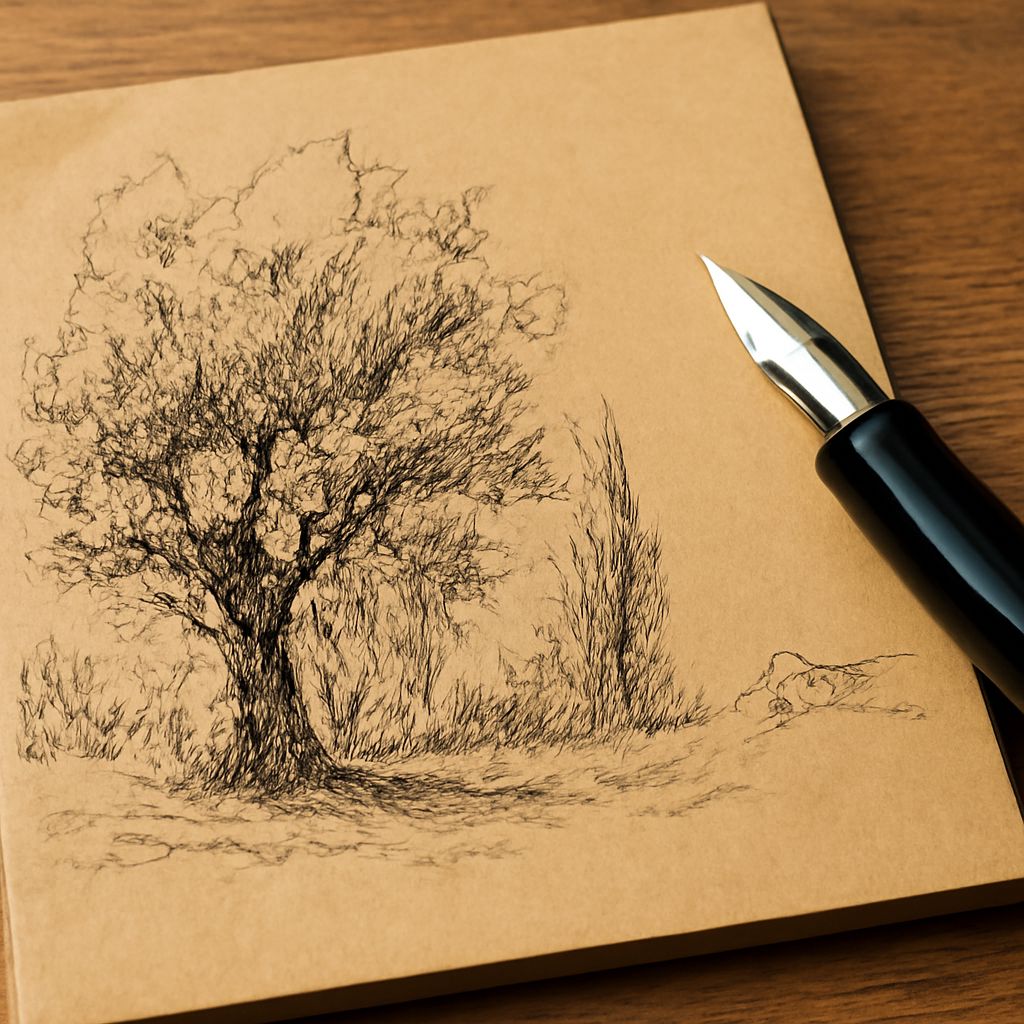
Stippling uses dots rather than lines to build tone. It takes longer but produces a soft, organic quality ideal for botanical subjects like leaves, bark, or the rough texture of tree trunks. If you’re working on a tree pen drawing, stippling the shadowed areas beneath foliage while using loose, looping lines for leaves creates compelling contrast.
Pressure Variation for Line Weight
The harder you press, the darker and wider your line. Light pressure produces thin, delicate lines. Practicing consistent pressure control — going from feather-light to firm in a single stroke — gives your drawings dynamic range. This principle applies directly to ballpoint pen calligraphy, where thick downstrokes and thin upstrokes define letterform elegance.
Ballpoint Pen Calligraphy Basics
Traditional calligraphy uses flexible nibs that spread with pressure. Ballpoint pens lack this flexibility, but you can simulate the thick-thin contrast by deliberately slowing your strokes on downward movements and speeding up on upstrokes. Ballpoint pen calligraphy is more controlled and less flowing than nib calligraphy, which gives it a crisp, architectural quality many designers prefer for logo lettering and titles.
Practice with a ruled guide sheet placed under your paper so the lines show through. Maintain a consistent pen angle — around 45 to 55 degrees — and work on alphabet consistency before attempting full words or phrases. Pairing your lettering practice with a watercolor pen brush for background washes can turn simple calligraphy into finished, frame-worthy pieces.
Drawing Trees and Botanicals with a Ballpoint Pen
Trees are excellent subjects for pen drawing because their structure involves clear value contrasts and varied texture. A successful tree pen drawing reads clearly from a distance and rewards close inspection with intricate detail.
- Start with the silhouette and major branch divisions before adding detail.
- Use loose, quick strokes for foliage clusters rather than drawing individual leaves.
- Reserve your darkest marks for areas deepest in shadow — the underside of branches, the base of the trunk where it meets ground.
- Let white paper stand in for the brightest highlights; ballpoint has no way to reclaim white once covered.
For black pen drawings of trees in winter, negative space becomes your most powerful tool. The bare branches against a white background create drama through absence rather than addition.
Choosing the Right Paper and Supplies
Ballpoint ink works on most paper types, but smooth surfaces like Bristol board or laser printer paper allow the ball to roll freely without catching on fibers. Textured watercolor paper can create interesting effects but may cause the ball tip to skip. If you plan to combine ink with a watercolor pen brush, choose a paper rated for mixed media to prevent warping when wet media is applied over dry ballpoint lines.
Keep a few backup pens at hand — ballpoints can dry out mid-session. Test ink flow on a scrap piece before beginning a piece you care about. Over time, building a collection of tip sizes from 0.3mm to 1.0mm gives you the full range from hairline detail to bold gesture lines, expanding what you can achieve with every ballpoint pen drawing session.