Continuous Contour Line Drawing: Boat, Floral, Botanical, and Tiger Subjects
What forces you to slow down, look more carefully, and commit to every mark you make? Continuous contour line drawing is one of the most demanding and rewarding drawing exercises available — you trace the edges and surface details of your subject without lifting the pen from the paper, creating a single unbroken line that records your observation in real time. The result is often imperfect by conventional standards and precisely because of that imperfection, more alive and expressive than careful rendering. Boat line drawing in this method captures the sweep of a hull in one flowing gesture. Floral line drawing reveals petal overlaps and stem curves in an organic, unplanned sequence. Botanical line drawing applied to this method produces images full of character that conventional illustration cannot replicate. Even a tiger line drawing becomes something powerful when the line traces without interruption from eye to stripe to paw.
This guide covers the method, its variants, and how to apply it productively across very different subject categories.
What Continuous Contour Line Drawing Does
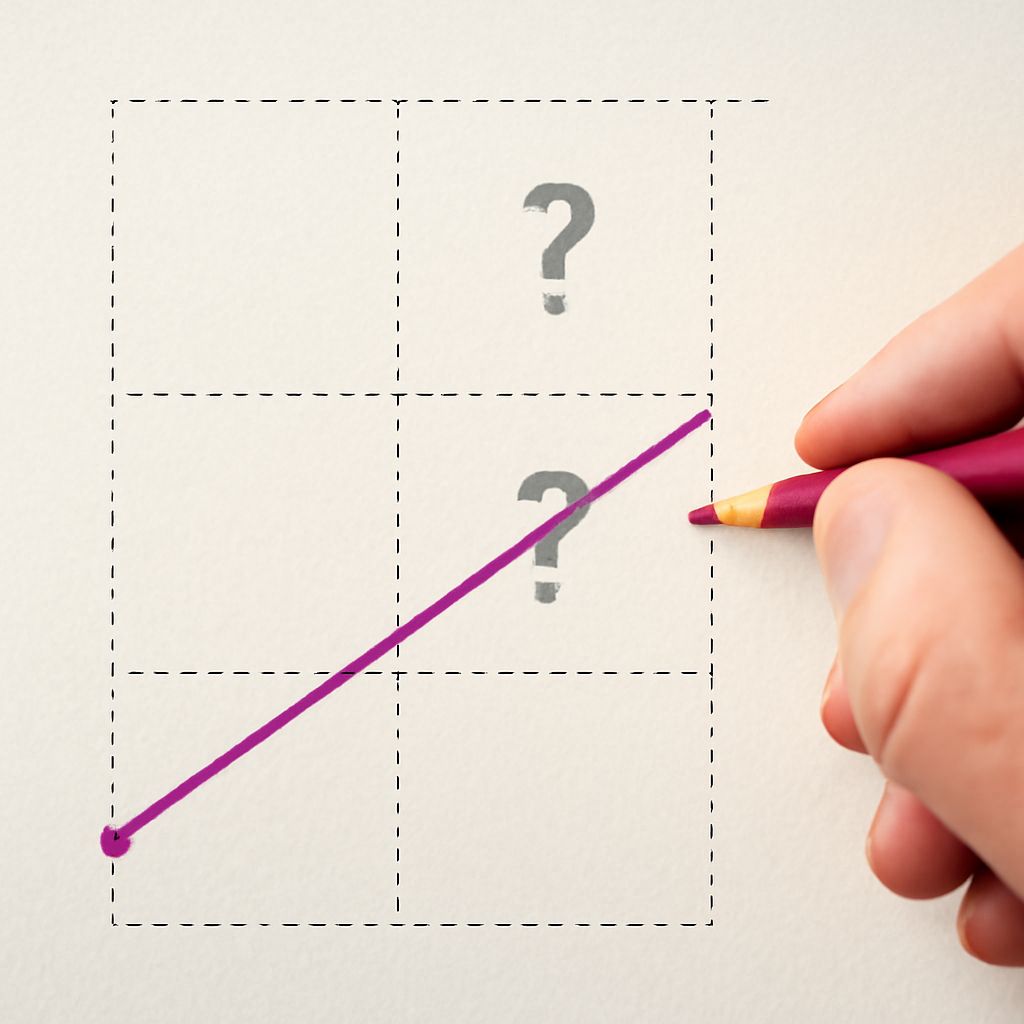
Continuous contour line drawing means moving your pen across the paper at the same speed as your eye moves across the subject, maintaining contact between pen and paper throughout. You look at the subject far more than at your paper. The line records the movement of your eye, which means it records genuine observation rather than remembered or imagined shapes.
This method is not about producing polished finished work. It is about training observation. When artists practice continuous contour line drawing regularly, their ability to see edges, overlaps, and spatial relationships improves dramatically — improvements that show up in all their other drawing work, not just in contour exercises.
Boat Line Drawing Using the Continuous Method
A boat line drawing done continuously is an excellent subject because boats have long, sweeping curves at the hull, complex rigging details, and strong spatial geometry that tests your ability to maintain proportion while moving without lifting. Start at the bow (front) and trace along the waterline toward the stern, then up and over the cabin or hull structure, into the mast and rigging, and back down. The line will cross itself at intersections — that is not a problem, it is part of what makes the drawing readable as a complex three-dimensional object.
The boat line drawing done this way captures something photographs cannot: the sequence of observation, the relative emphasis you placed on different parts of the vessel based on how long your eye lingered there.
Floral and Botanical Line Drawing Applications
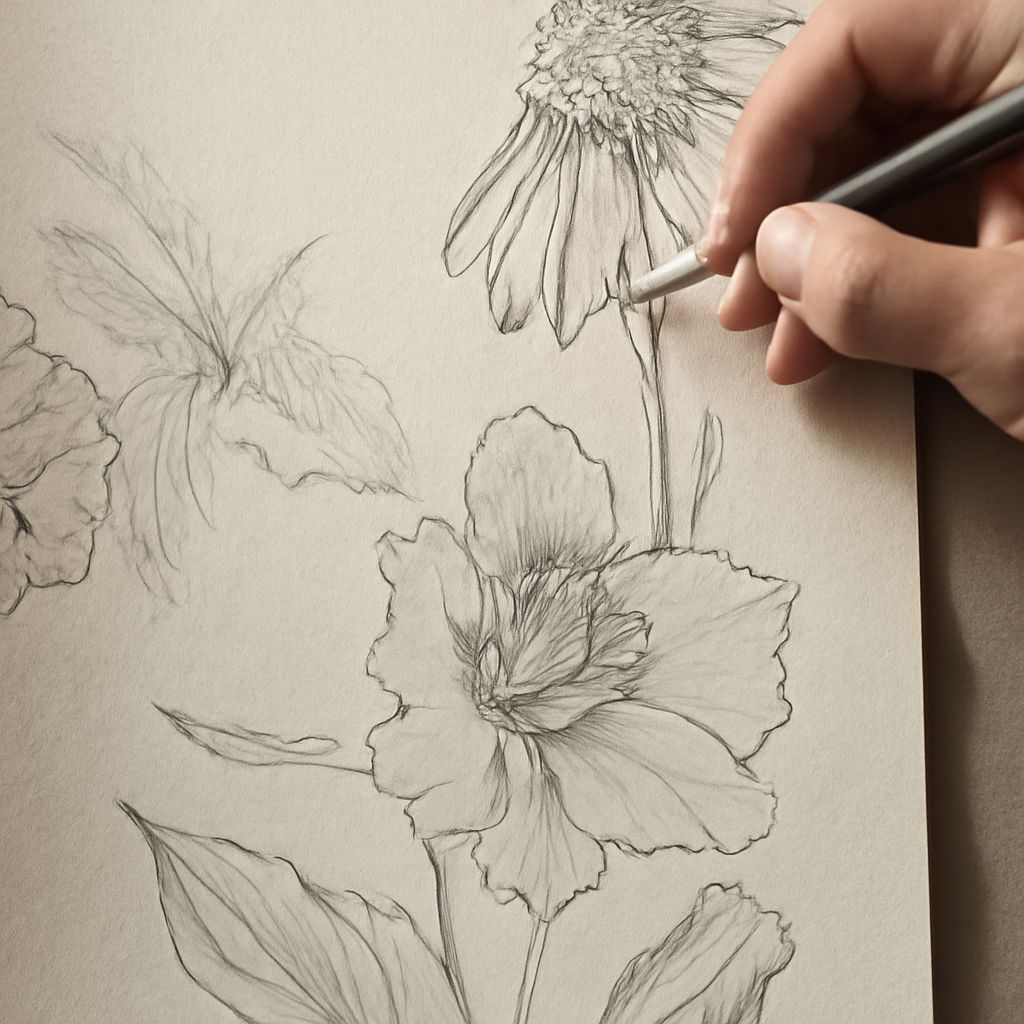
Floral line drawing is one of the most popular applications of the continuous method because flowers have naturally flowing curves that suit unbroken linear recording. A single rose, traced from the outermost petal edge through every overlap and turn back into the center, produces images that feel intimate and carefully observed even when the proportions are imperfect.
Botanical line drawing extends this approach to the whole plant: stem, leaves, flower, and root system recorded in continuous sequence. The leaf veins and petal venation that appear in botanical line drawing are particularly suited to continuous tracing because their branching structure follows a logical spatial order that your eye naturally moves along. The result communicates the structural logic of the plant in a way that a looser gestural sketch does not.
Tiger Line Drawing: Managing Complex Surface Detail
A tiger line drawing done continuously presents the challenge of managing a subject with both large structural forms (the massive head, the muscular body) and dense surface detail (stripes, fur texture, facial markings). The continuous method requires you to decide: do you trace the outer edges of forms, the interior stripe boundaries, or a combination?
Most effective tiger line drawing in the continuous method focuses on the most important structural edges and a selection of interior details, rather than attempting to trace every stripe completely. The eye selects which features to follow, and that selection process itself becomes part of the artistic decision-making. Your line quality — faster and looser over broad forms, slower and more deliberate at facial details — tells the viewer which areas matter most.
Building a Continuous Contour Practice
Begin with five-minute continuous contour sessions using simple objects before progressing to complex subjects like boats or animals. Use a pen rather than pencil — the inability to erase forces commitment. Do at least three drawings of the same subject in one session to see how your observation changes with repeated looking. Your third drawing of a subject is almost always more accurate and more expressive than your first, because repeated looking builds familiarity that enables real seeing rather than symbol recognition.