Drawing People: Beginner Guide to Drawing a Person and Human Figures
Is drawing people really that different from drawing other subjects? In terms of observation and technique, not particularly. The challenge is that viewers are hardwired to notice when something looks wrong about a human figure in a way that they are not when assessing a landscape or still life. When you draw a tree with imperfect proportions, most viewers accept it as an artistic choice. When you draw a person with imperfect proportions, viewers feel that something is off even if they cannot name why. Drawing people requires more precision than most other subjects because your audience is expert at evaluating people. Learning the right framework for drawing a person turns this challenge into a manageable technical problem rather than an overwhelming artistic mystery. Drawing people for beginners starts with proportion, posture, and gesture before any anatomical detail.
This guide covers how to sketch people from basic construction through finished figures, and the most effective tips for drawing people that apply regardless of your current skill level.
The Foundational Proportion System
Drawing people starts with understanding the standard proportion convention used in figure drawing: the head-height measurement system. The average adult human body is approximately seven to seven-and-a-half times the height of the head. This gives you a reliable framework for checking overall proportions before worrying about any specific body part.
When you start drawing a person, establish the head first as your unit of measurement. Then lightly mark where the waist, crotch, knees, and feet fall based on multiples of that head height. The waist falls around three head heights from the top. The crotch falls around three-and-a-half to four head heights. The knees fall around five to five-and-a-half head heights. The feet fall at seven to seven-and-a-half. Working within these anchors before adding any detail prevents the proportional errors that make figure drawings look wrong from the first mark.
Drawing People for Beginners: Start with Gesture
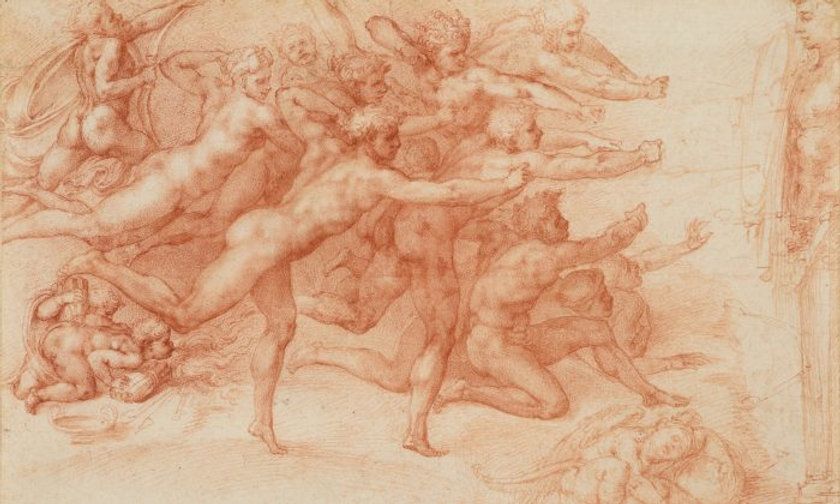
Drawing people for beginners often goes wrong because beginners start with the outline rather than the inner structure. Outlining produces stiff, flat figures because it prioritizes the edge over the volume and energy inside the form. Gesture drawing — beginning with the line of movement through the figure before anything else — produces figures that feel alive because they capture the pose’s essential energy first and add structure afterward.
Practice gesture with timed sessions using online reference. Start with 30-second poses where you can only capture the main line of action and rough mass positions. Gradually extend to one-minute, two-minute, and five-minute sessions. Each session level allows progressively more structure while retaining the gestural quality that makes figures feel inhabited rather than mechanical. This progression is the most effective drawing people for beginners approach because it trains observation speed and decisive mark-making simultaneously.
How to Sketch People Quickly and Accurately
Learning to sketch people quickly requires committing to construction marks rather than outlining. A quick sketch of a person uses the simplest possible shapes to indicate the major masses — a circle for the head, a tapered rectangle for the rib cage, a smaller shape for the pelvis — before adding limbs as tubes and finally the surface form and any details.
This construction approach lets you sketch people in dynamic poses without the slow outlining method that must start from some edge and work its way around the figure. Construction starts from the inside and works outward, which is faster and produces more structurally sound results. Timed practice — ten figures in ten minutes — is the most efficient way to build speed without sacrificing structural integrity.
Tips for Drawing People That Apply at Any Level
The most effective tips for drawing people that apply regardless of experience level:
- Always establish the overall proportions before adding any detail — one wrong early proportion ruins the whole figure.
- Look at your reference more than you look at your paper, especially early in the drawing.
- Draw through forms — draw the far arm even when the near torso overlaps it, then let the overlapping form define the boundary. This builds accurate spatial understanding.
- Vary your line weight even in quick sketches — heavier lines for forms in shadow or coming forward, lighter for forms receding or in light.
- Never draw a person floating — place the ground contact point first and build from there. A figure anchored to the ground reads as present and dimensional.
These tips for drawing people work together because they address the most common failure modes in figure work: proportion errors, insufficient observation, spatial confusion, and lack of tonal variation. Applying all five simultaneously in your next figure session will produce noticeably better results than your current approach.