Watercolor Palette Guide: Empty Palettes, Metal Options, and Building Your Setup
Does the watercolor palette you choose actually affect the quality of your work? More than most beginners expect. The container where you mix your colors affects how paint behaves, how easily you can see color relationships, and how convenient your workflow is across different painting contexts. Understanding the differences between types of watercolor palettes, and knowing when an empty watercolor palette serves you better than a pre-loaded one, will improve your painting experience before you touch a brush to paper.
This guide covers what to look for in watercolor palettes, the specific advantages of a metal watercolor palette, why an empty watercolor palette is often the better choice for experienced artists, and what “watercolor pallet” means when you encounter that spelling in product searches.
Types of Watercolor Palettes
Pre-Loaded vs. Empty Palettes
Pre-loaded watercolor palettes come with paint already installed in the wells, typically in pan form. These are convenient for beginners because they eliminate the decision of which paints to buy separately. The limitation is that you’re working with whatever color selection the manufacturer chose, which may not match your subjects or preferences. An empty watercolor palette, by contrast, lets you fill each well with exactly the colors you want from whatever brands and grades you choose.
Most experienced painters eventually migrate to an empty watercolor palette for this reason. The ability to curate your own color selection is worth the additional setup time. You can mix pigments from different brands, replace colors as your preferences evolve, and remove colors that aren’t serving your current subjects.
Well Design and Mixing Space
The well design of watercolor palettes matters significantly. Wells should be deep enough to hold a useful amount of paint, separated clearly to prevent colors from contaminating each other, and arranged with sufficient mixing space in the palette body. Palettes with very shallow wells dry out quickly and make it difficult to pick up concentrated pigment for strong mixtures. Palettes without adequate flat mixing areas force you to mix in the wells themselves, which dirties your stored colors.
Metal Watercolor Palette: When It’s the Right Choice
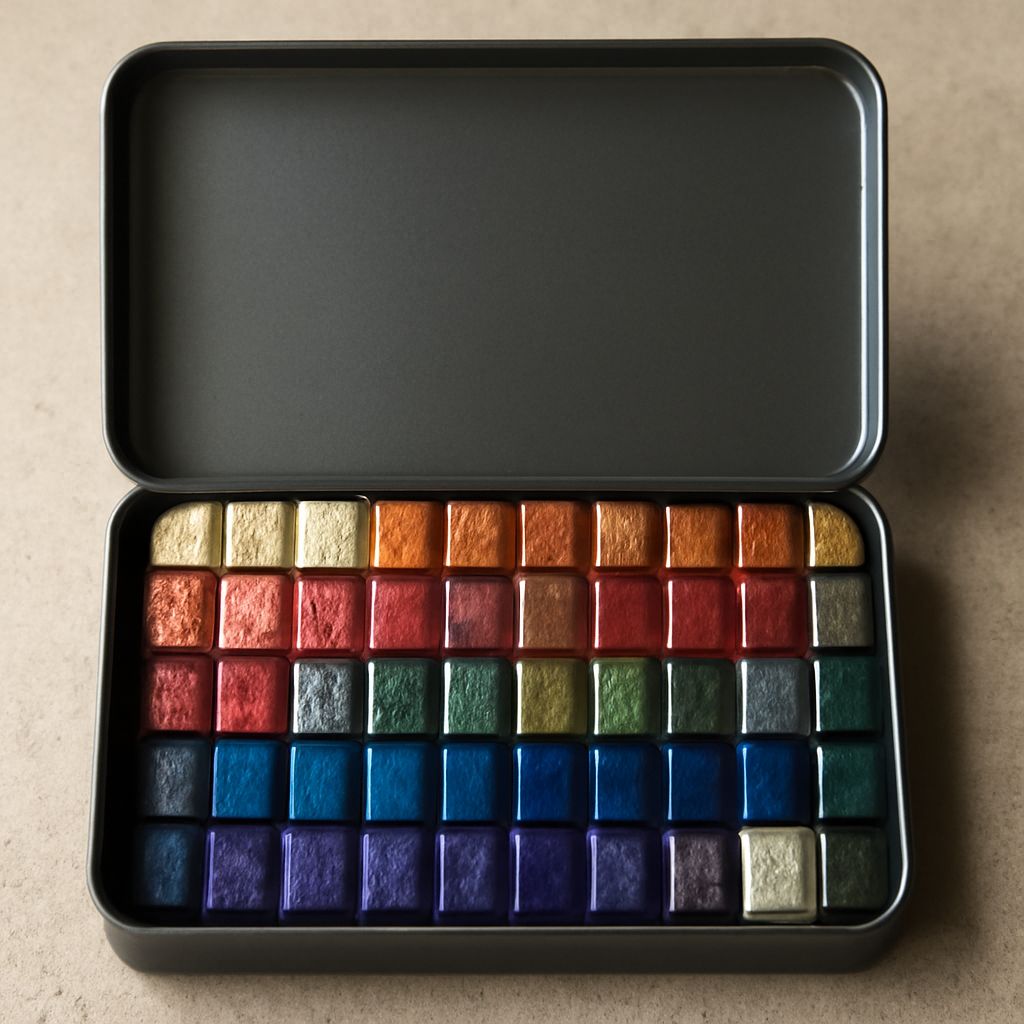
A metal watercolor palette typically refers to palettes constructed from aluminum or tin. These have several advantages over plastic: they are more durable, they don’t absorb pigment and stain over time the way some plastics do, and paint dries and re-activates from metal surfaces predictably. For travel painting, a metal watercolor palette is almost always the better choice because metal handles the physical stress of transport better than plastic and resists the denting and warping that plastic can develop.
The primary consideration with a metal watercolor palette is that some artists find the gray or silver surface makes color evaluation less accurate than a white surface. If you use a metal watercolor palette with natural or brushed metal color, keep this in mind when mixing colors that will look different once applied to white paper. Many metal palettes include a white coated interior precisely to address this issue.
Watercolor Pallet: The Common Spelling Variant
If you search for “watercolor pallet” rather than “watercolor palette,” you’ll find the same products under a common misspelling. Technically, a pallet is a wooden shipping platform, while a palette is the artist’s mixing surface. But in everyday product searches, both spellings point to the same category of tools. Retailers often include both spellings in their product metadata to capture both groups of searchers, so don’t be surprised to see “watercolor pallet” appearing in product titles alongside watercolor palettes.
Choosing and Setting Up Your Palette
Setting up your watercolor palettes thoughtfully from the beginning saves significant time and frustration. Arrange colors consistently: warm colors on one side, cool colors on the other, neutrals in a separate row. This arrangement lets you mix predictably without having to think about where to find each color during a painting session. When loading an empty watercolor palette with tube paint, squeeze small amounts into each well and let them dry completely before your first painting session. Dried pan paint activates easily with a damp brush and lasts much longer than working from wet tube paint each session.
For a metal watercolor palette used in travel, consider which colors you actually paint outdoors versus which are studio-only colors. Your travel palette doesn’t need to mirror your full studio setup. A smaller, more curated selection of ten to fourteen colors in a compact metal watercolor palette often serves outdoor painters better than trying to replicate a full studio setup in a portable format.