Watercolor Travel Kit Guide: Palettes, Colors, and What to Pack
What goes into a truly useful watercolor travel kit? That question has a different answer depending on whether you paint plein air landscapes, quick urban sketches, or detailed botanical studies on the road. The core challenge is finding a travel watercolor palette that holds enough color range to cover most subjects without weighing down your bag. You also want to think carefully about watercolor palette colors before you fill any pan set, because the pigments you choose matter as much as the container.
This guide covers everything from choosing a porcelain watercolor palette to selecting a watercolor travel palette that fits your practice. By the end, you’ll have a clear picture of what a well-stocked watercolor travel kit actually looks like in use.
Choosing the Right Travel Watercolor Palette Container
Porcelain Watercolor Palette Options
A porcelain watercolor palette is the gold standard for mixing surfaces. Porcelain does not absorb pigment, cleans completely with a damp cloth, and lets you see true color without a yellow or grey cast. The downside for travel is weight. A full porcelain watercolor palette with twelve or more wells can be heavy enough to make your bag noticeably heavier after a full day of walking.
Smaller porcelain options exist specifically for travel. A half-pan porcelain tray with six to eight wells sits flat in a sketchbook bag and still gives you a clean mixing surface. Combine a small porcelain mixing dish with a plastic half-pan travel case to get the best of both worlds.
Plastic and Metal Travel Cases
Most dedicated travel watercolor palette products are made from plastic or anodized aluminum. Plastic is lightweight and cheap but can stain with heavily pigmenting colors like phthalo blue or viridian. Metal cases are more durable and slightly heavier. Both types usually fold open to reveal a mixing lid, which is a practical design that doubles your usable mixing surface without adding size to your watercolor travel palette.
Look for half-pan cases over full-pan cases in a watercolor travel kit. Half pans hold the same pigment mass as a tube squeeze but take up less horizontal space, allowing more colors in a compact footprint.
Selecting Watercolor Palette Colors for Travel
A Minimal but Complete Color Range
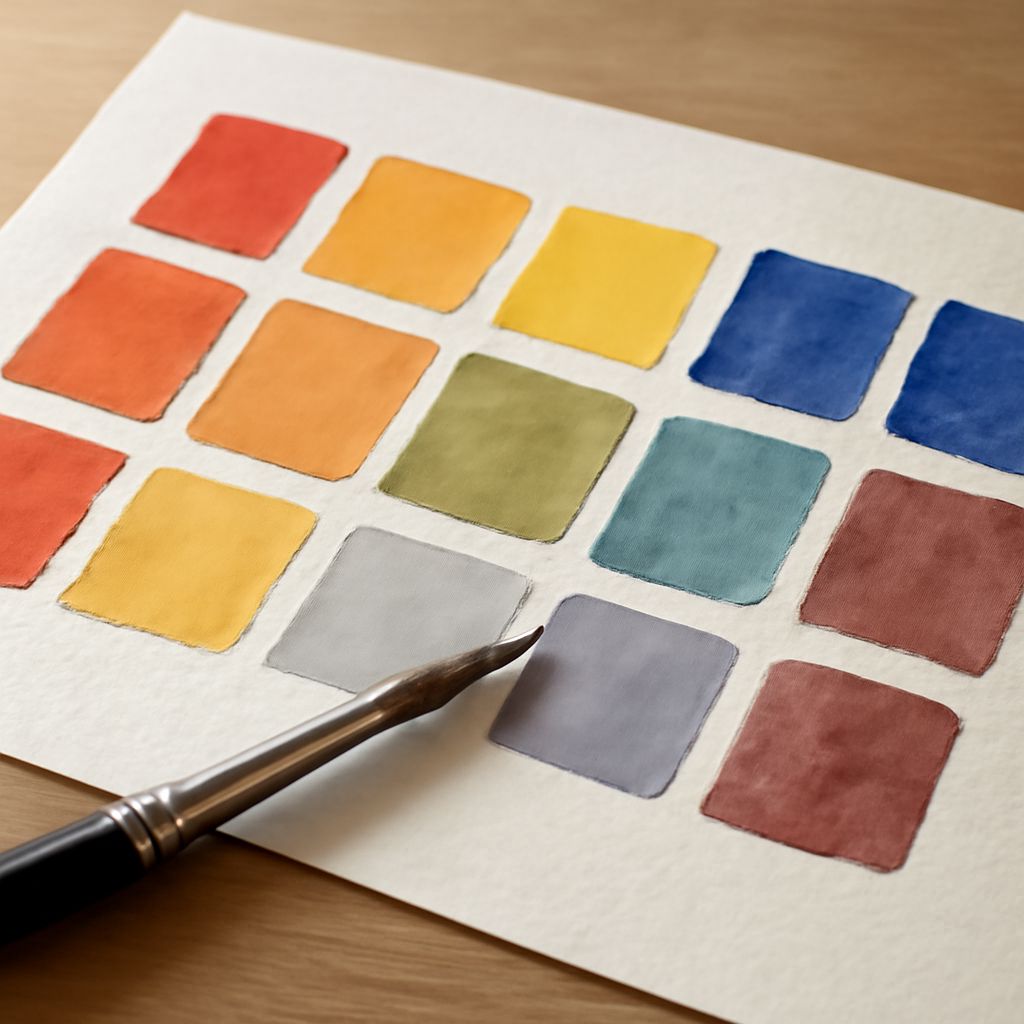
The ideal watercolor palette colors for travel cover the full spectrum with as few pans as possible. A twelve-pan set can handle most subjects if you choose well. A warm yellow, a cool yellow, a warm red, a cool red, a warm blue, a cool blue, a neutral earth tone, and one or two useful greens or earth mixes will take you far.
Avoid packing colors you can mix easily. You don’t need both orange and yellow-red if you can mix orange quickly on your porcelain watercolor palette. Reserve pan slots for colors that are hard to mix, like a good cadmium or phthalo substitute, a reliable earth like raw umber, and a strong dark like indigo or paynes grey.
Lightfastness Matters on the Road
When painting away from your studio, lightfastness becomes more relevant because your sketches may end up framed or displayed without further work. Check pigment ratings before filling a watercolor travel palette with student-grade sets. Some student colors use dyes rather than pigments and will fade significantly within a year of light exposure.
Artists-grade single-pigment colors cost more per pan but give you reliable lightfastness ratings. Many travel painters fill their travel watercolor palette with artists-grade half-pans because the cost difference is manageable when you only need twelve to eighteen pans total.
Brushes and Water Containers for a Travel Watercolor Kit
Brush selection shapes the whole character of a watercolor travel kit. Two or three brushes cover most needs: a large round for washes, a medium round for general work, and a small round or rigger for fine detail. Waterbrushes, which have a water reservoir in the handle, remove the need for a separate water container entirely and are popular for urban sketching where finding clean water can be inconvenient.
If you prefer traditional brushes, a collapsible water cup clips to a palette or sits in a pocket. Some travel painters carry two cups: one for clean water, one for rinsing. That small addition keeps watercolor palette colors from muddying when you switch between warm and cool pigments.
Packing and Protecting Your Travel Setup
A dedicated pouch or small roll keeps your watercolor travel kit organized and protects both brushes and palette. Brush rolls hold a dozen brushes flat without bending ferrules. A neoprene sleeve protects the palette from scratches. Keep the whole setup in an outer bag pocket for quick access when a good subject appears unexpectedly.
Protect filled pans from heat. A watercolor travel palette left in a hot car can cause pigment to crack or detach from the pan. When traveling by air, keep the palette in your carry-on to avoid pressure and temperature extremes in luggage holds. A small note on your kit explaining the non-hazardous nature of watercolors can help if you encounter security questions about the tubes or pans.