Calligraphy Art: A Guide to Types, Techniques, and Cross-Disciplinary Connections
What separates calligraphy art from ordinary handwriting — and why does mastering it develop skills that transfer directly to drawing, painting, and design? At its core, calligraphy demands the same hand-eye coordination, controlled pressure, and spatial awareness that underlies every other visual art discipline. The types of calligraphy range from the angular precision of Gothic blackletter to the fluid grace of Chinese brush script, and each requires a different tool, different grip, and different understanding of how ink and paper interact. Beyond the letterforms themselves, a calligrapher who studies types of perspective drawing gains a spatial vocabulary for understanding how letterforms sit in space. Knowledge of types of watercolor brushes informs brush calligraphy choices, and understanding types of watercolor paint opens up possibilities for calligraphy-watercolor hybrid artwork.
This guide covers the major categories of calligraphic traditions, the tools and techniques specific to each, and the connections between calligraphy and related visual disciplines that make it a uniquely comprehensive art practice.
The Major Types of Calligraphy
Western Calligraphic Traditions
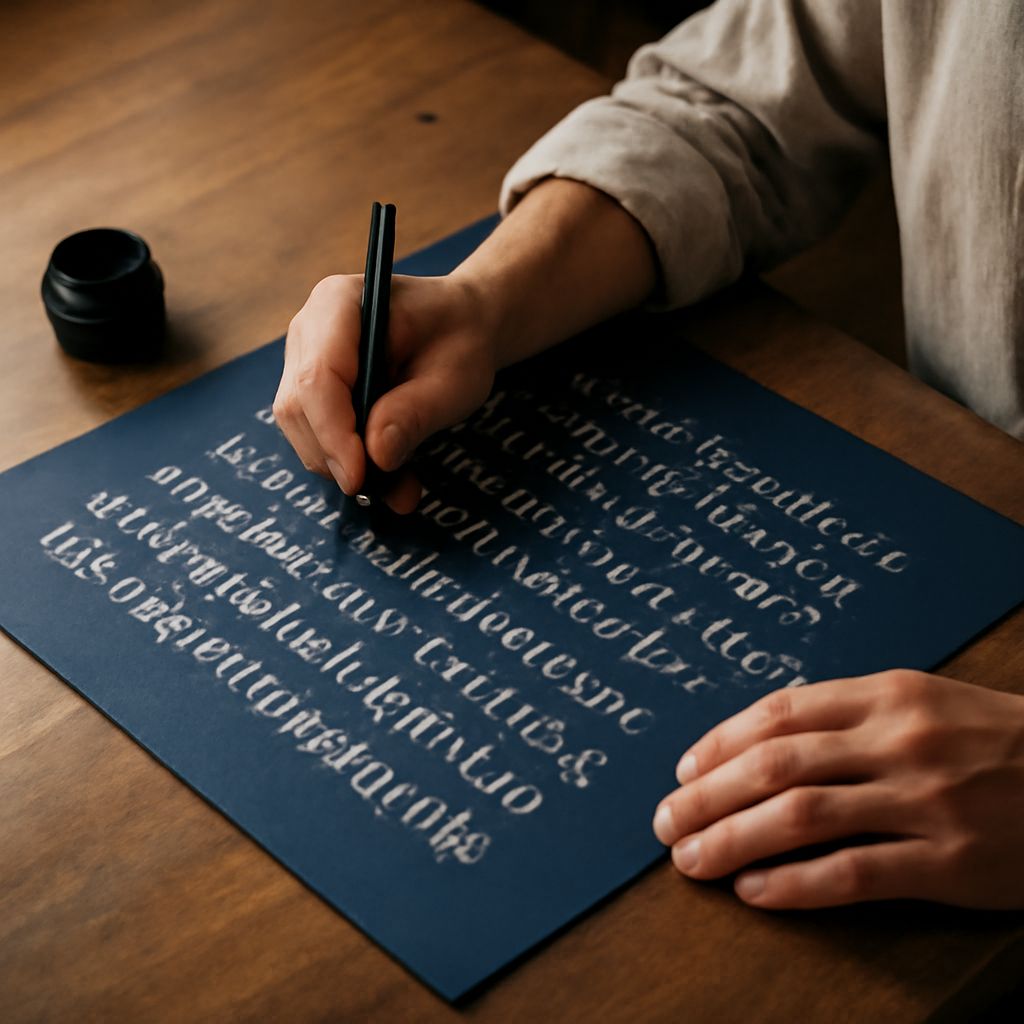
The types of calligraphy in the Western tradition are defined primarily by their historical scripts. Gothic or blackletter calligraphy uses a broad-edged pen held at a consistent angle to produce the dramatically thick and thin strokes of medieval manuscript tradition. Italic calligraphy is more flowing and accessible — slightly slanted letterforms with moderate contrast between thick and thin strokes. Copperplate (also called Roundhand or English Copperplate) uses a pointed flex nib that produces the characteristic hairline upstrokes and swelling downstrokes associated with formal historical documents and wedding stationery.
Each of these types of calligraphy requires different pen hold angles, different pressure application patterns, and different approaches to letter spacing and line rhythm. A calligrapher who has mastered all three has developed such precise control over mark-making tools that other drawing and painting disciplines become significantly more accessible as a result.
Eastern and Brush Calligraphic Traditions
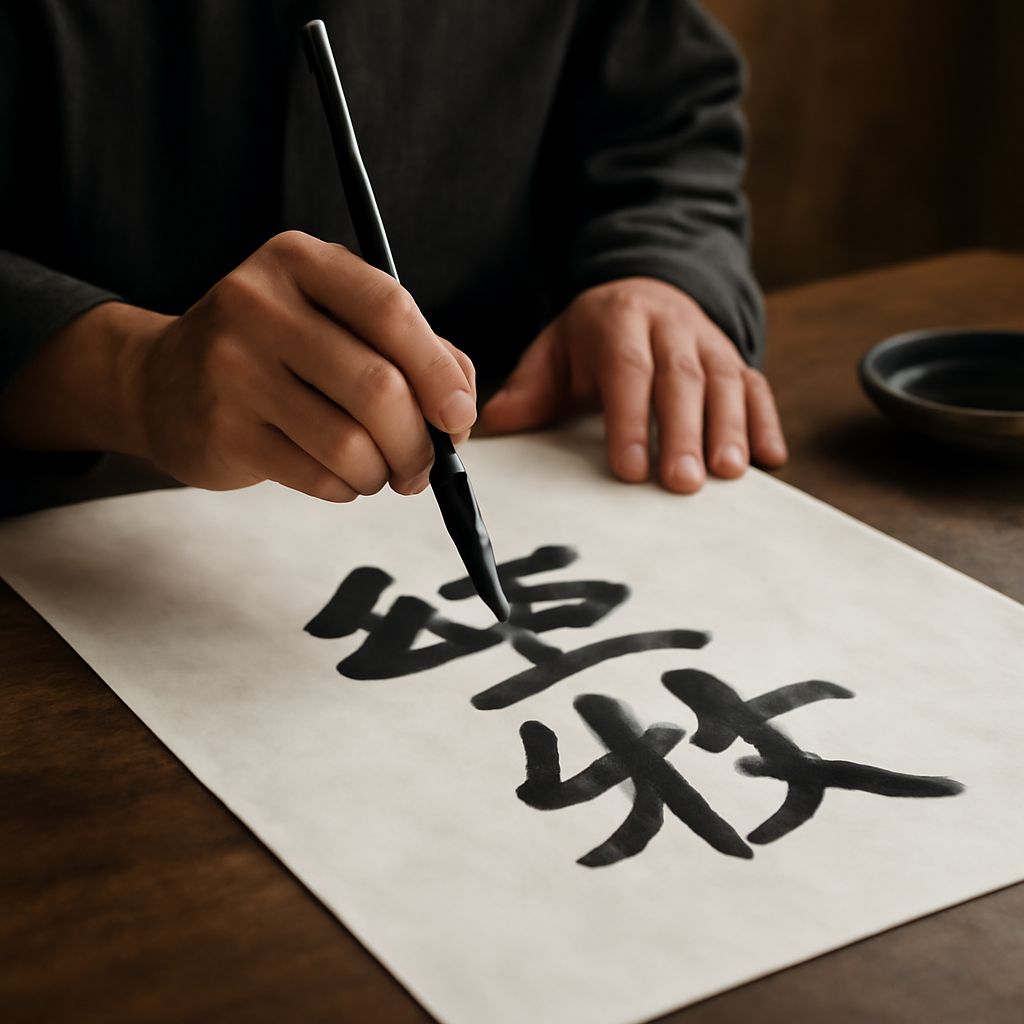
East Asian calligraphy — Chinese, Japanese, and Korean — uses brush rather than pen, which fundamentally changes the mechanics of calligraphy art. The brush’s flexible tip responds to both pressure and angle simultaneously, producing strokes that can begin as hairlines and swell dramatically mid-stroke before tapering back to a point. This brush vocabulary maps directly to the brush handling skills used in traditional ink painting (sumi-e in Japanese tradition), making brush calligraphy and ink painting deeply interrelated disciplines.
Arabic calligraphy represents a third major tradition with its own tool conventions (the reed pen, cut to a specific width and angle), its own relationship between letter form and decorative elaboration, and its own history as perhaps the most sophisticated calligraphic tradition in terms of the range of scripts and styles it encompasses.
Types of Perspective Drawing and Spatial Thinking in Calligraphy
Understanding types of perspective drawing — one-point, two-point, and three-point, plus atmospheric and oblique — improves calligraphy in subtle but real ways. Types of perspective drawing train spatial reasoning: the ability to understand how forms sit in three-dimensional space and how viewing angle affects their apparent shape. For calligraphers, this spatial awareness helps you understand how letterforms occupy the white space of a page, how ascenders and descenders create depth across a multi-line composition, and how large-format work changes spatial relationship between viewer and letterform.
Watercolor Brushes and Paint for Calligraphy-Painting Hybrids
Choosing Brushes for Brush Calligraphy
Knowing the types of watercolor brushes informs brush calligraphy tool selection directly. Round brushes with good snap — the brush returns to its point immediately after pressure is released — are the primary tool for both brush calligraphy and watercolor detail work. A size 4 or 6 round with a high-quality sable or synthetic blend tip works for both disciplines, making the investment in quality brush calligraphy tools do double duty in a watercolor practice.
Rigger brushes (long-haired rounds designed for fine line work) are excellent for the hairline parts of pointed pen calligraphic styles when translated to brush. The types of watercolor brushes that work less well for calligraphy are flat wash brushes and mop brushes — their large reservoirs and soft tips don’t provide the fine point control that letterforms require.
Watercolor Paint Types for Calligraphic Work
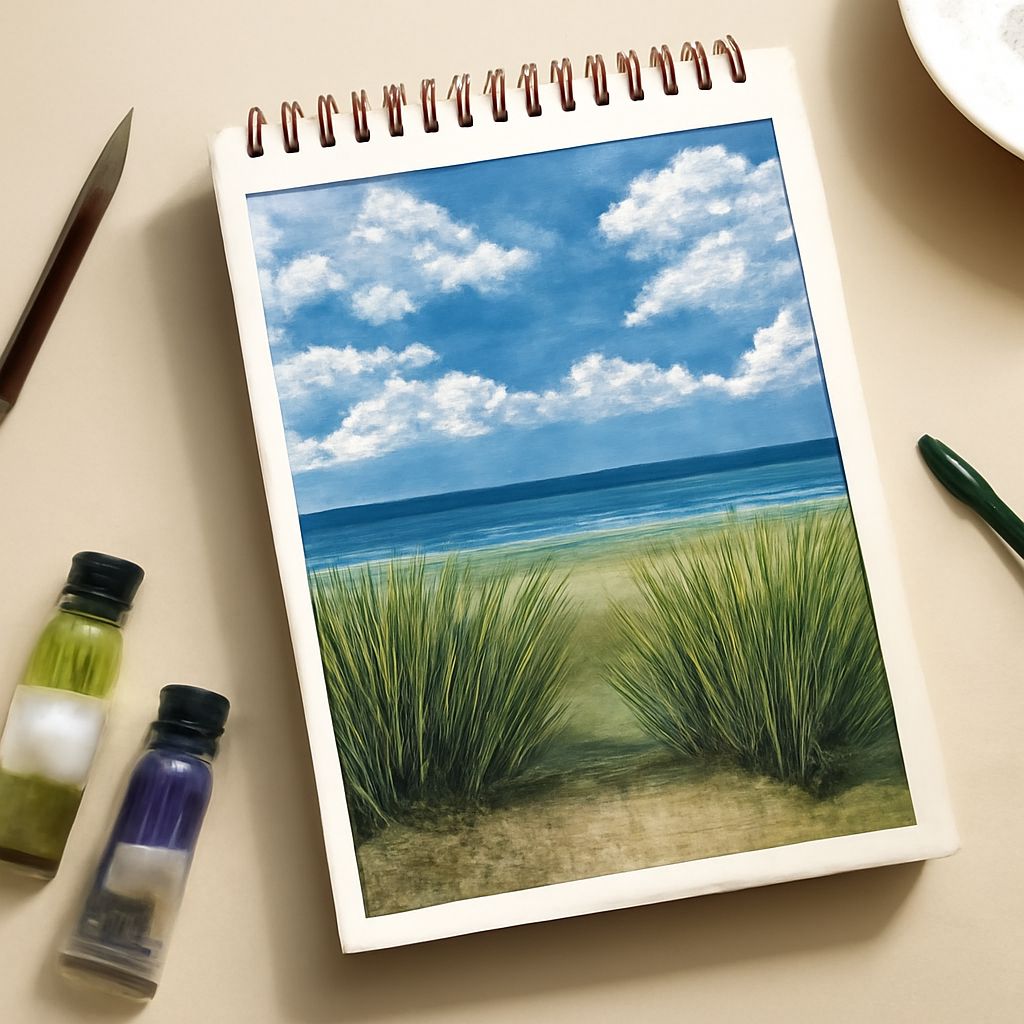
Understanding types of watercolor paint matters when integrating calligraphy and painting. Transparent watercolor pigments — phthalo blue, quinacridone rose — let underlying calligraphy show through when washes are applied over written text, creating interesting layered compositions. Opaque or granulating types of watercolor paint — like raw umber or cerulean blue — can obscure letterforms beneath a wash layer unless carefully managed. Knowing your paint’s opacity and granulation before layering it over calligraphic work prevents irreversible mistakes.
Safety Recap
When working with India ink for calligraphy, avoid direct contact with eyes and skin — India inks are waterproof when dry and difficult to remove from clothing and skin. Use ink in ventilated spaces, particularly when working with shellac-based or alcohol-based inks. Water-soluble inks and gum-arabic-based calligraphy inks are safer alternatives for beginners and those with sensitivity concerns.