Watercolor Book Recommendations and the Best Watercolor Pencils for Artists
Where do you turn when you want to push your painting skills past YouTube tutorials and scattered blog posts? A good watercolor book gives you a complete, sequenced learning path — not just isolated tips, but a coherent approach to color mixing, wet-on-wet technique, value structure, and composition. The right watercolor books can accelerate your progress by years compared to learning piecemeal.
Beyond instruction, many artists also seek out the best watercolor books for pure inspiration — collections of finished work that show what the medium can do at its highest level. And if you’re choosing supplies alongside your reading, knowing which best watercolor pencils to reach for makes the whole setup more intentional. Even the curious phenomenon of the watercolor book tattoo tells us something about how deeply this medium connects with its practitioners.
Top Watercolor Books for Beginners and Intermediate Artists
Instructional vs. Inspiration Books
Instructional watercolor books walk you through technique — brush loading, color temperature, layering washes, managing bloom effects. Jean Haines, David Webb, and Joseph Zbukvic have all published clear, well-photographed instructional titles that cover the full range from basic washes to complex atmospheric effects. Inspiration-focused watercolor books, by contrast, showcase finished work from master painters. Both types belong in your library.
Digital vs. Print Editions
Print editions remain the gold standard for art instruction books. The tactile experience of flipping between a demonstration photo and a technique explanation, with a pencil in hand, is hard to replicate on a screen. That said, digital editions work well for reference while traveling or when you want to zoom in on specific brushwork. Many publishers now include both formats when you buy the print version.
What to Look For
A strong watercolor book should include clear before-and-after process shots, not just finished paintings. Look for books that explain the why behind each decision — why wet-on-wet here, why a dry brush edge there. Authors who share their failures alongside their successes are usually the most useful teachers. Check that the color palette used in the book is one you can replicate with commonly available paints.
Best Watercolor Pencils: A Buyer’s Guide
Water-Soluble vs. Traditional Pencils
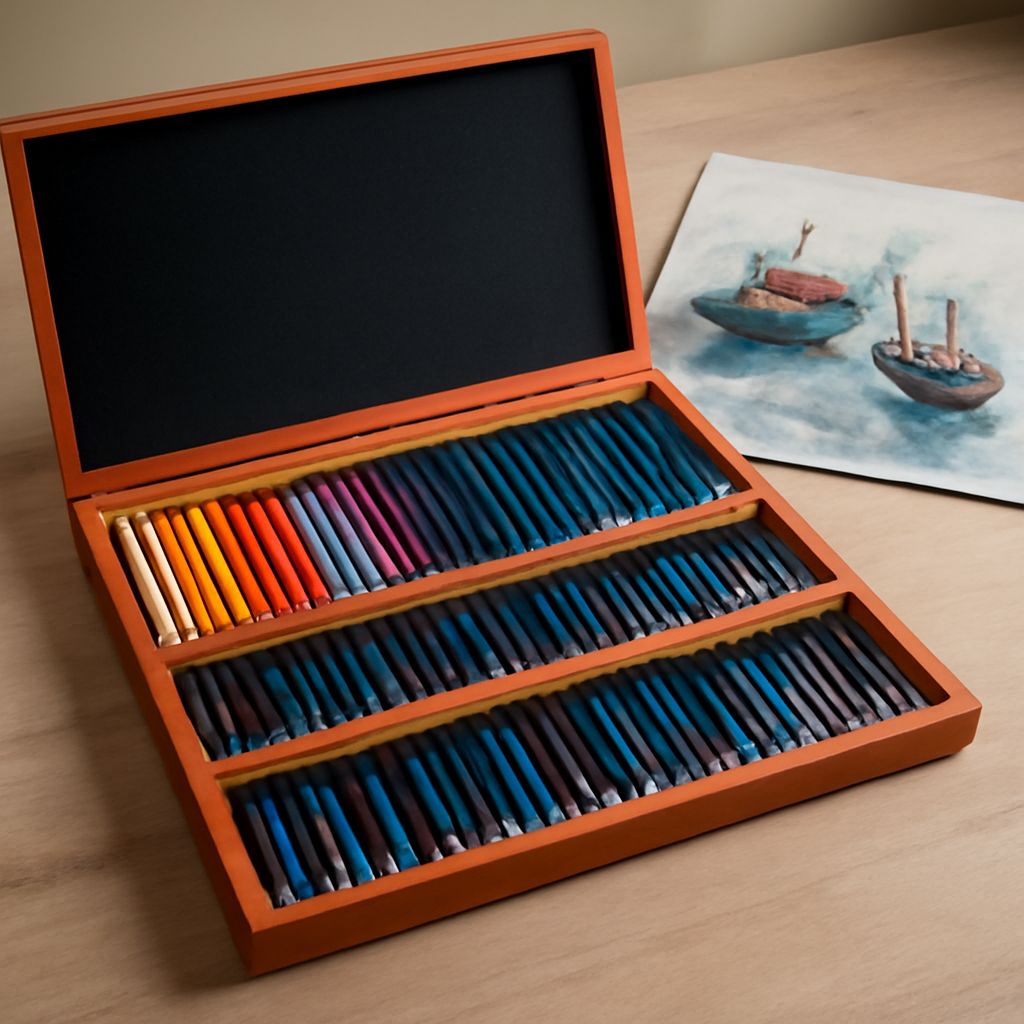
The best watercolor pencils dissolve when wet, releasing pigment that behaves like a wash. Dry, they draw like a standard colored pencil. This dual nature makes them ideal for travel sketching, journaling, and mixed-media work where you want both drawing precision and painterly washes. Brands like Faber-Castell Albrecht Dürer, Caran d’Ache Supracolor, and Derwent Watercolour consistently rank among the best watercolor pencils for both pigment density and blending performance.
Brand Comparisons
Faber-Castell Albrecht Dürer pencils offer rich, lightfast pigment in a wide range of colors. They dissolve smoothly and blend well both wet and dry. Caran d’Ache Supracolor carries slightly more wax and lays down a creamier dry stroke, making them versatile for artists who want a softer look. Derwent Watercolour pencils are more affordable and work well for beginners building their first set. All three represent the upper tier of best watercolor pencils available to working artists.
Pencil Techniques Worth Practicing
Try layering multiple colors dry, then activating with a wet brush to see how they blend. The pigments in quality watercolor pencils mix on the paper surface rather than producing mud. You can also dip the pencil tip directly in water for a saturated, paint-like stroke. Hatching with dry pencil before washing gives you built-in texture that paint alone can’t replicate.
Watercolor Book Tattoo: The Meaning Behind the Ink
Why Artists Get Watercolor-Style Tattoos
A watercolor book tattoo typically features loose, flowing color washes combined with book imagery — open pages, stacked spines, or a single illuminated page. The style mirrors the soft edges and luminous color of the painting medium itself. Artists who have dedicated years to watercolor often choose this tattoo design as a personal statement about craft, patience, and the beauty of impermanence — core values in a medium that can’t be overworked without consequence.
Book Imagery in Tattoo Art
Books as tattoo subjects carry rich symbolism: knowledge, story, transformation, personal history. When combined with watercolor technique, the result feels both intellectual and painterly. The loose pigment drops and color bleeds that define the watercolor book tattoo style are technically demanding for the tattoo artist — they require exceptional color control and a deep understanding of how color fades and shifts over time in skin.
Finding the Right Tattoo Artist
Not every tattoo artist is comfortable with watercolor style. Look for portfolios that show clean line work underneath the color, not just color alone. Watercolor tattoos without strong underlying structure tend to look blurry rather than painterly as they age. Ask your artist directly about their experience with this style and how they approach longevity in the design.
Building Your Watercolor Practice
Creating a Study Schedule
Short, focused sessions beat marathon painting days for building skill. Thirty minutes of deliberate practice — one technique, one study, one specific problem to solve — moves faster than three hours of general painting. Use your watercolor books to define a weekly curriculum: one week on wet-on-wet, the next on color temperature, the next on value studies.
Tracking Progress with Sketchbooks
Date every page. Looking back through a sketchbook from three months ago is one of the most motivating things you can do. The progress that feels invisible week-to-week becomes obvious across months. Keep a dedicated practice sketchbook separate from your finished work — it’s where you take risks, experiment with the best watercolor pencils you just discovered, and make the mistakes that teach you the most.
Next steps: Start by picking up one instructional watercolor book and one set of quality watercolor pencils, then commit to thirty minutes of focused practice three times a week. Build the habit before you expand the library or the supply collection.